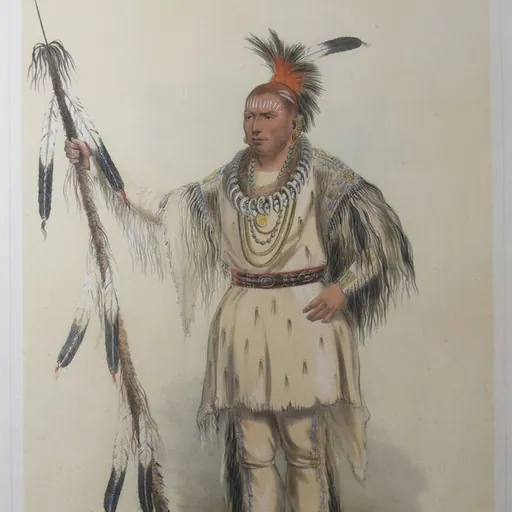
About Joc-O-Sot
Lived 1810 – 1844 (aged 33–34). Joc-O-Sot was an actor.
Joc-O-Sot, also known as Walking Bear (c. 1810 – September 3, 1844) was a Native American of the Meskwaki tribe. He fought in the Black Hawk war, in which he was wounded. He led some gaming expeditions in the Cleveland area after the war, then joined a theatrical company in which his depiction of Native American life made him very popular throughout the Eastern United States and then Europe. Feeling the effects of old war wounds, he was on his way home via a goodwill tour when he fell seriously ill and died in Cleveland. His gravesite has attracted attention since his death, both because of his story and as a result of local superstition.
Biography Life Joc-O-Sot was born circa 1810 of the Meskwaki tribe, whose home was based around present-day Iowa. His father's name was Katuchasha, who secured the honorific name "The Bear" through his exploits in war against the Osage Nation.
The Meskwaki allied themselves with the Sauk people in the Black Hawk War, and although he personally made effort to prevent that war Joc-O-Sot fought in the conflict as a Meskwaki leader, and as a result suffered notable wounds. Within a couple of years after the war he relocated to the Cleveland, Ohio area and directed expeditions of fishing and hunting. His first theatrical appearance occurred in Cincinnati and proved highly popular, and the act continued across the Eastern United States. Encouraged by Marble, Joc-O-Sot joined in 1844 a company headed by William Vincent Wallace which was to tour England. Joc-O-Sot was not in England very long before he became ill from what was likely tuberculosis and left for the United States of his own accord, his planned destination being home near Fort Leavenworth, Missouri. Evidently he stopped at Washington, D.C., on a diplomatic mission on behalf of his people to President John Tyler, and then headed to Montreal, Canada for the same purpose, making several goodwill stops along the way. He walked as far as Buffalo, New York, at which point his failing health prevented him from walking further. In all likelihood his remains were body-snatched for the purpose of medical research, in any case his body was confirmed as removed in 1882 Cleveland city records. He is known to have been elected as a chief subsequent to his death. Misfortune was said to affect several disparate developers who wished to move the graves for economic purposes.
Don’t just read it —
keep it.
Full-length biographies made to live with: read them, listen on the way to work, watch them tonight.
- E-book
- Audio
- Video
Instant download · yours to keep · every purchase keeps this site free
Important facts
People in Joc-O-Sot's life
Named in this biography and alive at the same time

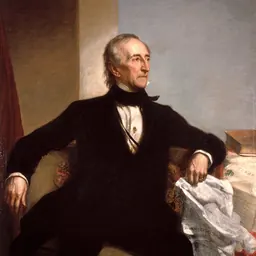
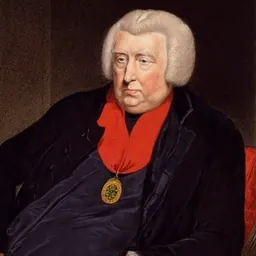

Related people
Same field, nearest in time

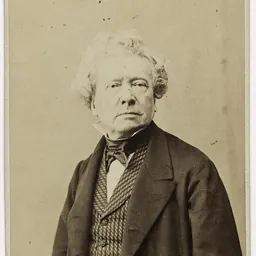

Contemporaries
People whose lives overlapped Joc-O-Sot's






Frequently asked questions
Who was Joc-O-Sot?
Native American warrior
When was Joc-O-Sot born?
Joc-O-Sot was born in 1810.
When did Joc-O-Sot die?
Joc-O-Sot died in 1844.
What was Joc-O-Sot's occupation?
Joc-O-Sot was an actor.
Sources & further reading
Cite this page
APA: Biography.guide. (2026). Joc-O-Sot. https://biography.guide/joc-o-sot/
MLA: "Joc-O-Sot." Biography.guide, https://biography.guide/joc-o-sot/.
Chicago: "Joc-O-Sot." Biography.guide. https://biography.guide/joc-o-sot/.
Data last updated: 2026-09-21 · Spot an error? Report a correction.
Portrait: Wikimedia Commons · author & licence
Page generated 2026-09-27 05:00 UTC