
About Joaquín Sáenz y Arriaga
Lived 1899 – 1976 (aged 76). Joaquín Sáenz y Arriaga was a Mexican presbyter, theologian and writer.
Joaquín Sáenz y Arriaga (12 October 1899 – 28 April 1976) was a Mexican Jesuit priest and theologian who was excommunicated from the Catholic Church. He played a significant role in contemporary traditionalist Catholicism, both in Mexico and in the wider Catholic world, as a pioneering theorist of sedevacantism, claiming that Pope Paul VI was a heretical antipope and thus not legitimate. His two most prominent works, The New Montinian Church and Sede Vacante (1973) have been described as "foundational" in the development of sedevacantism. He served as spiritual advisor to the group, endorsed integralism, and was staunchly anti-communist, supporting a so-called "Christian order" against an alleged "Judeo-Masonic conspiracy."
Sáenz y Arriaga lobbied at the Second Vatican Council against the development of the document Nostra aetate, which dealt with relations between the Catholic Church and the Jews. In the aftermath of the council, he opposed the pioneers of Latin American liberation theology, particularly Sergio Méndez Arceo, the Bishop of Cuernavaca and leader of the Centro Intercultural de Documentación. He also opposed the Second Conference of the Latin American and Caribbean Episcopal Council at Medellín, which he attended.
In the later years of his life, Sáenz y Arriaga was more publicly critical of Paul VI, finally declaring him in published works a heretical and non-Catholic antipope, for which he was excommunicated by Cardinal Miguel Darío Miranda y Gómez, the Archbishop of Mexico City, in 1971. In liturgy, he completely rejected the New Mass and continued to celebrate the Tridentine liturgy. His publication, Trento, which he operated with Fr Moisés Carmona, became the basis of the Unión Católica Trento and organised sedevacantism in Mexico and later internationally.
Early life Joaquín Sáenz y Arriaga was born on 12 October 1899 to Rafael Sáenz Arciga (born 1863) and Magdalena Arriaga Burgos de Sáenz (born 1862) in Morelia, Michoacán, Mexico. His parents were both of Spanish ancestry and Old Christian heritage. Part of a large Catholic family, Joaquín was the tenth child of thirteen. The brother of his grandmother was José Ignacio Arciga, Metropolitan Archbishop of Michoacán in the mid-19th century.
Society of Jesus Intending to join the Carthusians as a teenager, as he was drawn to the life of quiet contemplation, he was convinced instead by the local ordinary Leopoldo Ruiz y Flóres, the Archbishop of Michoacán, that his talents were more suited as a "soldier for Christ" in the Society of Jesus.
As was usual for a Jesuit seminarian, he moved around to different cities in Spain, spending the years from 1918 to 1922 in Granada, Andalusia. Here he studied Literature, Humanities and Philosophy. While in Granada he made his perpetual vows of poverty, obedience and chastity in the Society of Jesus on 16 September 1918. He moved again in 1923 to Sarrià, Barcelona, Catalonia attending the St. Ignatius College, Barcelona, where he studied Rhetoric and continued his studies in Philosophy.
Along with another seminarian, José Bravo, he was sent to Granada, Nicaragua, where he was assigned to teach at the Central American School of the Sacred Heart of Jesus, where he taught primary school children, as well as assisting the perfect (a role he would eventually fill). He was in Nicaragua from 1924 until early March 1926, where he was sent to visit the Jesuit seminary at La Libertad, El Salvador, as he had a growing reputation for his intellectual prowesss. However, a personality clash with the Father Superior of the Jesuit seminary in El Salvador saw him continue on to his home nation of Mexico at Puebla. He would return to Spain to complete his studies in theology at the St. Ignatius College, Barcelona. He was visited by Mexicans here, such as future politician Miguel Estrada Iturbide and was kept informed of the difficulties of the Catholic Church in Mexico due to rising government persecution. Back in his homeland of Mexico at this time the situation had radicalised for Catholics with the ascent to power of Plutarco Elías Calles, an anticlerical Freemason, who had brought in the so-called Calles Law which targeted Catholicism; a rebellion against these anticlerical and secularist measures known as the Cristero War was taking place. Sáenz y Arriaga attempted to aid the Cristeros by lobbying ecclesiastical authorities in the United States, relaying news and information from his peer on the ground Leopoldo Lara y Torres, the Bishop of Tacámbaro. With an official end to the militant aspect of the rebellion, Mexican religious living abroad were permitted to return home and so Sáenz y Arriaga returned to Mexico in July 1929 having completed his studies.
The Jesuit St. Andrew-on-Hudson Novitiate, Poughkeepsie, New York. Sáenz y Arriaga taught Ignatian spiritual exercises here in the early 1930s. Upon his return to Mexico, he was assigned to teach English at the Colegio de San José in Guadalajara, Jalisco. While in New York, he also visited Columbia University, becoming familiar with Fr. George Barry Ford, an American Catholic priest and chaplain to the Newman Club there. This work pushed back against the development of Nostra aetate (a document on the relationship between the Catholic Church and the Jews) and posited a wide-ranging conspiracy theory, in which it claimed that Judaism had worked to overthrow Christianity and the Catholic Church ever since its inception and claimed that the "Synagogue of Satan" had been behind every major heresy, as well as encouraging "enemies" such as Freemasonry and Communism. Some speculated that Sáenz y Arriaga was the author of the polemic and associate its spread at the council to him, but Scott Anderson and Jon Lee Anderson have claimed that the actual authors were his fellow members of Los TECOS; Carlos Cuesta Gallardo and Garibi Velasco.
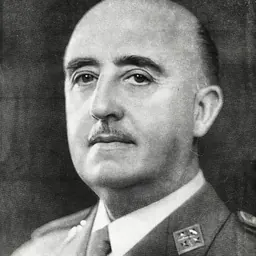
While in Europe, Fr. Sáenz y Arriaga published in July 1963, just after the death of Pope John XXIII (Angelo Roncalli), a work entitled Carta de informacíon a los obispos de España, Portugal y América (“Letter of Information to the Bishops of Spain, Portugal and America”), in which he sought to sound the alarm of “dangers” at the council, seeking to rally conservative leaning bishops in Spain, Portugal and Latin America to the traditionalist cause. During this time Sáenz y Arriaga and Rúa y Álvarez also visited Spain and met with the Spanish Head of State, Francisco Franco, seeking support of the Caudillo for Mexican Catholics. In addition to this, Sáenz y Arriaga travelled to Paris to visit Msgr. Georges Roche, one of the secretaries of Cardinal Eugène Tisserant, to gather intelligence on Montini, as Pope Pius XII had previously commissioned Roche to monitor Montini, then Pro-Secretary of State, for “suspicious relationships.”
In the aftermath of the council, upon returning to Mexico, Sáenz y Arriaga authored a book called Con Cristo o contra Cristo ("With Christ or Against Christ") against the document from the Second Vatican Council which he had fought most vehemently against; Nostra aetate. It alleged direct involvement of the American Jewish Committee, the ADL of B’nai B’rith and the World Jewish Congress with Cardinal Augustin Bea’s SPCU in developing the document. This work greatly irritated the local ordinary Miguel Darío Miranda y Gómez, the Archbishop of Mexico City, and earned him a reprimand, however, it proved difficult to sanction Sáenz y Arriaga for this as it carried an official imprimatur from Juan María Navarrette y Guerrero, the Archbishop of Hermosillo. By the summer of 1967, tensions with the local Archbishop had thawed, as he was given permission to continue as the ordinary confessor to the Congregation of Perpetual Adoration of the Blessed Sacrament, upon the request of the Mother Superior. CIDOC, CELAM & liberation theology conflict During the year of 1968, Sáenz y Arriaga toured South America holding several meetings with prominent traditionalists, such as Bishop Antônio de Castro Mayer of Campos in Brazil, Bishop Antonio Corso of Maldonado-Punta del Este-Minas in Uruguay and one of the pioneering theorists of sedevacantism, Carlos Alberto Disandro from Argentina. It was in this year that the Catholic factions in Latin America — represented at the radical ends by traditionalist Catholicism on one side and Latin American liberation theology on the other — were becoming increasingly polarised and as a consequence Sáenz y Arriaga was becoming increasingly open and direct in his published criticisms of the Vatican and its institutions, accusing them of complicity with communism. in which he argued that Paul VI (Giovanni Montini) was an illegitimate Pope and crypto-Jew who had the goal of creating a new Kabbalistic “homocentric religion of universal brotherhood” in place of the Catholic Church. This book directly led to Cardinal Miguel Darío Miranda y Gómez declaring Fr. Sáenz y Arriaga's suspension a divinis in December 1971 for "disobedience to the Pope." Debate swirled as to whether this amounted to excommunication or not. His supporters in Mexico (including members of Los TECOS) attacked the house of the Cardinal in Mexico City with graffiti saying “Sáenz sí, Miranda no.” Similarly in Rome, the cardinal's coat of arms was attacked by Italian integrists. His protegé and associate, Fr. Moisés Carmona from Acapulco, wrote:
Following his excommunication, Sáenz y Arriaga released a book which developed the sedevacantist thesis in more depth and explicitly stated the case that Paul VI (Giovanni Montini) was not legitimately the Pope of the Catholic Church. This 1973 text, Sede Vacante: Paolo VI no es Papa legítimo ("Sede Vacante: Paul VI is Not a Legitimate Pope"), has been called “a foundational book for the new traditionalism”, with another book on the opposite progressivist end of the Church, Gustavo Gutiérrez’s A Theology of Liberation also having emerged from Latin America at the same time. According to the Oxford Handbook of Vatican II, speaking of The New Montinian Church and Sede Vacante, it states “these two books would play a part in the development of sedevacantism, which started in Mexico, spread to the United States and Spain, and reached France.”
Legacy
In his last testament, written on 25 April 1976, Sáenz wrote:
and he added:
May the last cry of my soul be that of our Mexican martyrs: Long live Christ the King, Long live the Virgin of Guadalupe!"Que el último suspiro de mi alma sea el de nuestros Mártires mexicanos: Viva Cristo Rey, Viva la Virgen de Guadalupe!"
During the latter part of his life, Sáenz y Arriaga had stood as the de facto leader of sedevacantism in Mexico. His close collaborator with the journal Trento, Fr. Moisés Carmona, succeeded him after his death, with the founding of the Unión Católica Trento (“Tridentine Catholic Union”) in January 1977, heavily supervised by the secret society Los TECOS. Coupled with the consecration in October 1981 as Bishops of Fr. Moisés Carmona and Fr. Adolfo Zamora by Ngô Đình Thục, Titular Archbishop of Bulla Regia, a Vietnamese clergyman of the Roman Catholic Church, giving the Unión Católica Trento the ability to confer holy orders, including to ordain priests and consecrate Bishops, the Mexican sedevacantist movement initiated by Sáenz y Arriaga developed a more organised and institutionalised form than it had during his lifetime.
The Mexican sedevacantist movement founded by Sáenz y Arriaga fractured in the early 1990s, following the death of Bishop Carmona in a car crash, as well as conflicts between Los TECOS and the SSPX, which in turn led to conflicts between Los TECOS and Bishop José de Jesús Roberto Martínez y Gutiérrez (1917–2008), one of the priests consecrated by Carmona. As a consequence, the Unión Católica Trento transformed into the Sociedad Sacerdotal Trento ("Tridentine Priesty Society") in 1993, under Martín Dávila Gándara, as well as this the Fundación San Vicente Ferrer and the Obra Mariana Carmelitana also emerged. Many of these groups developed good relations with Mark Pivarunas and the Congregation of Mary Immaculate Queen (CMRI) in the United States, which had developed in the mid-1980s as the CMRI had cut ties with Francis Schuckardt. Pivarunas had been consecrated in 1991 by Carmona, who in turn consecrated Martín Dávila Gándara of the Sociedad Sacerdotal Trento in 1999.
Works 1963: Carta de informacíon a los obispos de España, Portugal y América (“Letter of Information to the Bishops of Spain, Portugal and America”) 1966: Con Cristo o contra Cristo ("With Christ or Against Christ") 1967: Cuernavaca y el progresimo religioso en México ("Cuernavaca and Religious Progressivism in Mexico") 1971: La nueva iglesia montiniana ("The New Montinian Church") 1972: ¿Por qué me Excomulgaron?: ¿Cisma o Fe? ("Why Was I Excommunicated?: Schism or Faith?") 1973: Sede Vacante: Paolo VI no es Papa legítimo ("Sede Vacante: Paul VI is Not a Legitimate Pope")
Don’t just read it —
keep it.
Full-length biographies made to live with: read them, listen on the way to work, watch them tonight.
- E-book
- Audio
- Video
Instant download · yours to keep · every purchase keeps this site free
Important facts
People in Joaquín Sáenz y Arriaga's life
Named in this biography and alive at the same time





Related people
Same field, nearest in time
Contemporaries
People whose lives overlapped Joaquín Sáenz y Arriaga's




Frequently asked questions
Who was Joaquín Sáenz y Arriaga?
Mexican theologian
When was Joaquín Sáenz y Arriaga born?
Joaquín Sáenz y Arriaga was born on 12 October 1899 in Morelia.
When did Joaquín Sáenz y Arriaga die?
Joaquín Sáenz y Arriaga died on 28 April 1976 in Mexico.
What was Joaquín Sáenz y Arriaga's occupation?
Joaquín Sáenz y Arriaga was a presbyter, theologian and writer.
What nationality was Joaquín Sáenz y Arriaga?
Joaquín Sáenz y Arriaga was Mexican.
Sources & further reading
· Wikipedia: Joaquín Sáenz y Arriaga
· DBpedia: Joaquín Sáenz y Arriaga
Cite this page
APA: Biography.guide. (2026). Joaquín Sáenz y Arriaga. https://biography.guide/joaquin-saenz-y-arriaga/
MLA: "Joaquín Sáenz y Arriaga." Biography.guide, https://biography.guide/joaquin-saenz-y-arriaga/.
Chicago: "Joaquín Sáenz y Arriaga." Biography.guide. https://biography.guide/joaquin-saenz-y-arriaga/.
Data last updated: 2026-09-20 · Spot an error? Report a correction.
Page generated 2026-09-27 05:29 UTC