
About Joan Birman
Born 1927. Joan Birman is an American mathematician and university teacher, known for Braid theory and Knot theory.
Joan Sylvia Lyttle Birman (born May 30, 1927, in New York City) is an American mathematician, specializing in low-dimensional topology. She has made contributions to the study of knots, 3-manifolds, mapping class groups of surfaces, geometric group theory, contact structures and dynamical systems. Birman is research professor emerita at Barnard College, Columbia University, where she has been since 1973.
Family Her parents were George and Lillian Lyttle, both Jewish immigrants. Her father was from Russia but grew up in Liverpool, England. Her mother was born in New York and her parents were Russian-Polish immigrants. At age 17, George emigrated to the US and became a successful dress manufacturer. He appreciated the opportunities from having a business but he wanted his daughters to focus on education. She has three children, Kenneth Paul Birman, Deborah Birman Shlider, and Carl David Birman. Her late husband, Joseph Birman, was a physicist and a leading advocate for human rights for scientists.
Education After high school, Birman entered Swarthmore College, a coeducational institution in Swarthmore, Pennsylvania, and majored in mathematics. However, she disliked living in the dorms so she transferred to Barnard College, a women's only college affiliated to Columbia University, to live at home.
Career After she earned her bachelor's degree from Barnard, Birman accepted a position at the Polytechnic Research and Development Co., which was affiliated with Brooklyn Polytechnic University. She later worked from the Technical Research Group and the W. L. Maxson Corporation.
Birman's first academic position was at the Stevens Institute of Technology (1968–1973). When she joined, she was the only female professor out of 160 members of the faculty. In 1969 she published "On Braid Groups", which introduced a way to relate the mapping class group of a surface to the mapping class group of a punctured version of the same surface. Known as the Birman Exact Sequence, this has become one of the most important tools in the study of braids and surfaces. During the later part of this period, in 1974, she published a monograph, Braids, Links, and Mapping Class Groups, based on a graduate course she taught as a visiting professor at Princeton University in 1971–72. This book is considered the first comprehensive treatment of braid theory, introducing the modern theory to the field, and contains the first complete proof of the Markov theorem on braids.
She supervised 21 doctoral students, and has a total of 70 academic descendants. Her doctoral students include Józef Przytycki.
Birman was a co-founder of Mathematical Sciences Publishing, a non-profit publishing house. She was a member of the New York Academy of Sciences Human Rights of Scientists Committee.
Work According to her MathSciNet author profile, Birman's scientific work includes 106 research publications and over 300 published reviews in Math Reviews. She is the author of the research monograph Braids, Links, and Mapping Class Groups.
Recognition In 1974, Birman was selected as a Sloan Research Fellow by the Alfred P. Sloan Foundation.
In 1994, she was selected as a Guggenheim Foundation Fellow by the John Simon Guggenheim Memorial Foundation. In 1996, the Mathematical Association of America awarded Birman the Chauvenet Prize, "the highest award for mathematical expository writing" for her 1993 essay New Points of View in Knot Theory. In 1997, Birman received an honorary doctorate from the Technion Israel Institute of Technology. In 2005, she won the New York City Mayor's Award for Excellence in Science and Technology. In 2015, Birman was named an honorary member of the London Mathematical Society. In 2021, Birman was elected to the National Academy of Sciences.
American Mathematical Society From 1978 to 1980, and again from 1990 to 1992, Birman was an American Mathematical Society (AMS) Council member at large.
In 1990, Birman donated funds to the AMS to establish the Ruth Lyttle Satter Prize in Mathematics in honor of her sister, Ruth Lyttle Satter, who was a plant physiologist.
In 2013, she became a fellow of the American Mathematical Society in the inaugural class.
Association of Women in Mathematics In 1987, she was selected by the Association for Women in Mathematics to be a Noether Lecturer, honoring her fundamental and sustained contributions to the mathematical sciences.
In 2015, the Association for Women in Mathematics began awarding the Joan & Joseph Birman Research Prize in Topology and Geometry. In 2020, they included her in that year's class of Fellows for "her groundbreaking research connecting diverse fields, and for her award-winning expository writing; for continuously supporting women in mathematics as an active mentor and a research role model; and for sponsoring multiple prize initiatives for women". The AWM also included her in a deck of cards featuring notable women mathematicians.
Selected publications
Don’t just read it —
keep it.
Full-length biographies made to live with: read them, listen on the way to work, watch them tonight.
- E-book
- Audio
- Video
Instant download · yours to keep · every purchase keeps this site free
Important facts
People in Joan Birman's life
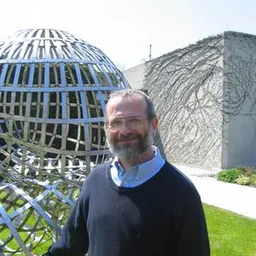
Named in this biography and alive at the same time



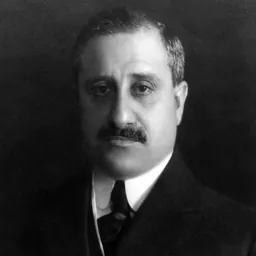
Related people
Same field, nearest in time



Contemporaries
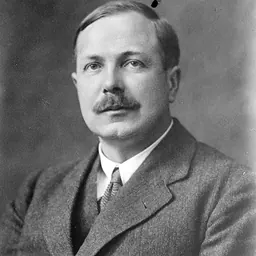
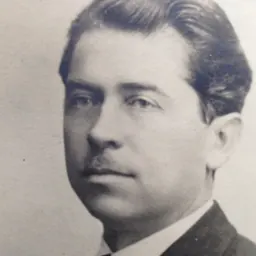
People whose lives overlapped Joan Birman's


Frequently asked questions
Who is Joan Birman?
U.S. mathematician
When was Joan Birman born?
Joan Birman was born on 30 May 1927 in New York City.
What is Joan Birman's occupation?
Joan Birman is a mathematician and university teacher.
What is Joan Birman known for?
Joan Birman is known for Braid theory and Knot theory.
What nationality is Joan Birman?
Joan Birman is American.
Sources & further reading
Cite this page
APA: Biography.guide. (2026). Joan Birman. https://biography.guide/joan-birman/
MLA: "Joan Birman." Biography.guide, https://biography.guide/joan-birman/.
Chicago: "Joan Birman." Biography.guide. https://biography.guide/joan-birman/.
Data last updated: 2026-09-20 · Spot an error? Report a correction.
Page generated 2026-09-27 05:08 UTC