
About Jo Johannis Dronkers
Lived 1910 – 1973 (aged 62). Jo Johannis Dronkers was a Dutch mathematician and hydrology technician.
Jo Johannis Dronkers (24 May 1910 – 20 February 1973) was a Dutch mathematician who is notable for the development of mathematical methods for the calculation of tides and tidal currents in estuaries. His work formed much of the mathematical basis for the design of the Delta Works. He attended the 1954 International Congress of Mathematicians in Amsterdam, where his work was discussed by David van Dantzig.
Although his work dealt with a problem in pure mathematics, it was notable for containing eleven propositions, five of which concerned tides. Three of these five propositions contained fundamental criticism of the work of Jannis Pieter Mazure, who at that time was one of the most influential people in the field of tidal calculations in the Netherlands. Amongst other propositions, Dronkers proposed a solution to the problem caused by the influence of upstream discharge on the calculation of tidal motion in downstream rivers.
Another of Dronkers' propositions concerned an inaccuracy in the work of Hendrik Lorentz contained in Lorentz's report on tidal movements as a consequence of the Zuiderzee Works.
Rijkswaterstaat and the Delta Works In 1934, Dronkers commenced his career at Rijkswaterstaat, a Dutch governmental agency responsible for water management and civil engineering works. He was assigned to the Sea Arms, Lower Rivers and Coasts service, a division directed by Dr. Johan van Veen, where Dronkers focused on the mathematical study of tides and related hydrodynamic phenomena. His expertise contributed significantly to the post-war restoration efforts associated with the aftermath of the Inundation of Walcheren in 1945. Dronkers' role during this period is vividly described in A. den Doolaard's non-fiction novel Het verjaagde water, in which he is described as "The Calculator."
Dronkers' collaborative work with notable engineers like Frank Spaargaren led to several key publications in hydraulic engineering, particularly on topics such as tidal basin closures. His work gained further prominence following the devastating North Sea Flood of 1953, as he became deeply involved in the Delta Works project, a series of major civil engineering projects built to protect the Netherlands from sea flooding. Between 1949 and 1963, Dronkers served at the Central Study Service of RIjkswaterstaat, later renamed the Directorate for Water Management and Water Movement, under the leadership of Ir. J.B. Schijf. Here, as the chief mathematician, he played an integral role in the early studies that shaped the Delta Plan.
In 1963, Dronkers took over as head of the hydrological department of the Delta Service, succeeding H.A. Ferguson. His mathematical acumen was crucial in devising tidal calculations for the Delta Works. The earlier Delta Commission Report of 1961, to which Dronkers contributed, focused extensively on storm surges and tidal motion, and included work by other notable Dutch engineers like Pieter Jacobus Wemelsfelder. Dronkers' work was pivotal in transitioning from empirical approaches to more scientifically robust computational methodologies in hydraulic engineering. His analytical techniques allowed for a proactive assessment of hydraulic interventions, thereby laying the groundwork for evidence-based strategic planning in the field. This approach continues to influence much of hydraulic engineering.
Dronkers published his magnum opus, Tidal computations in rivers and coastal waters, in 1964. It remains a benchmark in the field of tidal calculation theory, and led to the award of the Conrad Medal by the Royal Netherlands Institute of Engineers to Dronkers in 1965. However, the book’s reception was not without controversy in the hydraulic engineering community. Dronkers' computational approach, though rigorous, was criticized by Johan van Veen for its complexity and computational demands, which he believed could hinder timely practical applications. Instead, van Veen proposed the use of an electrical analogue, which led to the use of the Deltar analogue computer. Conversely, the notable Dutch civil engineer Johannes Theodoor Thijsse advocated for a physical model-based approach.
Don’t just read it —
keep it.
Full-length biographies made to live with: read them, listen on the way to work, watch them tonight.
- E-book
- Audio
- Video
Instant download · yours to keep · every purchase keeps this site free
Important facts
People in Jo Johannis Dronkers's life
Named in this biography and alive at the same time

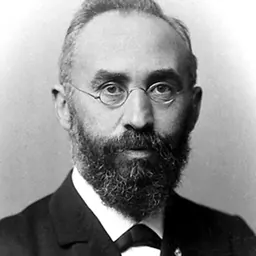
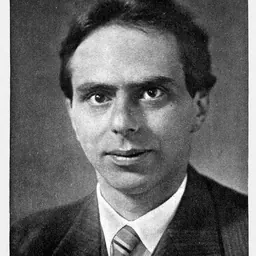

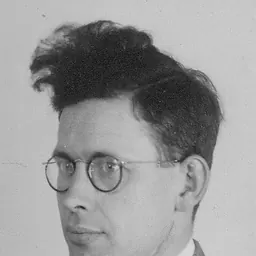
Related people
Same field, nearest in time

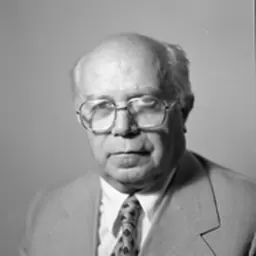

Contemporaries
People whose lives overlapped Jo Johannis Dronkers's






Frequently asked questions
Who was Jo Johannis Dronkers?
Ph.D. Universiteit Leiden 1939
When was Jo Johannis Dronkers born?
Jo Johannis Dronkers was born on 24 May 1910 in Poortvliet.
When did Jo Johannis Dronkers die?
Jo Johannis Dronkers died on 20 February 1973 in The Hague.
What was Jo Johannis Dronkers's occupation?
Jo Johannis Dronkers was a mathematician and hydrology technician.
What nationality was Jo Johannis Dronkers?
Jo Johannis Dronkers was Dutch.
Sources & further reading
· Wikipedia: Jo Johannis Dronkers
· DBpedia: Jo Johannis Dronkers
Cite this page
APA: Biography.guide. (2026). Jo Johannis Dronkers. https://biography.guide/jo-johannis-dronkers/
MLA: "Jo Johannis Dronkers." Biography.guide, https://biography.guide/jo-johannis-dronkers/.
Chicago: "Jo Johannis Dronkers." Biography.guide. https://biography.guide/jo-johannis-dronkers/.
Data last updated: 2026-09-20 · Spot an error? Report a correction.
Page generated 2026-09-27 05:09 UTC