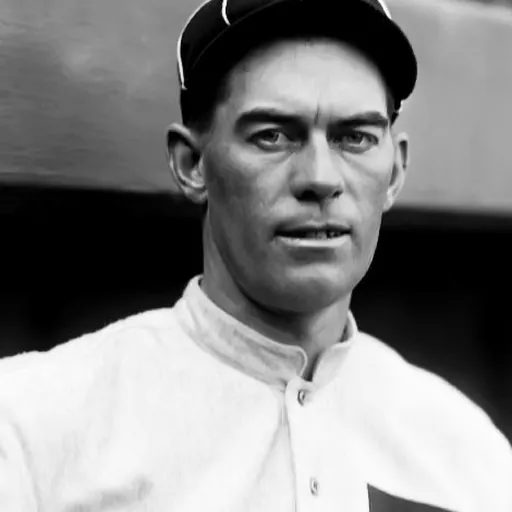
About Jimmy Lavender
Lived 1884 – 1960 (aged 75). Jimmy Lavender was an American baseball player.
James Sanford Lavender (March 25, 1884 – January 12, 1960) was an American professional baseball player who played in Major League Baseball as a pitcher from 1912 to 1917. He played a total of five seasons with the Chicago Cubs of the National League from 1912 to 1916; after being traded to the Philadelphia Phillies, he played an additional season in 1917. During his playing days, his height was listed at , his weight as , and he batted and threw right-handed. Born in Barnesville, Georgia, he began his professional baseball career in minor league baseball in 1906 at the age 22. He worked his way through the system over the next few seasons, culminating with a three-season stint with the Providence Grays of the Eastern League from 1909 to 1911.
Lavender primarily threw the spitball, and used it to win 16 games as a 28-year-old rookie in 1912. In July 1912, he defeated Rube Marquard, ending Marquard's consecutive win streak at 19 games, which at the time tied the record for the longest win streak for a pitcher in MLB history. Lavender's early success as a rookie soon turned to mediocrity as his career progressed, winning no more than 11 games in any season afterward. On August 31, 1915, he threw a no-hitter against the New York Giants.
He was traded to the Phillies before the 1917 season, and he played one season for the team, winning six games before retiring from major league baseball. Lavender returned to Georgia, worked on his farm in Montezuma, Georgia, and played professional baseball in an independent league. He died in Cartersville, Georgia at the age of 75.
Early life James Sanford Lavender was born on March 25, 1884 in Barnesville, Georgia into a wealthy family. He later attended Georgia Tech and studied mechanical engineering; he played a few games for his class' baseball team as well.
Minor league career In 1906, at the age of 22, he began his professional baseball career with the Cordele team in the class-D Georgia State League. The following season, he was promoted to the Danville Red Sox of the class-C Virginia League. With Danville, he had a 13–16 win–loss record in 307 innings pitched. From 1909 to 1911, he played with the Providence Grays of the class-A Eastern League for three seasons, winning a career-high 19 games in 1911. Charles Murphy, the Cubs' owner, drafted him with intent of then trading him to a Montreal minor league team as compensation for an earlier trade that brought Ward Miller to the Cubs.
Major league career
Chicago Cubs
1912–1913 seasons
Lavender made his MLB debut on April 23, 1912 as a relief pitcher in a 5–3 loss to the Pittsburgh Pirates. On June 28, versus the Pirates, he threw a one-hit shutout in a 3–0 win, and collected three hits as a hitter. On July 1, he shutout Pittsburgh once more, this time in a 12-inning, 1–0 victory. He threw his third consecutive complete game shutout on July 5, a 4–0 victory over the St. Louis Cardinals. Lavender took a 33-inning consecutive scoreless inning streak into his next start, a home game against the New York Giants and pitcher Rube Marquard. He gave up five hits and defeated the Giants 7–2, ending Marquard's consecutive win streak at 19 games, which at the time tied the record for the longest streak in baseball history. The loss appeared to affect Marquard for the remainder of the season, though he regained his form in the 1912 World Series. During the 1913 season, upon the ending of an 11-game winning streak by Washington Senators pitcher Joe Boehling, Marquard commented, "I know just how Boehling feels. I know how I felt after Lavender beat me in Chicago last year after I had won nineteen straight, and I can sympathize with the Washington youngster." Lavender would have continued success against the Giants throughout his career. Lavender started just one more game in 1912, a 3–2 victory on October 5 against St. Louis. Following the season, the Cubs played a series of exhibition games with the Chicago White Sox of the American League called the City Series. #tag:ref|The City Series was a series of exhibition games which began in 1903 with one game to determine a champion of Chicago. This series quickly grew into a series which ruled that the team who was first to four wins was declared the champion. He completed his rookie season with his career-high 16 victories, against 13 losses, and a 3.04 earned run average (ERA) in 251 innings pitched. After his successful rookie season, he was largely ineffective in the first half of 1913 season; so much so that manager Johnny Evers was contemplating putting Lavender on waivers if he had not regained his form from the previous season. Lavender showed signs of improvement, surrendering just three hits in a 12–2 victory over the Pittsburgh Pirates on June 30, followed by a 5–1 win over the Reds on July 3. He followed that with two consecutive strong games as the starting pitcher, allowing just one unearned run in each game; the second was a complete game against the Reds. The injury did not cause Lavender to lose much playing time. He pitched a four-inning relief appearance on June 19, followed by a complete-game shutout on June 27 against the Reds. At the time, the fine for such an infraction was a five-dollar fine. The Phillies players noticed that the pitcher was constantly scratching the side of his leg. They asked the umpire to search the pitcher. Lavender refused to be searched and ran into the outfield, and the umpire refused to chase Lavender. Eventually, a particularly fast Phillies player, Hans Lobert, was able to catch up with him and grab the offending item. He then missed time due to suffering a broken rib attempting to climb out of a bathtub. His next appearance was not until May 7, when he pitched two innings in relief. At the conclusion of the season, the Cubs played the Chicago White Sox of the American League in an exhibition series. Lavender pitched a shutout in game two, but the White Sox were declared victors after winning four games to the Cubs' one. His totals for the 1915 season included 41 games pitched, a 10–16 win–loss record, a career-low 2.58 ERA, and a career-high 117 strikeouts. In his next start, against the Giants on June 14, he allowed only an infield single to Benny Kauff. The New York Sun noted that Kauff's single was as a result of a ground ball that took a bad hop and bounced away from the fielder. Lavender continued to pitch well throughout the season, both starting and in relief, culminating with a complete-game shutout against Pittsburgh on September 9, his fourth shutout of the season. However, it was not official until April 2, 1917, with Chicago sending an additional $5,000 to complete the deal. He made his Philadelphia debut on April 27, pitching a complete-game victory against the Giants, allowing five hits and one run. Lavender faced his former club, the Cubs, for the first time on May 19, and pitched the last three innings for the victory. Philadelphia's asking price for his rights was $1,000, but they received no offers. Christy Mathewson, manager of the Reds, was reported to have had interest in Lavender, the pitcher's success against the Giants still fresh in Mathewson's mind. Though Philadelphia had a meeting with Cincinnati, Mathewson was unable to attend, and no trade discussions materialized. The San Francisco Seals of the Pacific Coast League expressed interest in Lavender, but he stressed that he was retired and that he would only consider a trade to Atlanta of the Southern Association so that he could be near his farm in Montezuma. In 1922, it was reported that he signed with Atlanta after playing well for an independent team in Dawson, Georgia.
Post-baseball life After his playing career ended, Lavender returned to Georgia and worked on his farm in Montezuma, Georgia. He died on January 12, 1960, at the age of 75, in Cartersville, Georgia, and is interred at Felton Cemetery in Montezuma.
Don’t just read it —
keep it.
Full-length biographies made to live with: read them, listen on the way to work, watch them tonight.
- E-book
- Audio
- Video
Instant download · yours to keep · every purchase keeps this site free
Important facts
People in Jimmy Lavender's life
Named in this biography and alive at the same time



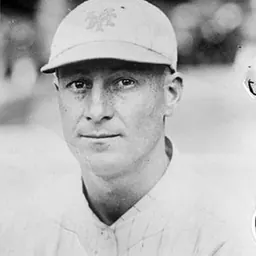
Related people
Same field, nearest in time

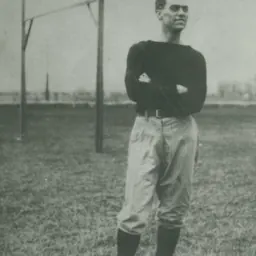

Contemporaries
People whose lives overlapped Jimmy Lavender's

Frequently asked questions
Who was Jimmy Lavender?
American baseball player
When was Jimmy Lavender born?
Jimmy Lavender was born on 26 May 1884 in Barnesville.
When did Jimmy Lavender die?
Jimmy Lavender died on 12 January 1960 in Cartersville.
What was Jimmy Lavender's occupation?
Jimmy Lavender was a baseball player.
What nationality was Jimmy Lavender?
Jimmy Lavender was American.
Sources & further reading
Cite this page
APA: Biography.guide. (2026). Jimmy Lavender. https://biography.guide/jimmy-lavender/
MLA: "Jimmy Lavender." Biography.guide, https://biography.guide/jimmy-lavender/.
Chicago: "Jimmy Lavender." Biography.guide. https://biography.guide/jimmy-lavender/.
Data last updated: 2026-09-21 · Spot an error? Report a correction.
Portrait: Wikimedia Commons · author & licence
Page generated 2026-09-27 04:59 UTC