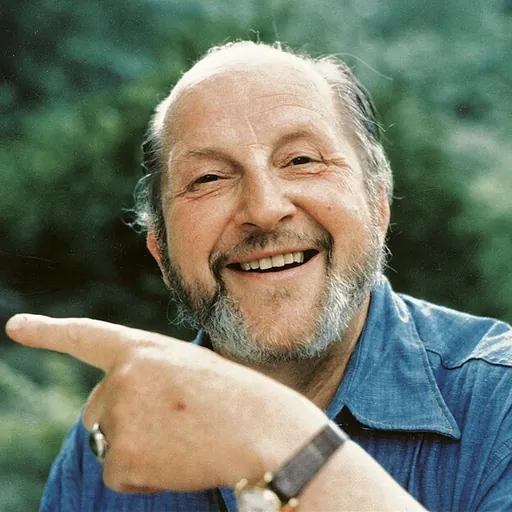
About Jijé
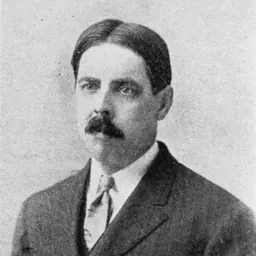
Lived 1914 – 1980 (aged 66). Jijé was a Belgian comics artist, illustrator, draftsperson, ceramicist, writer and painter.
Joseph Gillain , better known by his pen name Jijé (; 13 January 1914 – 19 June 1980) was a Belgian comics artist, best known for being a seminal artist on the Spirou et Fantasio strip (and for having introduced the Fantasio character) and the creator of one of the first major European western strips, Jerry Spring.
Biography Blondin, Cirage, Prof. Labarbousse and guest star "Marsupilami Africanis" in Les soucoupes volantes (1954) Born Joseph Gillain in Gedinne, Namur, he completed various art studies (woodcraft, goldsmithing, drawing and painting) at the abbey of Maredsous. In 1936, he created his first comics character, Jojo in the catholic newspaper Le Croisé. Jojo was strongly inspired by The Adventures of Tintin, but Jijé gradually developed his own style. Jijé also produced many illustrations for various Walloon magazines (Les Cahiers wallons).
In 1936, he began work on about ten frescoes painted in the transept, the vault, and the altar of the church in Corbion (Bouillon, Belgium). These later paintings echoed those painted in the rood screen in 1933 and naturally reflected the veneration of the church's patron saint. These frescoes have now disappeared, having been covered over in the early 1970s.
In 1938, he painted a three-by-three-meter canvas in the church of Corbion (Bouillon, Belgium), depicting thirty-five villagers listening to Saint John the Baptist preach on the banks of the Semois River. He portrays himself in the painting, palette in hand. This painting can still be seen in the church today.
In 1939, he started to work for the new Spirou magazine, where he would produce the largest part of his oeuvre and with whom he would remain associated with until the end of his life. Because the magazine could not receive foreign comic strip material during the war, as the main local artist, he drew most of the comics during that period. He took over the main series, Spirou, from the Frenchman Rob-Vel: he added the sidekick Fantasio to the lone hero Spirou in order to add some comic relief in the series. He then created his own series, Jean Valhardi, and drew episodes of the American series published during the war, like Red Ryder and Superman, when due to the war, the American pages could not reach the publisher. Together with Franquin, Jijé is considered to be the father of the Atom style,
But Jijé was also the first master of the Franco-Belgian realistic comic, with Jerry Spring. Both his drawing style and his writing was very influential and groundbreaking. Later students of Jijé, not really working in the Atom style or the School of Marcinelle, include Jean Giraud (aka Moebius), Jean-Claude Mézières and Guy Mouminoux. Artist Jean Giraud started working in the style of Jijé before developing his own style.
He is held in high esteem by many of his peers, both those he tutored like Franquin and Moebius, and others. Tibet, author of Ric Hochet and Chick Bill, and for the major part of his career working for rival Tintin magazine, has said that "If Hergé is considered as God the Father, then Jijé undoubtedly is the Godfather".
Awards 1975: Grand Prix Saint-Michel of the city of Brussels, Belgium 1976: Stripschapprijs, Netherlands 1977: Grand Prix de la ville d'Angoulême, France
Don’t just read it —
keep it.
Full-length biographies made to live with: read them, listen on the way to work, watch them tonight.
- E-book
- Audio
- Video
Instant download · yours to keep · every purchase keeps this site free
Important facts
People in Jijé's life
Named in this biography and alive at the same time


Related people
Same field, nearest in time



Contemporaries
People whose lives overlapped Jijé's




Frequently asked questions
Who was Jijé?
Belgian comic artist (1914–1980)
When was Jijé born?
Jijé was born on 13 January 1914 in Gedinne.
When did Jijé die?
Jijé died on 19 June 1980 in Versailles.
What was Jijé's occupation?
Jijé was a comics artist, illustrator, draftsperson, ceramicist, writer and painter.
What nationality was Jijé?
Jijé was Belgian.
Sources & further reading
Cite this page
APA: Biography.guide. (2026). Jijé. https://biography.guide/jije/
MLA: "Jijé." Biography.guide, https://biography.guide/jije/.
Chicago: "Jijé." Biography.guide. https://biography.guide/jije/.
Data last updated: 2026-09-22 · Spot an error? Report a correction.
Portrait: Wikimedia Commons · author & licence
Page generated 2026-09-27 05:03 UTC