
About Jeremy Bernstein
Lived 1929 – 2025 (aged 95). Jeremy Bernstein was an American physicist, writer, historian and essayist.
Jeremy Bernstein (December 31, 1929 – April 20, 2025) was an American theoretical physicist and popular science writer.
Early life Bernstein's parents, Philip S. Bernstein, a Reform rabbi, and Sophie Rubin Bernstein named him after the biblical Jeremiah, the subject of his father's masters thesis. Philip's parents were immigrants from Lithuania, while Sophie was of Russian-Jewish descent. The family moved from Rochester to New York City during World War II, when his father became head of all the Jewish chaplains in the armed forces.
Education and career Bernstein studied at Harvard University, receiving his bachelor's degree in 1951, his master's in 1953, and his Ph.D. in 1955. His thesis research, on electromagnetic properties of deuterium, was supervised by Julian Schwinger. As a theoretical physicist, he worked on elementary particle physics and cosmology. A summer spent in Los Alamos led to a position at the Institute for Advanced Study. In 1962 he became a faculty member at New York University, moving to become a professor of physics at Stevens Institute of Technology in 1967, a position that he continued to hold after retirement as professor emeritus. He has held adjunct or visiting positions at the Brookhaven National Laboratory, CERN, Oxford, the University of Islamabad, and the Ecole Polytechnique.
Bernstein was involved in Project Orion, investigating the potential for nuclear pulse propulsion for use in space travel. In 2025, before his death in April, he was the last living member of the senior personnel of the project.
Bernstein died on April 20, 2025, at the age of 95.
Popular writing Bernstein was a popular science writer and profiler of scientists. He was a staff writer for The New Yorker from 1961 to 1995, authoring scores of articles. He also wrote regularly for The Atlantic Monthly, the New York Review of Books, and Scientific American, among others. Bernstein's biographical profiles of physicists, including Robert Oppenheimer, Hans Bethe, Albert Einstein, John Stewart Bell and others, were able to draw on the experiences of personal acquaintance.
Books Analytical Engine – Computers Past, Present and Future, Random House, 1964 A Comprehensible World: On Modern Science and its Origin, Random House, 1967 Elementary Particles and Their Currents, Freeman, 1968 Einstein, Viking Press 1973, Penguin Books, 1976 Experiencing Science, Basic Books, 1978 Hans Bethe – Prophet of Energy, Basic Books, 1980 Science Observed – Essays Out of My Mind, Basic Books, 1982 Three Degrees Above Zero – Bell Labs in the Information Age, Scribners, 1984 Cosmological Constants – Papers in Modern Cosmology (with Gerald Feinberg), Columbia University Press, 1986 The Life it Brings – One Physicist's Beginnings, Ticknor and Field, Penguin, 1987 Kinetic Theory in the Expanding Universe, Cambridge University Press, 1988 Tenth Dimension: an Informal History of High Energy Physics, McGraw Hill, 1989 Quantum Profiles conversations with physicists John Stewart Bell and John Archibald Wheeler, (and Einstein's correspondence with Michele Besso), Princeton University Press, 1991 ; second edition: 2020 Cranks, Quarks and the Cosmos – Writings on Science, Basic Books, 1993 A Theory of Everything (Essays), Springer, 1996 Albert Einstein and the Frontiers of Physics, Oxford University Press, 1996 Hitler's Uranium Club – The Secret Recordings of Farm Hall (with David C. Cassidy), American Institute of Physics, 1996 Modern Physics (with Paul Fishbane, Stephen Gasiorowicz), Prentice Hall, 2000 The Merely Personal: Observations on Science and Scientists, Ivan Dee, 2001 Oppenheimer – Portrait of an Enigma, Ivan Dee, 2004 Secrets of the Old One: Albert Einstein 1905, Copernicus Books, 2006 Plutonium – a History of the World's Most Dangerous Element, Joseph Henry Press, 2007 A Physicist on Wall Street and Other Essays on Science and Society, Springer, 2008 Quantum Leaps, Belknap Press, 2009; 2011 pbk edition A Palette of Particles, Harvard University Press, 2013 Nuclear Weapons – What You Need to Know, Cambridge University Press, 2010 A Chorus of Bells and Other Scientific Inquiries, World Scientific, 2014 A Bouquet of Numbers and Other Scientific Offerings, World Scientific, 2016 A Bouquet of Dyson and Other Reflections on Science and Scientists, World Scientific, 2018
Media appearances To Mars by A-Bomb: The Secret History of Project Orion (BBC, 2003)
Don’t just read it —
keep it.
Full-length biographies made to live with: read them, listen on the way to work, watch them tonight.
- E-book
- Audio
- Video
Instant download · yours to keep · every purchase keeps this site free
Important facts
People in Jeremy Bernstein's life
Named in this biography and alive at the same time

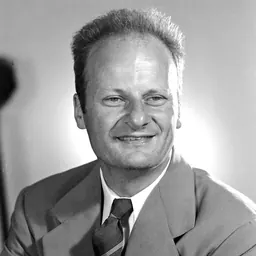


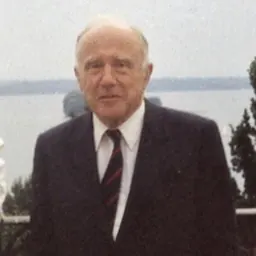


Related people
Same field, nearest in time
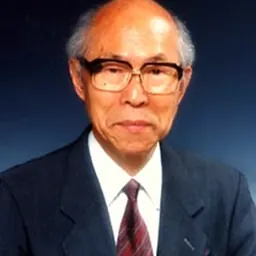


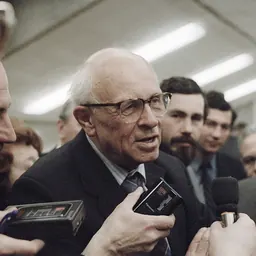
Contemporaries
People whose lives overlapped Jeremy Bernstein's




Frequently asked questions
Who was Jeremy Bernstein?
American physicist
When was Jeremy Bernstein born?
Jeremy Bernstein was born on 31 December 1929 in Rochester.
When did Jeremy Bernstein die?
Jeremy Bernstein died on 20 April 2025 in New York City.
What was Jeremy Bernstein's occupation?
Jeremy Bernstein was a physicist, writer, historian and essayist.
What nationality was Jeremy Bernstein?
Jeremy Bernstein was American.
Sources & further reading
Cite this page
APA: Biography.guide. (2026). Jeremy Bernstein. https://biography.guide/jeremy-bernstein/
MLA: "Jeremy Bernstein." Biography.guide, https://biography.guide/jeremy-bernstein/.
Chicago: "Jeremy Bernstein." Biography.guide. https://biography.guide/jeremy-bernstein/.
Data last updated: 2026-09-20 · Spot an error? Report a correction.
Page generated 2026-09-27 05:08 UTC