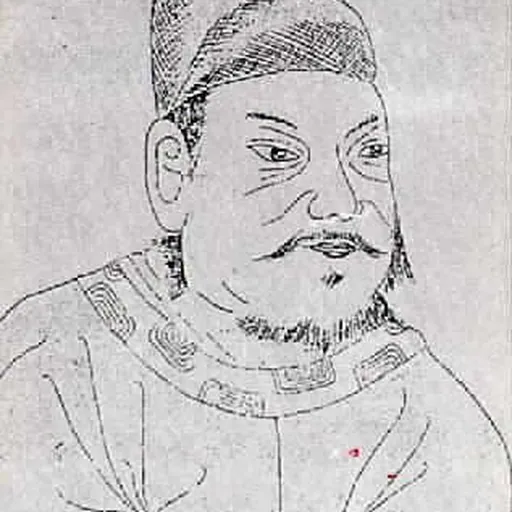
Jeongjo of Joseon
22nd King of Joseon (r. 1776–1800)
About Jeongjo of Joseon
Lived 1752 – 1800 (aged 47). Jeongjo of Joseon was a Korean king.
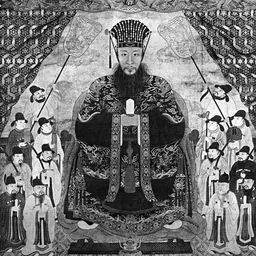
Jeongjo (; 28 October 1752 – 18 August 1800), personal name Yi San, sometimes known as Jeongjo the Great, was the 22nd monarch of Joseon. He was the second son of the ill-fated Crown Prince Sado and Lady Hyegyŏng, and ascended to the throne upon the death of his grandfather, King Yeongjo. Despite the persistence of factional struggles, his reign marked a cultural and political renaissance, and is considered one of the high points of the Joseon period. Today, he is generally regarded to be among the greatest leaders in Korean history. Following the establishment of the Korean Empire, he was honored as Emperor Seon.
Jeongjo continued his grandfather's Tangpyeong policy (but took on a different approach, prioritizing the recruitment of the most talented scholars regardless of faction), encouraged the publication of literary collections and legal codes, established the Jangyongyeong Guard and the Kyujanggak Royal Library, and ordered the construction of Hwaseong Fortress. However, his appointment of Hong Guk-yeong left behind the malpractice of having state affairs swayed by close retainers. Furthermore, just before his death, worried about his young heir, he chose the daughter of Kim Jo-sun of the Andong Kim clan as crown princess; yet this turned out to be a self-defeating move that tilted power to one side and became the backdrop for the era of sedo politics (; also known as "in-law politics").
Biography Early life He was the son of Crown Prince Sado and Lady Hyegyŏng (who wrote the Memoirs of Lady Hyegyŏng, which details her life and offers advice and explanations for her grandson about the deaths of his grandfather and many maternal relatives). His elder brother Crown Prince Uiso died in infancy. His mother Lady Hyegyŏng's collection of memoirs serves as a significant source of historical information on the political happenings during the reigns of King Yeongjo (her father-in-law), King Jeongjo (her son), and King Sunjo (her grandson).
In 1762, Crown Prince Sado was executed (by imprisonment in a rice chest) by King Yeongjo after long conflicts and Sado's years of mental illness. On 21 February 1764, Yi San became the adoptive son of Crown Prince Hyojang and Princess Consort Hyosun by the order of King Yeongjo. Crown Prince Hyojang was the elder half-brother of his father, Crown Prince Sado. Crown Prince Hyojang though, had died during his childhood. King Yeongjo made Yi San a part of Hyojang's family because he was concerned that Yi San, who was Sado's son and successor, would be opposed. The Noron faction protested Yi San's legitimacy as the royal successor under the claim that Yi San was the 'Son of a prisoner' or 'Son of a madman' and thus ineligible to succeed the throne. This was a major source of vexation for King Yeongjo for an extended period.
After 1762 to 1777, some members of Noron attempted to depose Jeongjo for his relation to Crown Prince Sado and open the path of succession for his half-brothers Prince Eunjeon, Prince Euneon and, Prince Eunshin. His grand uncle Hong In-han and Jeong Hu-gyeom, adopted son of Princess Hwawan, were amongst them.
When he was the Crown Prince, King Jeongjo met Hong Guk-yeong , a controversial politician who first strongly supported Jeongjo's accession and toiled to improve the king's power, but ended up being expelled because of his desire and ambition for power. Another helper was Kim Jong-su , despite being a member of Noron.
In 1775, one year before King Yeongjo's death, King Jeongjo was appointed regent. However, King Yeongjo did not give him any military power.
Reign Before Yeongjo died, Jeongjo had his coronation in Gyeonghuigung on 10 March 1776. After his coronation, Jeongjo chose his spouse. The first thing that Jeongjo said to his officials was that he was the son of Jangjo (temple name of Crown Prince Sado) who was executed by the former king.
Jeongjo tried to empathize with his people. During his second year of reign, a great drought came. During the drought, Jeongjo was nervous just like the people and did a rainmaking ritual for his people. He also was deeply concerned about the continuing outbreaks of measles epidemics, and among other things supplied free public medicines in an attempt curb the death rates.
Concerned about political factions, Jeongjo continued his grandfather's policy of (political harmony policy) in an attempt to balance political factions. By this, he tried to get rid of the parties which caused his father's death. He also moved the court to the city of Suwon to be closer to his father's grave. He built Hwaseong Fortress to guard the tomb. It is now a UNESCO World Heritage Site.
Jeongjo was always threatened by some of his officials who were against his reign. He was able to overcome these challenges with the help of Hong Guk-yeong and others. Jeongjo then established the new law of (free trade law), which allowed anyone to sell their goods at the market. This abolished the previous law of , which reserved this right exclusively to members of merchant groups in the capital.
Death In his final years, Jeongjo arranged for the marriage of his second son and successor Sunjo of Joseon to Lady Kim of the Andong clan, daughter of Kim Jo-sun, but did not live to see his son's marriage. In 1800, Jeongjo died suddenly under uncertain circumstances at the age of 47, without seeing much of his life's work come to fruition under his son, Sunjo. There are many books regarding the mystery behind his death, and speculation as to the cause of his death continues even today.
He is buried with his wife, Queen Hyoui, at the royal tomb of Geonneung in the city of Hwaseong.
On 7 December 1899, Jeongjo posthumously became Jeongjo Sanghwangjae.
Family
Biological father: King Jangjo (; 13 February 1735 – 12 July 1762) Grandfather: King Yeongjo (; 31 October 1694 – 22 April 1776) Portrayed by Bae Soo-bin in the 2008 SBS TV series Painter of the Wind. Portrayed by Han Myeong-goo in the 2008 film Portrait of a Beauty. Portrayed by Jo Sung-ha in the 2010 KBS2 TV series Sungkyunkwan Scandal. Portrayed by Hong Jong-hyun in the 2011 SBS TV series Warrior Baek Dong-soo. Portrayed by Hyun Bin and Goo Seung-hyun in the 2014 film The Fatal Encounter. Portrayed by Lee Je-hoon, Kim Woo-suk, and Kim Dan-yool in the 2014 SBS TV series Secret Door. Portrayed by Go Woo-rim in the 2015 KBS2 drama special Crimson Moon. Portrayed by So Ji-sub and Lee Hyo-je in the 2015 film The Throne. Portrayed by Lee Jun-ho and Lee Joo-won in the 2021 MBC TV series The Red Sleeve.
Don’t just read it —
keep it.
Full-length biographies made to live with: read them, listen on the way to work, watch them tonight.
- E-book
- Audio
- Video
Instant download · yours to keep · every purchase keeps this site free
Important facts
more
ho Hongje, Yi Hongjae, Chongjo roi de Corée, Yi Chongjo, Jungjo, king of Korea Chongjo, Hong-jae Yi, Chongjo Taewang, Yi Song, cha Hyŏngun, Chongjo roi de Coree, god of korea, Li Suan, King Jeongjo, Yi SanFamily & relationships
People in Jeongjo of Joseon's life
Named in this biography and alive at the same time




Related people
Same field, nearest in time
Contemporaries
People whose lives overlapped Jeongjo of Joseon's



Frequently asked questions
Who was Jeongjo of Joseon?
22nd King of Joseon (r. 1776–1800)
When was Jeongjo of Joseon born?
Jeongjo of Joseon was born on 22 September 1752 in Changgyeonggung.
When did Jeongjo of Joseon die?
Jeongjo of Joseon died on 28 June 1800 in Changgyeonggung.
What was Jeongjo of Joseon's occupation?
Jeongjo of Joseon was a king.
What nationality was Jeongjo of Joseon?
Jeongjo of Joseon was Korean.
Sources & further reading
· Wikipedia: Jeongjo of Joseon
Cite this page
APA: Biography.guide. (2026). Jeongjo of Joseon. https://biography.guide/jeongjo-of-joseon/
MLA: "Jeongjo of Joseon." Biography.guide, https://biography.guide/jeongjo-of-joseon/.
Chicago: "Jeongjo of Joseon." Biography.guide. https://biography.guide/jeongjo-of-joseon/.
Data last updated: 2026-09-30 · Spot an error? Report a correction.
Portrait: Wikimedia Commons · author & licence
Page generated 2026-10-04 14:26 UTC