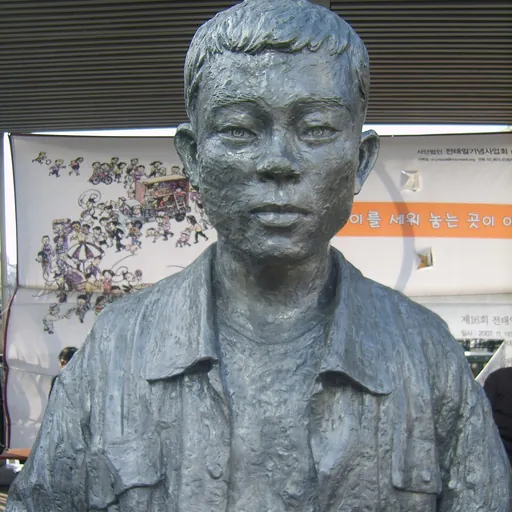
Jeon Tae-il
Korean trade unionist and human right activist
About Jeon Tae-il
Lived 1948 – 1970 (aged 22). Jeon Tae-il was a South Korean human rights defender, trade unionist, politician and textile worker.
Jeon Tae-il (; 28 September 1948 – 13 November 1970) was a South Korean sewing worker and workers' rights activist who committed suicide by self-immolation at the age of 22 in protest of the poor working conditions of South Korean factories during the Third Republic era. His death brought attention to the country's substandard labor conditions and advanced the formation of a labor union movement in South Korea.
Early life Jeon Tae-il was born on 28 September 1948. He was the son of Jeon Sang-soo, a poor sewing worker from Namsan-dong, Daegu, and his wife, Lee So-sun. At one time, his father tried his hand at the domestic water industry, but failed repeatedly. His maternal grandfather was killed by a Japanese police officer on charges of joining the anti-Japanese independence movement. In 1954, he and his family members moved to Seoul, but were homeless under the Yeomcheon Bridge near Seoul Station. Jeon's mother begged in Manni-dong while his father worked, together making enough for the family to live in a monthly rental room.
However, the family returned to Daegu in 1960. Jeon did not finish elementary school and had an underprivileged childhood with little formal education; he began peddling on the street to survive. In March 1963, he entered Cheong-ok High School in Daegu, but his father forced him to drop out to do sewing work at home. Frustrated that he could not attend school, he ran away from home but returned within three days. His father repeatedly kicked and beat him afterwards.
In 1968, Jeon became aware of the Labor Standards Act which protected workers' human rights. Doctors told Jeon's mother that the injection to relieve her son's burns would cost 15,000 won, but she replied that she could not pay that amount. At around 4 pm, Jeon was taken away by ambulance and sent to the emergency room of St. Mary's Hospital in Seoul, where he died at 10 pm on 13 November.
The boss of a company in the Peace Market said he was worried about being investigated because of Jeon's death. The boss later said, "If Jeon Tae-il had worked at our factory, it would have been a really big problem." Some workers were cynical about Jeon's death, commenting that it "would not make any changes to workers' rights". At that time, some workers who did not receive a proper education did not care about Jeon's death.
Jeon's death had a large social impact. On 16 November, more than 100 law students at Seoul National University claimed to have received his body and performed a funeral. Nationally, more than 400 students began indefinite fasting protests. On 20 November, students from universities such as Seoul National University, Sungkyunkwan University, and Ewha Women's University gathered at Seoul National University Law School to hold a memorial ceremony for Jeon, as well as a protest. Korea University and Yonsei University students also participated in the rally. After the protests, Seoul National University issued an indefinite suspension of operations, but Seoul National University students continued to engage in vigils.
On 22 November, about 40 university students at Saemoonan Church held a fasting prayer for the Atonement, saying that society was responsible for the death of Jeon and that they are also co-conspirators. On 23 November, Protestant and Catholic Christians jointly held a memorial service for Jeon.
Kim Dae-jung, a presidential candidate of the New Democratic Party, pledged at a press conference on 23 January 1971 that as president he would "implement the spirit of Jeon Tae-il".
In April 2012, his younger sister Jeon Soon-ok was elected to the National Assembly as a member of the Democratic United Party.
Legacy and memorials
Jeon's death mobilized and motivated workers to take up the struggle of workers' rights, and this eventually led to the creation of labor unions in South Korea. His death also became a catalyst for uniting many university students, some religious officials, and the news media, which continuously silenced their support for the cause of the workers.
The biographic film A Single Spark details Jeon's struggle. A bestselling biography of him was published in 2001.
In 1984, the Jeon Tae-il Commemorative Project was organized in Seoul, centered around labor activists. In 1985, the Jeon Tae-il Memorial Hall was opened. Afterwards, the Jeon Tae-il Foundation was organized to start awarding the Jeon Tae-il Literary Award and the Jeon Tae-il Labor Award.
After the June Struggle in 1987, labor groups gathered and held workers' meetings from July to August of that year. On 15 July, the 1987 Declaration of the Liberation of the Working Class was held in reference to Jeon's commentary.
In November 1988, a national workers' meeting was held in Seoul to commemorate Jeon's self-immolation, and it has been held every November since.
In 2001, Jeon was recognized by the government as a member of the democratization movement. On 19 September 1996, Jeon Tae-il Street was created in Euljiro 6-ga, Jung District, Seoul. In commemoration of this, a memorial performance was held in front of a painting containing the image of Jeon's self-immolation.
On 14 October 2020, "Jeon Tae-il Memorial Month" was proclaimed at a ceremony on Jeon Tae-il Bridge in Jongno District, Seoul, held about a month ahead of the 50th anniversary of Jeon's death. During the ceremony, digital media artist Hooranky Bae unveiled a digital artwork with a motif of Jeon Tae-il, alongside the Jeon Tae-il 50th Anniversary Event Committee. In an interview with Yonhap News, Bae said: "[Jeon] left a great impression. He's a martyr who went beyond human limits."
On 12 November 2020, the South Korean government honored the 50th anniversary of Jeon Tae-il's death, commemorating his sacrifice and expressing its commitment toward a labor-respecting society by posthumously awarding the Mugungwha Medal of the Order of Civil Merit for the first time in the category of labor.
In the 2021 South Korean animated film Chun Tae-il: A Flame That Lives On, directed by Byun Young-kyu and Hong Jun-pyo, Jeon Tae-il is portrayed by Jang Dong-yoon. The film won both the Annecy International Animation Film Festival and Fantasia International Film Festival.
In popular culture Jeon's statue was prominently featured in the 2025 MBC supernatural action-comedy Oh My Ghost Clients as a poignant symbol that bridged the drama’s supernatural themes with the real-world labour struggles in South Korea. In a key moment, the protagonist a labour rights lawyer leaves a business card at the foot of the statue, symbolically reaching out to the spirit world while also acknowledging the historical sacrifices made in the fight for labour justice. While not explicitly named so in the series, the character "Bo Sal" (played by Tang Jun-sang) is based on Jeon.
Don’t just read it —
keep it.
Full-length biographies made to live with: read them, listen on the way to work, watch them tonight.
- E-book
- Audio
- Video
Instant download · yours to keep · every purchase keeps this site free
Important facts
People in Jeon Tae-il's life
Named in this biography and alive at the same time


Related people
Same field, nearest in time
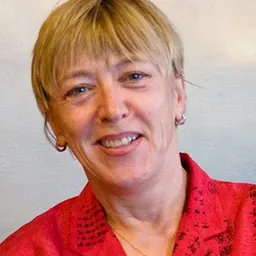
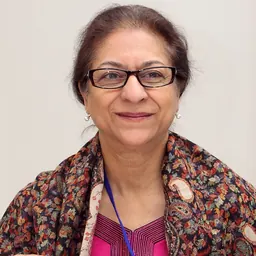
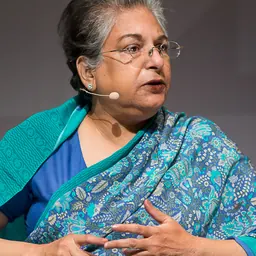

Contemporaries
People whose lives overlapped Jeon Tae-il's


Frequently asked questions
Who was Jeon Tae-il?
Korean trade unionist and human right activist (1948–1970)
When was Jeon Tae-il born?
Jeon Tae-il was born on 26 August 1948 in Daegu.
When did Jeon Tae-il die?
Jeon Tae-il died on 13 November 1970 in Dongdaemun District.
What was Jeon Tae-il's occupation?
Jeon Tae-il was a human rights defender, trade unionist, politician and textile worker.
What nationality was Jeon Tae-il?
Jeon Tae-il was South Korean.
Sources & further reading
Cite this page
APA: Biography.guide. (2026). Jeon Tae-il. https://biography.guide/jeon-tae-il/
MLA: "Jeon Tae-il." Biography.guide, https://biography.guide/jeon-tae-il/.
Chicago: "Jeon Tae-il." Biography.guide. https://biography.guide/jeon-tae-il/.
Data last updated: 2026-09-23 · Spot an error? Report a correction.
Portrait: Wikimedia Commons · author & licence
Page generated 2026-09-27 05:07 UTC