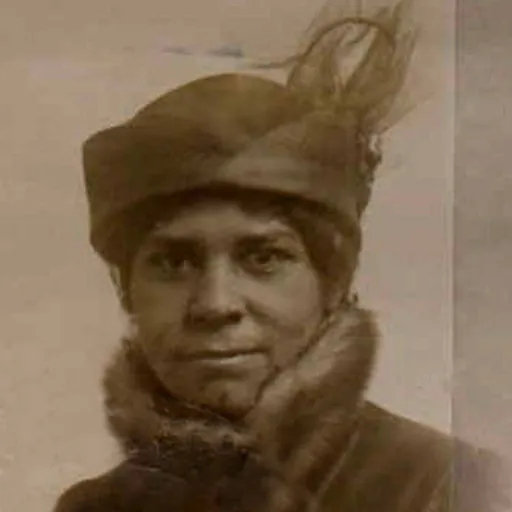
About Jennie B. Moton
Lived 1879 – 1942 (aged 63). Jennie B. Moton was an American educator, official and suffragist, known for Woman's club movement.
Jennie B. Moton (1879-1942) was an American educator and clubwoman. As a special field agent for the Agricultural Adjustment Administration (AAA) in the 1930s and 40s, she worked to improve the lives of rural African Americans in the South. She directed the department of Women's Industries at the Tuskegee Institute, presided over the Tuskegee Woman's Club, and was a two-term president of the National Association of Colored Women (NACW).
In 1941, she was one of several influential Black leaders who helped persuade President Franklin D. Roosevelt to sign Executive Order 8802.
Early life and education
Jennie Dee Booth was one of twelve siblings born to Robert and Ellen Booth. Her father was a farmer and oysterer ; both of her parents were multiracial. She graduated from the Hampton Institute in Virginia in 1900.
Career Jennie B. Moton, from the 1929 yearbook of Tuskegee Institute After graduating from college, she taught for eight years at the Hampton Institute's Whittier Training School, where students practiced pedagogy.
Tuskegee Institute
She married Robert Russa Moton on July 1, 1908; the couple had five children, including Charlotte Moton Hubbard (born in 1911) who went on to become the first Black woman to serve as deputy assistant secretary of state in the United States.
In 1920, Moton was one of the speakers at a conference of the Commission on Interracial Cooperation in Memphis, Tennessee, along with Washington, Elizabeth Ross Haynes, and Charlotte Hawkins Brown. Lugenia Burns Hope also contributed to the drafts. Addressing a white audience, the women offered their perspective on topics such as child welfare, suffrage, education, protection of Black girls, and the eradication of lynching. In 1924, Moton was elected to the executive board of the Southern Interracial Committee.
Women's club movement
Moton served as president of the Alabama Association of Women's Clubs (AAWC) from 1929 to 1936. Under her leadership, the AAWC organized charitable fundraisers, voter registration drives, youth programs, a war bond program, and efforts to combat tuberculosis. She hosted the AAWC's 1934 conference at the Tuskegee Institute; noted educator and activist Nannie Helen Burroughs was among the speakers. Moton served for a time as chairperson of the Board of Trustees for the Nannie Helen Burroughs Training School for Women and Girls.
Moton succeeded Mary Fitzbutler Waring as the 11th president of the NACWC in 1937. While serving as president, Moton met Mary McLeod Bethune, former 8th president of the NACWC who, as a member of Franklin D. Roosevelt's "Black Cabinet," had the ear of the president. In 1941, Moton, Bethune, and A. Philip Randolph helped persuade Roosevelt to sign Executive Order 8802, which prohibited discrimination in the defense industries based on "race, creed, color or national origin." A few weeks later, Bethune was one of the speakers at the NACWC biennial conference in Oklahoma City, along with educator, activist, and 7th NACWC President Hallie Q. Brown.
Government service
From 1936 to 1942 she worked for the Agricultural Adjustment Administration (AAA), a federal agency that paid farmers to reduce their production of cotton and tobacco. She was one of three Black special field agents appointed by Cully Cobb to travel the deep South, keeping home agents apprised of program guidelines and getting Black farmers interested in the program. In 1933, the Agricultural Adjustment Act had had the unintended effect of displacing thousands of tenant farmers and sharecroppers in the South without any compensation; it was later ruled unconstitutional, and the law was replaced with the Soil Conservation and Domestic Allotment Act of 1936. Moton's special task was "to contact Negro farm women in the Southern region in order to get their viewpoint" on the program as well as providing them with information. She often met up with women at women's clubs and at Sunday church services.
Later years
Moton remained active in community affairs until the end of her life. During her final years she served as a member of the Margaret Murray Washington Memorial Foundation, and in 1942 was appointed a home nursing consultant for the National Red Cross. She was also a race relations advisor for the U.S. Division of Physical Fitness in Philadelphia.
Moton died in Hampton, Virginia, on December 23, 1942. She was buried alongside her husband on the grounds of the Hampton Institute.
Honors and awards Honorary Master of Arts degree, Bennett College, 1931 Hall of Fame, Montgomery Federation of Women, 1941
Don’t just read it —
keep it.
Full-length biographies made to live with: read them, listen on the way to work, watch them tonight.
- E-book
- Audio
- Video
Instant download · yours to keep · every purchase keeps this site free
Important facts
Family & relationships
People in Jennie B. Moton's life
Named in this biography and alive at the same time

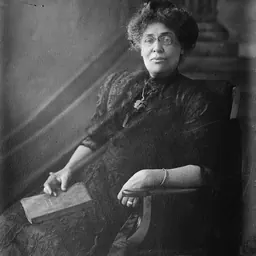

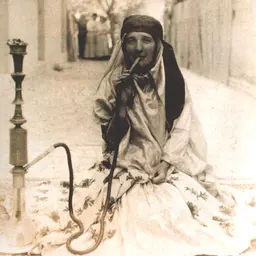

Related people
Same field, nearest in time

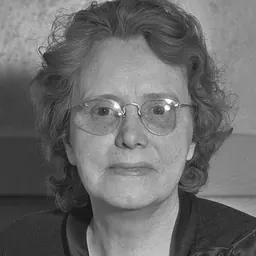


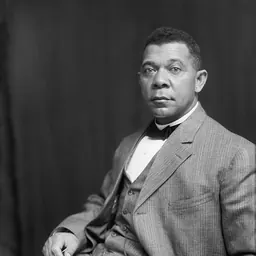
Contemporaries
People whose lives overlapped Jennie B. Moton's


Frequently asked questions
Who was Jennie B. Moton?
educator and clubwoman
When was Jennie B. Moton born?
Jennie B. Moton was born on 24 February 1879 in Roanes.
When did Jennie B. Moton die?
Jennie B. Moton died on 23 December 1942 in Hampton.
What was Jennie B. Moton's occupation?
Jennie B. Moton was an educator, official and suffragist.
What was Jennie B. Moton known for?
Jennie B. Moton was known for Woman's club movement.
What nationality was Jennie B. Moton?
Jennie B. Moton was American.
Sources & further reading
Cite this page
APA: Biography.guide. (2026). Jennie B. Moton. https://biography.guide/jennie-b-moton/
MLA: "Jennie B. Moton." Biography.guide, https://biography.guide/jennie-b-moton/.
Chicago: "Jennie B. Moton." Biography.guide. https://biography.guide/jennie-b-moton/.
Data last updated: 2026-09-23 · Spot an error? Report a correction.
Portrait: Wikimedia Commons · author & licence
Page generated 2026-09-27 05:06 UTC