
About Nannie Helen Burroughs
Lived 1879 – 1961 (aged 82). Nannie Helen Burroughs was an American women's rights activist, educator, suffragist, religious leader, civil rights advocate and clubwoman, known for National Training School for Women and Girls.
Nannie Helen Burroughs (May 2, 1879 – May 20, 1961) was an educator, orator, religious leader, civil rights activist, feminist, and businesswoman in the United States. Her speech "How the Sisters Are Hindered from Helping," at the 1900 National Baptist Convention in Virginia, instantly won her fame and recognition. In 1909, she founded the National Training School for Women and Girls in Washington, DC. Burroughs' objective was at the point of intersection between race and gender.
She fought both for equal rights as well as opportunities for women beyond the duties of domestic housework. Constructed in 1927–1928, its Trades Hall has a National Historic Landmark designation.
In 1913, Nannie H. Burroughs became one of the first four Honorary Members of Delta Sigma Theta sorority. The other three were Mary Church Terrell, Coralie Franklin Cook and Gabrielle L. Pelham, mother of Dorothy Pelham Beckley.
Early life and education Nannie H. Burroughs born on May 2, 1879, in Orange, Virginia. She is considered to be the eldest of the daughters of John and Jennie Burroughs. Around the time she was five years old, Nannie's youngest sisters died and her father, who was a farmer and Baptist preacher, died a few years later. John and Jennie Burroughs had both formerly been enslaved.
Nannie's parents had skills and capacities that enabled them to start toward prosperity by the time the war ended and freed them. She had a grandfather known as Lija the carpenter, during the slave era, who was capable of buying his way out to freedom.
By 1883, Burroughs and her mother relocated to D.C. and stayed with Cordelia Mercer, Nannie Burroughs' aunt and older sister of Jennie Burroughs. In D.C., there were better opportunities for employment and education. Burroughs attended M Street High School. It was here she organized the Harriet Beecher Stowe Literary Society, and studied business and domestic science. There she met her role models Anna J. Cooper and Mary Church Terrell, who were active in the suffrage movement and civil rights.
Upon graduating from M Street High School with honors in 1896, Burroughs sought work as a domestic-science teacher in the District of Columbia Public Schools, but was unable to find a position. Though it is not documented that she was explicitly told, Burroughs was refused the position with the implication that her skin was too dark — they preferred lighter-complexioned black teachers. Her skin color and social status had thwarted her for the appointment she was chosen for. Burroughs said that "the die was cast [to] beat and ignore both until death." This zeal opened a door to the profession for low-income and social status black women. This is what led Burroughs to establish a training school for women and girls.
Career Nannie Burroughs holding the Woman's National Baptist Convention banner. From 1898 to 1909, Burroughs was employed in Louisville, Kentucky, as an editorial secretary and bookkeeper of the Foreign Mission Board of the National Baptist Convention. In her time in Louisville, the Women's Industrial Club had formed. Here they held domestic science and management courses. One of the founders of the Women's Convention was Nannie Burroughs, providing additional help to the National Baptist Convention and serving from 1900 to 1947: nearly half a century. She was president for 13 years in the Women's Convention. Burroughs' also actively participated in the National Association for the Advancement of Colored People (NAACP). Burroughs spoke at the Virginia Women's Missionary Union at Richmond with the address "How White and Colored Women Can Cooperate in Building a Christian Civilization." in 1933
Burroughs was also a published playwright. In the 1920s, she wrote The Slabtown District Convention and Where is My Wandering Boy Tonight?, both one-act plays for amateur church theatrical groups. The popularity of the comedic, satiric Slabtown necessitated multiple printings through the succeeding century, although sometimes the wording is updated as needed by successive productions.
Training school and racial uplift Burroughs opened the National Training School in 1908. In the first few years of being open, the school provided evening classes for women who had no other means for education. The classes were taught by Burroughs herself. There were 31 students who regularly attended her classes, however, after time, and due to the high level of teaching, the school began attracting more students. The school was founded in a small farmhouse that eventually attracted women from all over the nation. Many disagreed with Burroughs teaching women skills that did not directly apply to domestic housework. Nonetheless, students continued coming and the school carried on.
Death and legacy
She died on May 20, 1961, after an extraordinarily fruitful life dedicated to the advancement of women and girls through the National Trade and Professional School, the Women's Convention of the National Baptist Convention, and other organizations and roles. She was buried at the Nineteenth Street Baptist Church where she was a member.
Three years after her death the institution was renamed the Nannie Burroughs School and has remained that way since. Even though more than 50 years has passed since her death, her history and legacy continue to motivate modern African-American women. The Manuscript Division in The Library of Congress holds 110,000 items in her papers. 1907, she received an honorary M.A. from Eckstein Norton University, a historically black college in Cane Spring, Bullitt County, Kentucky. (It merged with Simpson University in 1912.) Burroughs' image was included in the 1945 painting Women Builders by William H. Johnson as part of his Fighters for Freedom series. In 1964, the school that Burroughs had founded in 1909 as the National Training School for Women and Girls in Washington, DC, was renamed the Nannie Helen Burroughs School in her honor. Its Trades Hall has been designated as a National Historic Landmark. In 1975, Mayor Walter E. Washington declared May 10 Nannie Helen Burroughs Day. Nannie Helen Burroughs Avenue NE, formerly Deane Avenue and Grant Streets, in the Deanwood neighborhood of Washington, DC, is named for her. In 1997 the National Women's History Project honored Burroughs during Women's History Month.
Don’t just read it —
keep it.
Full-length biographies made to live with: read them, listen on the way to work, watch them tonight.
- E-book
- Audio
- Video
Instant download · yours to keep · every purchase keeps this site free
Important facts
People in Nannie Helen Burroughs's life
Named in this biography and alive at the same time


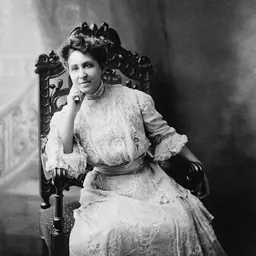

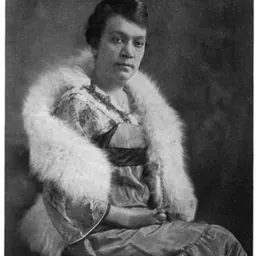
Related people
Same field, nearest in time



Contemporaries
People whose lives overlapped Nannie Helen Burroughs's


Frequently asked questions
Who was Nannie Helen Burroughs?
American activist (1879–1961)
When was Nannie Helen Burroughs born?
Nannie Helen Burroughs was born on 2 May 1879 in Orange.
When did Nannie Helen Burroughs die?
Nannie Helen Burroughs died on 20 May 1961 in Washington, D.C..
What was Nannie Helen Burroughs's occupation?
Nannie Helen Burroughs was a women's rights activist, educator, suffragist, religious leader, civil rights advocate and clubwoman.
What was Nannie Helen Burroughs known for?
Nannie Helen Burroughs was known for National Training School for Women and Girls.
What nationality was Nannie Helen Burroughs?
Nannie Helen Burroughs was American.
Sources & further reading
· Wikipedia: Nannie Helen Burroughs
· DBpedia: Nannie Helen Burroughs
Cite this page
APA: Biography.guide. (2026). Nannie Helen Burroughs. https://biography.guide/nannie-helen-burroughs/
MLA: "Nannie Helen Burroughs." Biography.guide, https://biography.guide/nannie-helen-burroughs/.
Chicago: "Nannie Helen Burroughs." Biography.guide. https://biography.guide/nannie-helen-burroughs/.
Data last updated: 2026-09-20 · Spot an error? Report a correction.
Page generated 2026-09-27 05:27 UTC