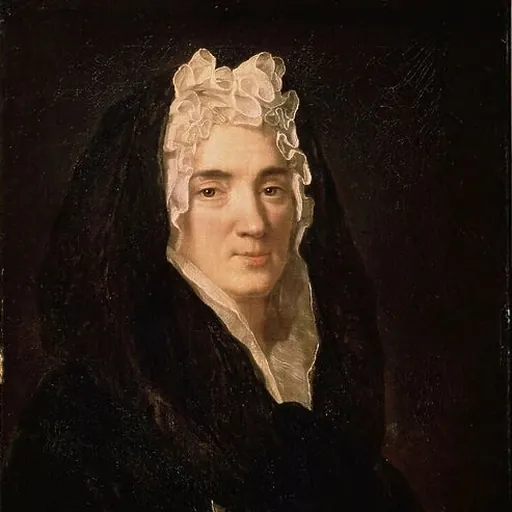
Jeanne-Marie Bouvier de La Motte Guyon
French Roman Catholic mystic
About Jeanne-Marie Bouvier de La Motte Guyon
Lived 1648 – 1717 (aged 69). Jeanne-Marie Bouvier de La Motte Guyon was a French autobiographer, writer, mystic and philosopher.
Jeanne-Marie Bouvier de La Motte Guyon (commonly Madame Guyon; 13 April 1648 – 9 June 1717) was a French mystic, spiritual writer, and lay teacher of prayer whose writings on inward prayer, abandonment to God, and pure love became one of the central subjects of the late seventeenth-century Quietist controversy in France. Her works, especially Moyen court et très facile de faire oraison and her biblical commentaries, circulated widely in manuscript and print. They influenced François Fénelon, archbishop of Cambrai, but drew the opposition of Jacques-Bénigne Bossuet, Louis Antoine de Noailles, and other French ecclesiastical authorities.
Guyon was never formally condemned as a heretic by name, but her writings and teachings stood behind the Articles of Issy in 1695, and her Moyen court was placed on the Index Librorum Prohibitorum in 1689. She was imprisoned several times, including in the Bastille, and spent her later years at Blois. Although her teaching remained suspect in Catholic France, her writings were widely read in Protestant circles, especially among Pietists, Quakers, Methodists, Holiness writers, and other traditions of inward religion.
Guyon’s spirituality also belonged to a wider transnational literature of interior prayer that included earlier Spanish and New Spanish contemplatives. Among the figures read by Guyon’s circle was Gregorio López, the Spanish hermit of New Spain, whose radically simplified prayer and reputation as a modern Desert Father helped shape later Catholic and Protestant traditions of inward devotion.
Life
Early life
Jeanne-Marie Bouvier de La Motte was born at Montargis, south of Paris, into a prosperous family of the French provincial bourgeoisie. Her father, Claude Bouvier de La Motte, belonged to the local legal and administrative élite. Her childhood alternated between family life and periods of education in convents, including houses of the Ursulines and the Benedictines. Guyon later described herself as a child drawn both to piety and to vanity, and her autobiography presents her early life as a series of unstable movements between religious aspiration, family pressure, illness, and ordinary social ambition.
Her later self-presentation belongs to the genre of early modern spiritual autobiography. It does not simply record events, but interprets them as stages in an interior education by God. Modern scholars therefore use the autobiography cautiously, treating it both as an important historical source and as a theological narrative shaped by conventions of mystical self-writing.
Marriage and widowhood
In 1664, at the age of fifteen, Jeanne-Marie married Jacques Guyon, a wealthy man considerably older than herself. The marriage brought her into a socially prominent household, but it was unhappy. Guyon later portrayed these years as marked by domestic constraint, the hostility of relatives, physical illness, and the death of children. Five children were born of the marriage, though not all survived childhood.
Her first major works appeared in this period. Moyen court et très facile de faire oraison was published in 1685 and set forth her practical teaching on inward prayer. In the same year she also published a commentary on the Song of Songs, a biblical book that became central to her account of the soul’s purification and union with God.
McGinn argues that Fénelon’s defence of Guyon was not primarily a simple defence of her person, but a defence of the mystical element in Christianity against what Fénelon regarded as Bossuet’s narrowed and anti-mystical interpretation of tradition.
The Issy conferences and imprisonment
The growing controversy led to the conferences at Issy in 1694–1695. The chief examiners were Bossuet, Noailles, and Louis Tronson; Fénelon participated from a distance and later more directly. The result was the Articles of Issy, signed on 10 March 1695. The articles did not name Guyon, but they were intended to set boundaries against teachings associated with her circle. They affirmed the legitimacy of certain forms of mystical prayer, including the prayer of simple presence and passive prayer, but insisted on the continuing necessity of faith, hope, charity, vocal prayer, moral effort, obedience, and ecclesiastical judgment.
Later life
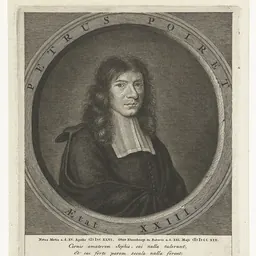
After her release from the Bastille, Guyon lived under restriction, eventually settling at Blois. She continued to write and to correspond with disciples, including Protestant admirers. Her later years were quieter, but her works continued to circulate in manuscript and in editions prepared by followers, especially the Dutch Reformed mystic and editor Pierre Poiret. Guyon died at Blois on 9 June 1717.
Her best-known short work is Moyen court et très facile de faire oraison (A Short and Easy Method of Prayer), first published in 1685. It teaches a simple inward prayer of faith, recollection, and abandonment. The soul is instructed to turn inward, gently return to God when distracted, and allow divine action to operate beyond discursive effort. The work’s accessibility helped make it influential, but also contributed to its suspicion among Catholic authorities. It was condemned in 1689.
Les Torrents spirituels develops Guyon’s teaching on the soul’s passage through purification, loss, abandonment, and transformation in God. Its imagery of torrents, rivers, and the sea presents the soul as drawn beyond self-possession into the divine will. This work became especially important for later readers who interpreted Guyon as a teacher of total surrender and inward transformation.
Among the seventeenth-century writers cited in the Justifications was the French Capuchin mystical theologian Pierre de Poitiers, author of Le Jour mystique (1671), whom Dominique Tronc describes as having been “particularly appreciated” by Guyon. Guyon drew on Pierre de Poitiers especially on themes such as naked faith (foi nue), quietude, distractions in prayer, interior nudity, union with God, and conformity to the divine will.
Her autobiography, written in stages, became one of the principal sources both for her admirers and for her enemies. Bossuet used it in his later polemics to portray her as deluded, proud, and dangerous; modern scholars have treated it more cautiously, as a spiritual autobiography shaped by the conventions of early modern mystical self-writing.
Guyon’s teaching also shows continuity with seventeenth-century French contemplative traditions preceding the Quietist controversy. In her Justifications, she repeatedly cites Pierre de Poitiers’s Le Jour mystique, especially its discussions of inward recollection, passive prayer, and the distinction between disturbance in the lower faculties and repose in the will united to God. The passages selected by Guyon from his treatise evoke the “centre” or “ground” of the soul beyond images and mutability.
Guyon’s teaching on simple inward prayer also stood within a broader current of early modern contemplative literature that sought to reduce prayer to loving attention, recollection, and abandonment to the divine will. Dominique and Murielle Tronc identify Gregorio López, together with the Carmelite José de Jesús María Quiroga, as among the earlier Spanish mystical writers read by Guyon and her circle before the later controversies surrounding Miguel de Molinos.
Passivity, action, and virtue
Guyon’s critics accused her of teaching a passivity that suppressed human cooperation, moral effort, prayer, and the practice of virtue. McGinn’s analysis distinguishes several issues often conflated in the polemics: passive contemplation, the prayer of quiet, the one act, abandonment, holy indifference, and the relation between direct and reflex acts. Guyon’s language sometimes appeared to minimize explicit acts of virtue, petition, and reflection. Fénelon attempted to defend a more qualified position, insisting that the advanced soul remains free, meritorious, obedient, and capable of distinct acts of virtue, even when these acts are suffused by simple love.
Bossuet’s Instruction sur les états d’oraison and his later Relation sur le quiétisme attacked the teachings associated with Guyon, François La Combe, François Malaval, Miguel de Molinos, and Fénelon. He charged the new mystics with the exclusion of Christ’s humanity from contemplation, the suppression of desires and petitions, the doctrine of the one act, neglect of mortification and virtue, and overattachment to extraordinary prayer. McGinn notes that Bossuet’s later polemics, especially the Relation, helped form the popular image of Guyon and Fénelon as dangerous enthusiasts, even though the theological substance of the work added little to earlier arguments.
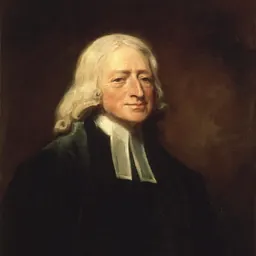
Guyon herself remained imprisoned while the theological and political conflict continued around her. McGinn describes her prison writings as moving but not adding substantially to her mystical teaching. He also notes that attempts were made to prove accusations of immorality between Guyon and La Combe, including through a forged or coerced letter obtained from La Combe after his mental collapse in prison. Guyon recognized the deception and demanded to confront him directly. She remained in the Bastille until March 1703. Guyon also entered English-speaking Protestant devotion through John Wesley, who abridged her autobiography and read her with sympathy and caution, retaining what he judged useful for holiness while warning against excess. López therefore formed part of the same Franco-Dutch-German devotional transmission through which Guyon’s writings entered Pietist, Methodist, and other Protestant traditions of inward religion.
American Holiness and evangelical reception
In the nineteenth century, Guyon’s writings entered American Protestant devotional culture through Methodist, Quaker, Holiness, and perfectionist networks. Ward describes this as a form of experimental theology: Catholic mystical texts were reread through Protestant categories of sanctification, disinterested love, surrender, and inward experience. Later Holiness and Higher Life writers, including Hannah Whitall Smith, received Guyon and Fénelon through anthologies, abridgements, and devotional collections that emphasized inward rest, guidance, and abandonment to God.
Guyon’s influence also reached conservative evangelical and Pentecostal-adjacent settings through the broader interior-life tradition. A. W. Tozer recommended Guyon, Fénelon, and other mystical writers, and his anthology The Christian Book of Mystical Verse preserved a Protestant devotional canon concerned with the prayer of quiet, the rest of faith, communion with God, and divine love.
Catholic reception and anti-mysticism
Within Catholicism, the Quietist controversy contributed to a broader suspicion of mystical literature. McGinn argues that the condemnations of Molinos, Petrucci, Fénelon, and the works associated with Guyon helped produce an anti-mystical climate in the eighteenth century. The Index of Forbidden Books became an instrument by which many works emphasizing interiority and contemplative prayer were suppressed. McGinn cites Eulogio Pacho’s description of the period as a hecatomb of mystical literature.
The American reception of Guyon also intersected with nineteenth-century moral philosophy through Upham, whose philosophical work joined questions of psychology, the will, disinterested love, religious experience, and sanctification. In this setting, Guyon became not only a devotional author but also a figure through whom Protestants explored the relation between inward experience, moral agency, and religious transformation.
Modern scholarship and assessment
Modern scholarship has reinterpreted Guyon beyond the polemical categories of the seventeenth century. Earlier accounts often repeated Bossuet’s view of her as an enthusiast or spiritual danger. Later historians of spirituality have treated her as a major figure in early modern mysticism whose writings illuminate the tensions between gender, authority, experience, ecclesiastical control, and the language of interior prayer.
McGinn interprets the crisis of Quietism as involving three interrelated factors: the suspicion of interior religion in an age of increasing religious and social exteriority; an internal narrowing or implosion of mystical discourse around themes such as pure love, abandonment, acquired and infused contemplation, and the impossible supposition; and the growing influence of Enlightenment models of reason, moderation, and human nature. He also sees a growing psychologization of mystical theology in the seventeenth century, especially in the detailed analysis of interior states. In this respect, Guyon and Fénelon stand at the end of a major phase of early modern Catholic mysticism.
Guyon’s historical importance lies in the paradox of her reception. In Catholic France, her name became bound to the suspicion of Quietism, and her writings helped provoke one of the most consequential anti-mystical reactions of the early modern period. Outside Catholic structures, however, her works remained spiritually influential and helped shape Protestant traditions of inward prayer. The same themes that made her suspect to Bossuet—abandonment, passivity before God, pure love, and the soul’s direct interior relation to divine action—made her attractive to later readers seeking a language of immediate spiritual experience.
McGinn’s interpretation places Guyon within a larger crisis rather than treating her as an isolated eccentric. Her teaching drew on recognized mystical traditions, but it also used language that could be ambiguous, extreme, or insufficiently qualified. Her opponents often exaggerated her errors, but her writings also contributed to the disputed vocabulary that made the controversy difficult to resolve. The result was a conflict in which questions of theology, psychology, ecclesiastical authority, gender, and political power converged around the meaning of Christian mysticism itself.
Selected works Moyen court et très facile de faire oraison (A Short and Easy Method of Prayer) Le Cantique des cantiques interprété selon le sens mystique Les Torrents spirituels. Éditions Jérôme Millon, 2021. 306p. . Justifications La Vie par elle-même Biblical commentaries on the Old and New Testaments Spiritual letters and poems
Don’t just read it —
keep it.
Full-length biographies made to live with: read them, listen on the way to work, watch them tonight.
- E-book
- Audio
- Video
Instant download · yours to keep · every purchase keeps this site free
Important facts
People in Jeanne-Marie Bouvier de La Motte Guyon's life
Named in this biography and alive at the same time

Related people
Same field, nearest in time

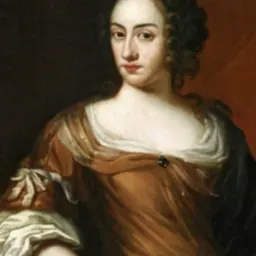

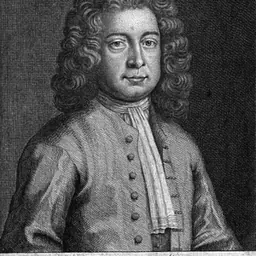
Contemporaries
People whose lives overlapped Jeanne-Marie Bouvier de La Motte Guyon's
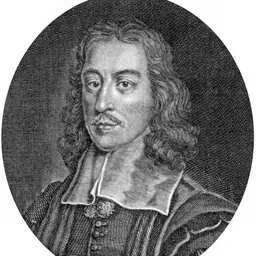
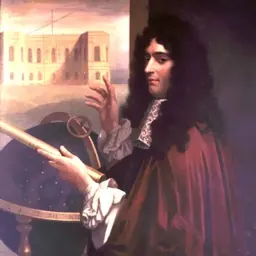

Frequently asked questions
Who was Jeanne-Marie Bouvier de La Motte Guyon?
French Roman Catholic mystic (1648-1717)
When was Jeanne-Marie Bouvier de La Motte Guyon born?
Jeanne-Marie Bouvier de La Motte Guyon was born on 13 April 1648 in Montargis.
When did Jeanne-Marie Bouvier de La Motte Guyon die?
Jeanne-Marie Bouvier de La Motte Guyon died on 9 June 1717 in Blois.
What was Jeanne-Marie Bouvier de La Motte Guyon's occupation?
Jeanne-Marie Bouvier de La Motte Guyon was an autobiographer, writer, mystic and philosopher.
What nationality was Jeanne-Marie Bouvier de La Motte Guyon?
Jeanne-Marie Bouvier de La Motte Guyon was French.
Sources & further reading
· Wikipedia: Jeanne-Marie Bouvier de La Motte Guyon
Cite this page
APA: Biography.guide. (2026). Jeanne-Marie Bouvier de La Motte Guyon. https://biography.guide/jeanne-marie-bouvier-de-la-motte-guyon/
MLA: "Jeanne-Marie Bouvier de La Motte Guyon." Biography.guide, https://biography.guide/jeanne-marie-bouvier-de-la-motte-guyon/.
Chicago: "Jeanne-Marie Bouvier de La Motte Guyon." Biography.guide. https://biography.guide/jeanne-marie-bouvier-de-la-motte-guyon/.
Data last updated: 2026-09-29 · Spot an error? Report a correction.
Portrait: Wikimedia Commons · author & licence
Page generated 2026-10-04 14:04 UTC