
About François Malaval
Lived 1627 – 1719 (aged 91). François Malaval was a French writer and catholic theologian.
François Malaval (17 December 1627 – 15 May 1719) was a French Catholic spiritual writer and contemplative theologian associated with the contemplative currents of seventeenth-century French Catholic spirituality. Blind from infancy, he became known for his writings on recollection and interior prayer, especially the Pratique facile pour élever l’âme à la contemplation, a widely circulated guide to contemplative practice that initially received ecclesiastical approbation and was translated into several languages. An English translation by Lucy Menzies, with an introduction by Evelyn Underhill, was published in 1938 under the title A Simple Method of Raising the Soul to Contemplation in the Form of a Dialogue.
Most of Malaval’s principal writings predated both the condemnation of Miguel de Molinos and the height of the Quietist controversies. Although some of his works were later placed on the Index Librorum Prohibitorum, modern scholarship generally distinguishes his theology from the doctrines condemned under the name of Quietism and situates his work within the broader apophatic tradition of Catholic mysticism.
Historians of spirituality regard Malaval as an important figure in the transition between the seventeenth-century flowering of French contemplative theology and the subsequent anti-Quietist reaction. Bernard McGinn describes him as a “Quietist” who was not a Quietist, arguing that later polemicists often assimilated him unfairly to Molinos and other condemned writers despite important theological differences. An accident left him blind at the age of nine months. Assisted by secretaries and readers, including poor students paid to read to him, he studied humanities with the Oratorians of Marseille before undertaking theological and canonical studies with the Dominicans of the city. He later obtained a doctorate in theology at the Sorbonne.
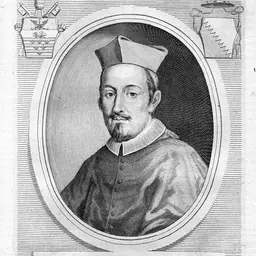
Around the middle of the seventeenth century, Malaval entered learned and devotional circles connected with figures such as Pierre Gassendi, Pierre Puget, François Picquet, Christina, Queen of Sweden, and Cardinal Giovanni Bona.
During the controversies over contemplative prayer in the late seventeenth century, Malaval publicly submitted to ecclesiastical authority after the condemnation of some of his writings. In later years he largely withdrew from polemics and devoted himself to charitable activity and religious poetry. He died in Marseille on 15 May 1719 after a brief illness. Contemporary accounts describe his funeral as drawing large crowds who regarded him as a holy man.
The Pratique facile is structured as a dialogue between a spiritual director and a soul named Philothea, echoing the literary form of Francis de Sales’s Introduction to the Devout Life. Malaval presents contemplation not primarily as an extraordinary mystical phenomenon but as a simplified and unified form of prayer grounded in faith, silence, and loving attention to the divine presence.
In the Pratique facile, Malaval distinguishes contemplative prayer from discursive meditation. Meditation proceeds through images, reflections, and successive acts of the understanding and will; contemplation, by contrast, simplifies the soul’s attention into what seventeenth-century spiritual writers often described as a “simple regard” or “simple view” of God. This simplicity is presented not as inactivity, but as a unified movement of faith and love.
A recurring theme in Malaval’s work is the deepening awareness of the presence of God. McGinn compares this aspect of his spirituality to that of Brother Lawrence, describing Malaval as a mystic of divine presence and recollection. Contemplation is repeatedly defined as silent and loving attention to God present within the soul through faith.
Malaval insisted that contemplation did not abolish meditation but represented its fulfilment and fruit. He repeatedly described meditation as a preparatory stage leading toward a more simplified and loving awareness of God.
Attrait and divine attraction
One of the central concepts in Malaval’s mystical theology is the attrait, the divine attraction or gracious drawing by which God leads the soul toward contemplation. For this reason he advises spiritual seekers not to become excessively preoccupied with distinguishing acquired contemplation from infused contemplation, but instead to follow the movement of grace with humility and obedience.
Although Malaval’s title speaks of an “easy practice”, he did not teach that the higher contemplative life was automatically available to all in the same way. He wrote especially for souls already disposed to interior things and mortified in the exterior senses and passions. His teaching therefore made contemplation more accessible than anti-Quietist rigorists allowed, but did not present it as a universal shortcut or dispense with ascetical preparation, spiritual maturity, or divine vocation.
Apophatic theology and learned ignorance
A recurring theme in Malaval’s work is the inadequacy of conceptual language before the mystery of God. He teaches that divine reality exceeds images and discursive reasoning, and that contemplation involves a movement toward silent and loving awareness grounded in faith.
His spirituality draws extensively on the negative theology of Pseudo-Dionysius. Malaval frequently describes contemplation as a movement into divine darkness, paradoxically more luminous than ordinary intellectual knowledge. In the dedication to Cardinal Bona prefacing the expanded edition of the Pratique facile, he spoke of “a darkness more luminous than all the knowledge of the world”.
This apophatic theology was connected in Malaval’s writings to reflections on his own blindness. He interpreted physical blindness as a symbol of the contemplative darkness through which the soul comes to perceive divine reality beyond images and concepts. Evelyn Underhill interpreted the Pratique facile as presupposing ordinary Christian devotional and sacramental practice rather than replacing it.
Acquired and infused contemplation
Malaval devoted considerable attention to the distinction between acquired contemplation and infused contemplation, a major topic in seventeenth-century debates concerning mystical prayer.
He maintained that contemplation always depends upon grace and faith, but distinguished between acquired contemplation as a stable habit of recollection and infused contemplation as a more directly supernatural operation of God within the soul.
The “one act” of prayer
Malaval addressed the disputed seventeenth-century idea that advanced prayer could become a single or continuous act. His treatment differs from more radical versions associated with writers such as Juan Falconi and Molinos. For Malaval, the “one act” is not an irreversible act that abolishes ordinary prayer, moral vigilance, or renewed consent. It is better understood as a habit of recollection, gradually formed in the soul, by which the intention of turning toward God becomes stable and simple.
In the Pratique facile, he teaches that meditation on the mysteries of Christ’s life remains valuable and necessary, especially for beginners and in times of distraction or dryness. Higher contemplation, however, gradually simplifies the soul’s attention into a loving awareness of God beyond images and discursiveness. In this state the humanity of Christ is not rejected but retained within faith and memory. His writings frequently describe contemplation as a loving and peaceful repose in the presence of God.
Defending himself against charges of passivism, he insisted that silence was not idleness but homage to God. McGinn interprets this teaching as part of a broader apophatic understanding of contemplation in which the soul passes beyond images and multiplicity into a simple awareness of divine presence.
Quietist controversy
Most of Malaval’s principal writings predated both the condemnation of Molinos and the height of the Quietist controversies. The first version of the Pratique facile appeared in 1664, more than a decade before Molinos’s Spiritual Guide.
The Jesuit Paolo Segneri criticized aspects of Malaval’s teaching in the context of broader debates over passive prayer, acquired contemplation, and the relation between meditation and mystical prayer. In 1682 Segneri attacked forms of prayer of quiet associated with Malaval, Molinos, and Pier Matteo Petrucci, though without always naming them directly.
Reception and legacy
Malaval’s reputation declined after the Quietist controversies, but his writings remained part of the wider history of Catholic contemplative theology and French mystical literature. McGinn argues that Malaval illustrates the marginalization of apophatic mysticism in post-seventeenth-century Catholic theology. Although largely forgotten after the anti-Quietist reaction, he has increasingly attracted scholarly attention as part of the modern retrieval of Christian mystical traditions.
Modern historians of spirituality have reassessed his work in relation to apophatic theology, recollection, and the seventeenth-century debates concerning contemplation and interior prayer. Jean-Marc Vivenza interprets Malaval through the theme of the “divine darkness,” while Frédéric Cousinié situates him within the broader French discourse on images, imagination, and contemplation.
Works
Malaval’s writings include manuals of contemplative prayer, devotional prose, spiritual poetry, apologetic treatises, and correspondence.
His best-known work is the Pratique facile pour élever l’âme à la contemplation, first published anonymously in Paris in 1664 and expanded in 1670. The original work consisted of four dialogues; the expanded version added twelve more, making sixteen dialogues in all.
The Pratique facile circulated widely during Malaval’s lifetime and passed through several editions in France and Italy. The French article also notes translations into Dutch and Italian, the latter by the Oratorian Nicola Balducci. McGinn states that a first Italian translation appeared in 1669 and that Balducci’s translation of the expanded edition appeared in 1672 and was reprinted three times by 1679. The text also circulated in abbreviated devotional compilations associated with the French interior tradition.
Malaval also published spiritual poetry and devotional works. His Poésies spirituelles, first issued in 1671, contained more than one hundred spiritual poems. The later French tradition remembered Malaval’s poetry for its Baroque themes, including the flight of time, the transience of human things, and the sweetness of the interior life.
Among his principal writings are:
Pratique facile pour élever l’âme à la contemplation (Paris, 1664; expanded edition, 1670) A Simple Method of Raising the Soul to Contemplation in the Form of a Dialogue (English translation by Lucy Menzies with introduction by Evelyn Underhill, 1938) Poésies spirituelles (1671) La vie de S. Philippe Benizi (1672) Discours contre la superstition populaire des jours heureux ou malheureux (1688) Avertissement à tous les fidèles d'assister à la procession du Saint-Sacrement (1690) Lettre de M. Malaval à M. l'abbé de Foresta-Colongue (1697)
A Latin treatise on the prayer of quiet remained unpublished and is now apparently lost. Much of Malaval’s correspondence is lost, though some letters survive in printed and manuscript collections, including the correspondence of Giovanni Bona and Bossuet and manuscripts in the Vatican Library. Lost works attributed to him include memoirs on Puget and Picquet and a letter concerning neutrality in matters of religion.
Don’t just read it —
keep it.
Full-length biographies made to live with: read them, listen on the way to work, watch them tonight.
- E-book
- Audio
- Video
Instant download · yours to keep · every purchase keeps this site free
Important facts
People in François Malaval's life
Named in this biography and alive at the same time





Related people
Same field, nearest in time


Contemporaries
People whose lives overlapped François Malaval's





Frequently asked questions
Who was François Malaval?
French writer (1627-1719)
When was François Malaval born?
François Malaval was born on 17 December 1627 in Marseille.
When did François Malaval die?
François Malaval died on 15 May 1719 in Marseille.
What was François Malaval's occupation?
François Malaval was a writer and catholic theologian.
What nationality was François Malaval?
François Malaval was French.
Sources & further reading
Cite this page
APA: Biography.guide. (2026). François Malaval. https://biography.guide/francois-malaval/
MLA: "François Malaval." Biography.guide, https://biography.guide/francois-malaval/.
Chicago: "François Malaval." Biography.guide. https://biography.guide/francois-malaval/.
Data last updated: 2026-09-20 · Spot an error? Report a correction.
Page generated 2026-09-27 05:12 UTC