
About Giovanni Bona
Lived 1609 – 1674 (aged 65). Giovanni Bona was a catholic priest, writer, liturgist, monk and catholic theologian.
Giovanni Bona (19 October 1609 – 28 October 1674) was an Italian Cistercian, cardinal, liturgist, ascetical writer, and theologian of mysticism. A member and later Abbot General of the Congregation of the Feuillants, he became one of the most influential Catholic spiritual authors of the seventeenth century and an important pioneer in the historical study of the liturgy. His writings synthesized patristic, medieval, and early modern traditions of contemplative theology and helped transmit monastic forms of contemplative prayer into broader seventeenth-century devotional culture.
Biography Bona was born at Mondovì, in Piedmont, northern Italy, on 19 October 1609, though some sources give 9 or 10 October. He was the son of Giovanni Battista Bona, a military captain belonging to a noble family originally from the French Dauphiné, and Laura Zugano.
His father favoured a military career for him but, after studying for five years at a nearby Jesuit college in Mondovì, he entered the Cistercian monastery of the Congregation of the Feuillants at Pinerolo on 19 July 1625. During his years of official life in Rome, he modestly declined further honours, refusing the Bishopric of Asti.
He welcomed the expiration of his third term in office in the hope that he would be allowed to enjoy a life of retirement and study, but his intimate friend, Pope Alexander VII, wishing to honour his culture and piety, appointed him consultor to the Congregation of the Index, the Holy Office, the Congregation of Rites, and the Congregation for the Propagation of the Faith.
On 29 November 1669, shortly before his death, Pope Clement IX made Bona a cardinal. He participated in the papal conclave of 1669–1670, which opened on 20 December 1669 and concluded on 29 April 1670 with the election of Pope Clement X. On 19 May 1670, he received the titular church of San Bernardo alle Terme. There was no change in his extremely simple manner of life, and every year he donated his surplus revenue to the needy priests of the Missionary College at Rome.
Bona maintained extensive correspondence with scholars and spiritual writers across Europe, especially with the learned Maurists, and belonged to the learned Catholic culture sometimes described as the seventeenth-century Republic of Letters. His selected correspondence was later edited by Robert Sala as Epistolae selectae (Turin, 1755), together with letters written to Bona by other learned contemporaries.
He died at Rome on 28 October 1674, aged 65.
Mystical theology Bona was one of the principal synthesizers of seventeenth-century Catholic mystical theology. His spiritual writings consciously situated themselves within a continuous tradition extending from the Church Fathers through medieval monastic and mystical authors.
According to Simon Icard, Bona sought to present “the most constant tradition of spiritual doctrines” by synthesizing patristic, medieval, and early modern authorities. His writings drew extensively on medieval contemplative authors including Bernard of Clairvaux, Bonaventure, Richard of Saint Victor, Johannes Tauler, Jan van Ruusbroec, Henry Herp, Thomas à Kempis, Catherine of Genoa, Denys the Carthusian, William of Saint-Thierry, Aelred of Rievaulx, Gilbert of Hoyland, Catherine of Siena, and Jean Gerson.
His mystical doctrine was strongly shaped by the medieval tradition of lectio divina, especially the schema presented in the Scala Claustralium of Guigo II. Icard argues that Bona’s sequence of meditation, aspirations or ejaculatory prayer, and contemplation reproduces the traditional monastic ascent toward mystical union.
In Via compendii ad Deum per motus anagogicos et orationes iaculatorias, translated into English by Henry Collins as The Easy Way to God: A Manual of Ejaculatory Prayer (1876), Bona presents aspiration prayer as a practical bridge between meditation and contemplation. The work distinguishes the scholastic and mystical ways to God and describes the latter as a shorter, affective, and more accessible path ordered toward mystical union.
Bona’s spirituality emphasized aspirations (orationes jaculatoriae), short fervent prayers continually directed toward God. In his Via compendii ad Deum (1657), he described these aspirations as stages in the soul’s ascent to contemplative union.
Bona grounds the practice of aspirations and contemplative prayer in patristic and monastic authorities including Augustine of Hippo, Jerome, Gregory the Great, Basil of Caesarea, John Chrysostom, John Cassian, Thomas Aquinas, Bonaventure, and Teresa of Ávila. He presents ejaculatory prayer not as a novel method but as a recovery of ancient Christian practice, especially the continual prayer tradition associated with the Desert Fathers.
Icard also argues that Bona sought to defend mystical theology as an authentic form of theology rather than merely devotional practice.
Modern historians of spirituality have situated Bona among a group of seventeenth-century writers who sought to simplify contemplative practice and make interior contemplative prayer more broadly accessible beyond monastic elites. Bernard McGinn groups Bona’s Via compendii ad Deum, later translated as Short Cut to God, alongside the contemplative manuals of François Malaval and Jeanne Guyon as part of a broader movement toward concise and accessible guidebooks of contemplative prayer.
Bona was personally connected with several spiritual writers later drawn into the Quietist controversies and subsequent anti-Quietist polemics. François Malaval dedicated the expanded edition of his Easy Practice to Bona and acknowledged his encouragement and approval of contemplative teaching.
Writings Certain of Bona’s works remained unfinished or unpublished, while others circulated widely throughout Europe in multiple editions and translations.
His best known ascetical works include Via Compendii ad Deum (1657), translated into English in 1876 by Henry Collins O. Cist. under the title An Easy Way to God, Besides passing through numerous Latin editions in four decades, it was translated into Italian, French, German, Armenian, and Spanish. Sir Roger L'Estrange produced an English translation (The Guide to Heaven, 1680),
In Rerum liturgicarum, Bona criticized certain medieval liturgical practices, including the Missa sicca, provoking controversy and criticism from some contemporaries, notably the Franciscan scholar Francisco Macedo. Macedo’s attack on Bona was itself later placed on the Index of Forbidden Books.
Other important works include: De discretione spirituum in vita spirituali deducendorum (1671), translated into French in 1675 and 1701 Testamentum sive praeparatio ad mortem Cursus vitae spiritualis (1674), posthumously published by C. Morozzo and long attributed to him Phoenix rediviva Hortus coelestium deliciarum, later edited by Marco Vattasso in 1918
The first collected edition of Bona’s complete works was published at Antwerp in 1677. A major expanded edition edited by Robert Sala appeared at Turin between 1747 and 1753 in four folio volumes.
Reception and influence Bona’s writings circulated widely throughout Catholic Europe from the seventeenth through the nineteenth centuries. His synthesis of meditation, aspirations, and contemplation became an important vehicle for transmitting medieval monastic spirituality into early modern devotional culture.
Twentieth-century spiritual theologians such as Adolphe Tanquerey continued to regard Bona as a major representative of the Benedictine and affective tradition of Catholic spirituality.
According to Simon Icard, modern scholarship increasingly interprets Bona not simply as a devotional writer or liturgist, but as a major mediator between medieval mystical theology and the contemplative revival of the seventeenth century.
Don’t just read it —
keep it.
Full-length biographies made to live with: read them, listen on the way to work, watch them tonight.
- E-book
- Audio
- Video
Instant download · yours to keep · every purchase keeps this site free
Important facts
People in Giovanni Bona's life
Named in this biography and alive at the same time


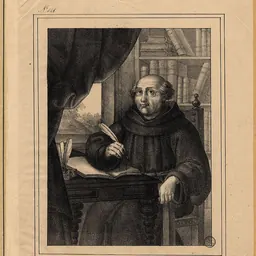
Related people
Same field, nearest in time

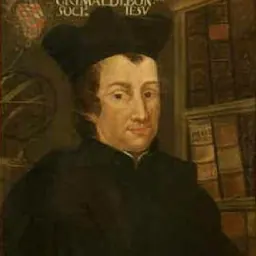
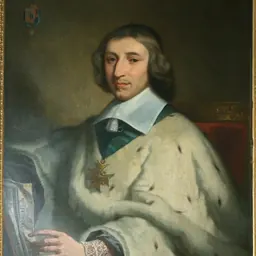

Contemporaries
People whose lives overlapped Giovanni Bona's





Frequently asked questions
Who was Giovanni Bona?
Catholic cardinal
When was Giovanni Bona born?
Giovanni Bona was born on 10 October 1609 in Mondovì.
When did Giovanni Bona die?
Giovanni Bona died on 28 October 1674 in Rome.
What was Giovanni Bona's occupation?
Giovanni Bona was a catholic priest, writer, liturgist, monk and catholic theologian.
Sources & further reading
Cite this page
APA: Biography.guide. (2026). Giovanni Bona. https://biography.guide/giovanni-bona/
MLA: "Giovanni Bona." Biography.guide, https://biography.guide/giovanni-bona/.
Chicago: "Giovanni Bona." Biography.guide. https://biography.guide/giovanni-bona/.
Data last updated: 2026-09-20 · Spot an error? Report a correction.
Page generated 2026-09-27 05:24 UTC