
Jean-Pierre Vernant
French historian and anthropologist
About Jean-Pierre Vernant
Lived 1914 – 2007 (aged 93). Jean-Pierre Vernant was a French anthropologist, historian, professor, french resistance fighter, philosopher and hellenist.
Jean-Pierre Vernant (; January 4, 1914 – January 9, 2007) was a French resistant, historian and anthropologist, specialist in ancient Greece. Influenced by Claude Lévi-Strauss, Vernant developed a structuralist approach to Greek myth, tragedy, and society which would itself be influential among classical scholars. He was an honorary professor at the Collège de France.
Biography Born in Provins, France, Vernant at first studied philosophy, receiving his agrégation in this field in 1937.
A member of the Young Communists (Jeunes Communistes), Vernant joined the French Resistance during World War II and was a member of Libération-sud (founded by Emmanuel d'Astier). He later commanded the French Forces of the Interior (FFI) in Haute-Garonne under the pseudonym of "Colonel Berthier." He was a Companion of the Liberation. After the war, he remained a member of the French Communist Party until 1969.
He entered the Centre national de la recherche scientifique (CNRS) in 1948 and, under the influence of Louis Gernet, turned to the study of ancient Greek anthropology. Ten years later, he became director of studies at the École des hautes études en sciences sociales (EHESS). In 1971 he was professor in the University of São Paulo. This visit was also an act of protest that he made with François Châtelet against the brazilian military government (dictatorship).
He was a member of the French sponsorship committee for the Decade for the Promotion of a Culture of Peace and Non-Violence for the Children of the World. He supported the funding organisation Non-Violence XXI.
He was awarded the CNRS gold medal in 1984. In 2002, he received an honorary doctorate at the University of Crete.
Vernant died a few days after his 93rd birthday in Sèvres.
After his death, his name was given to a French highschool in Sèvres, le "Lycée Jean-Pierre Vernant".
Influence The structuralist approach pioneered by Vernant has been influential on a wide range of classical scholars. More specifically, Vernant's reading of the myth of Prometheus was an important influence on philosopher Bernard Stiegler's book, Technics and Time, 1: The Fault of Epimetheus.
Criticism Vernant's approach has been heavily criticized, particularly among Italian philologists, even by those of Marxist tendencies. He has been accused of a fundamentally ahistorical approach, allegedly going as far as to manipulate his sources by describing them in categories which do not apply (polysemy and ambiguity).
Awards
Honours Commander of the Légion d'honneur Grand Cross of the Ordre national du Mérite Compagnon de la Libération Croix de Guerre Officier of the Ordre des Arts et des Lettres Commander of the Order of the Phoenix (Greece)
Awards and prizes
1980 : Amic Award of the Académie Française (France) 1984 : Médaille d'or du CNRS (France) 1991 : Gold Medal of History (San Marino) 1993 : Award for Humanistic Studies of the American Academy of Arts & Sciences (USA)
Honorary degrees
University of Chicago University of Bristol Masaryk University of Brno University of Naples University of Oxford University of Crete (2002) New Bulgarian University (2004)
Other awards
Associate member of the Académie royale de Belgique Foreign honorary member of the American Academy of Arts and Sciences Corresponding Fellow of the British Academy Honorary Member of the Society for the Promotion of Hellenic Studies
Select publications Les origines de la pensée grecque (Paris), 1962 (= Origins of Greek Thought, 1982) Mythe et pensée chez les Grecs: Etudes de psychologie historique (Paris), 1965 (= Myth and Thought among the Greeks, 1983) With Pierre Vidal-Naquet: Mythe et tragédie en Grèce ancienne, 2 vols. (Paris), 1972, 1986 (= Tragedy and Myth in Ancient Greece, 1981; Myth and Tragedy in Ancient Greece, 1988) Mythe et société en Grèce ancienne (Paris), 1974 (= Myth and Society in Ancient Greece, 1978) Divination et rationalité, 1974 With Marcel Detienne: Les ruses de l'intelligence: La mètis des Grecs (Paris), 1974 (= Cunning Intelligence in Greek Culture and Society, 1977) Religion grecque, religions antiques (Paris), 1976 Religion, histoires, raisons (Paris), 1979 With Marcel Detienne: La cuisine de sacrifice en pays grec (Paris), 1979 (= Cuisine of Sacrifice among the Greeks, 1989) With Pierre Vidal-Naquet: Travail et esclavage en Grèce ancienne (Brussels), 1988 L'individu, la mort, l'amour: soi-même et l'autre en Grèce ancienne (Paris), 1989 Mythe et religion en Grèce ancienne (Paris), 1990 Figures, idoles, masques (Paris), 1990 With Pierre Vidal-Naquet: La Grèce ancienne, 3 vols. (Paris), 1990–92 Mortals and Immortals: Collected Essays (Princeton), 1991 With Pierre Vidal-Naquet: Œdipe et ses mythes (Brussels), 1994 Entre mythe et politique (Paris), 1996 With Jean Bottéro and Clarisse Herrenschmidt: L'orient ancien et nous (Paris), 1996. Ancestor of the West: Writing, Reasoning, and Religion in Mesopotamia, Elam, and Greece, translated by Teresa Lavender Fagan. University of Chicago Press, 2000. . With Françoise Frontisi-Ducroux: Dans l'œil du miroir (Paris), 1997 L'univers, les dieux, les hommes: récits grecs des origines Paris, Le Seuil, 1999 (= The Universe, The Gods, and Men: Ancient Greek Myths, 2001) La traversée des frontières (Paris), 2004
Don’t just read it —
keep it.
Full-length biographies made to live with: read them, listen on the way to work, watch them tonight.
- E-book
- Audio
- Video
Instant download · yours to keep · every purchase keeps this site free
Important facts
People in Jean-Pierre Vernant's life
Named in this biography and alive at the same time



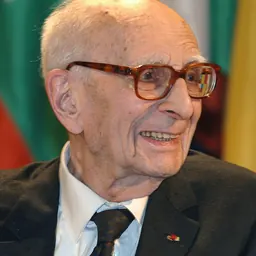


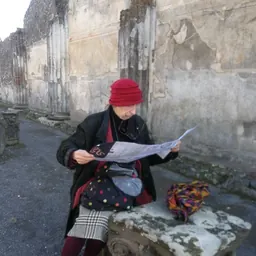

Related people
Same field, nearest in time

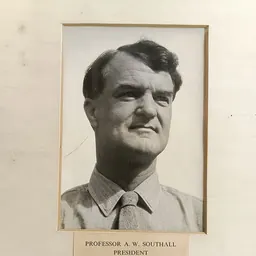
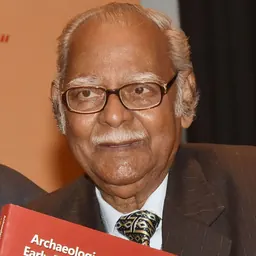
Contemporaries
People whose lives overlapped Jean-Pierre Vernant's


Frequently asked questions
Who was Jean-Pierre Vernant?
French historian and anthropologist (1914–2007)
When was Jean-Pierre Vernant born?
Jean-Pierre Vernant was born on 4 January 1914 in Provins.
When did Jean-Pierre Vernant die?
Jean-Pierre Vernant died on 9 January 2007 in Sèvres.
What was Jean-Pierre Vernant's occupation?
Jean-Pierre Vernant was an anthropologist, historian, professor, french resistance fighter, philosopher and hellenist.
What nationality was Jean-Pierre Vernant?
Jean-Pierre Vernant was French.
Sources & further reading
· Wikipedia: Jean-Pierre Vernant
· DBpedia: Jean-Pierre Vernant
Cite this page
APA: Biography.guide. (2026). Jean-Pierre Vernant. https://biography.guide/jean-pierre-vernant/
MLA: "Jean-Pierre Vernant." Biography.guide, https://biography.guide/jean-pierre-vernant/.
Chicago: "Jean-Pierre Vernant." Biography.guide. https://biography.guide/jean-pierre-vernant/.
Data last updated: 2026-09-20 · Spot an error? Report a correction.
Page generated 2026-09-27 05:19 UTC