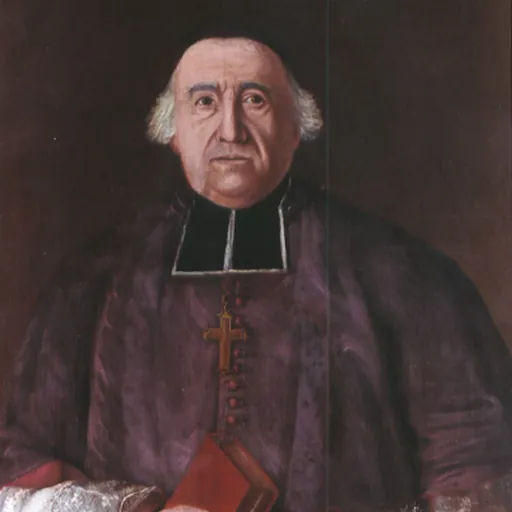
About Jean-Olivier Briand
Lived 1715 – 1794 (aged 79). Jean-Olivier Briand was a catholic priest and catholic bishop.
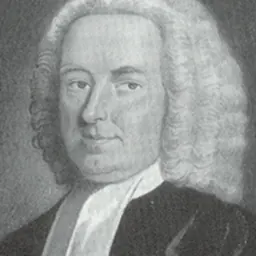
Jean-Olivier Briand (January 23, 1715 – June 25, 1794) was the bishop of the Roman Catholic Diocese of Quebec from 1766 to 1784.
Life Jean-Olivier Briand was born at Plérin, Brittany on January 23, 1715. He studied at the Seminary of St. Brieuc and was ordained a priest in 1739. In 1741 he left for Canada with another priest, Abbé René-Jean Allenou de Lavillangevin, and the newly appointed bishop for Quebec City, Henri-Marie Dubreil de Pontbriand for whom Briand served as vicar-general. He ministered to the dying at the Battle of Sainte-Foy, and after the bishop's death was appointed administrator of the diocese which then included Acadia, Louisiana, and Illinois.
In the aftermath of the French and Indian War, when many colonists abandoned the country, Briand foresaw that a change of allegiance was inevitable. The Prefect of the Propaganda, Cardinal Castelli advised the Canadian clergy "to forget that they were French". His predecessor, Bishop Pontbriand, reiterated the principle that Christians should accord princes the respect and obedience which is their due (Romans 13:1-7). Briand was able to diplomatically adapt to the new regime and so managed to maintain the rights of the Church without causing a confrontation with the authorities. When the Treaty of Paris was signed in 1763, he ordered a Te Deum for the cessation of the Seven Years' War and praised General Murray for his humanity towards the conquered. Briand was consecrated Bishop of Quebec in Paris on March 16, 1766.
Briand's efforts contributed to the 1774 passage of the Quebec Act. The Act guaranteed free practice of the Catholic faith and removing mention of the Protestant faith from the oath of allegiance. On the other hand, it forbade the bishop from corresponding directly with Rome, and gave governors the right to oversee the appointment of parish priests and the selection of new ordinands.
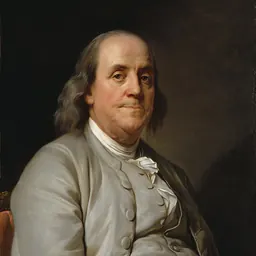
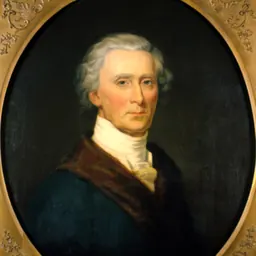
American Revolution Briand did not trust the American colonists, whose antipapal prejudice seemed clear. He was a notable opponent of the American Revolution and served as a useful ally to the British administration under Guy Carleton. In April 1776, the Continental Congress sent Samuel Chase, Benjamin Franklin, and Charles Carroll of Carrollton on a diplomatic mission to Canada, in order to seek assistance from French Canadians against the British. Carroll was an excellent choice for such a mission, being fluent in French and a Roman Catholic, and therefore well suited to negotiations with the French-speaking Catholics of Quebec. He was joined in the commission by his cousin John Carroll.
The commencement of the Invasion of Quebec and the American seizure of Fort Ticonderoga on May 10 prompted Briand, at the request of Governor Carleton, to issue a pastoral letter urging Canadiens to defend their country. It went largely unheeded, as the Canadiens, after so many years of war, while somewhat sympathetic to the Americans, were not interested in fighting for either side.
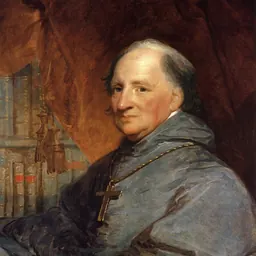
He notably excommunicated Maryland-born Jesuit priest John Carroll, when the latter tried to encourage Canadians to join the revolution or at least remain neutral. Carroll was apparently somewhat ambiguous about a clergyman being involved in political matters, took opportunity to accompany the ailing Franklin back to Philadelphia.
Later life Briand, was invited by Cardinal Castelli, the Prefect of the Propaganda, to administer confirmation in Pennsylvania and Maryland, but abandoned the plan upon the recommendation of Father Ferdinand Steinmeyer, S.J. (popularly known as Father Farmer), who drew attention to the Anti-Catholic feeling which was then prevalent in the Colonies.
He resigned in 1784 to make room for a younger bishop. He retained episcopal powers but seldom exercised them during his last years.
Don’t just read it —
keep it.
Full-length biographies made to live with: read them, listen on the way to work, watch them tonight.
- E-book
- Audio
- Video
Instant download · yours to keep · every purchase keeps this site free
Important facts
People in Jean-Olivier Briand's life
Named in this biography and alive at the same time


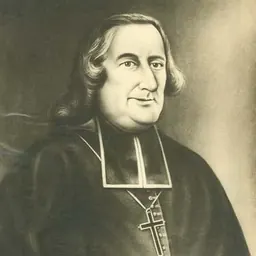


Related people
Same field, nearest in time
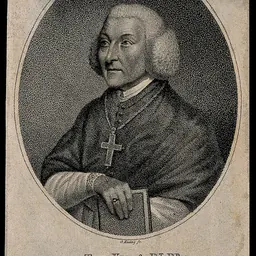
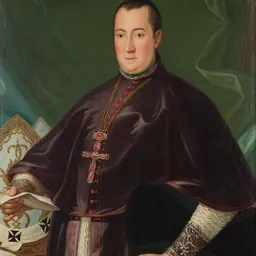
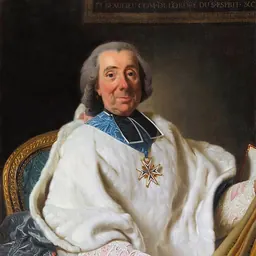

Contemporaries
People whose lives overlapped Jean-Olivier Briand's





Frequently asked questions
Who was Jean-Olivier Briand?
Catholic bishop
When was Jean-Olivier Briand born?
Jean-Olivier Briand was born on 23 January 1715 in Plérin.
When did Jean-Olivier Briand die?
Jean-Olivier Briand died on 25 June 1794 in Quebec City.
What was Jean-Olivier Briand's occupation?
Jean-Olivier Briand was a catholic priest and catholic bishop.
Sources & further reading
· Wikipedia: Jean-Olivier Briand
· DBpedia: Jean-Olivier Briand
Cite this page
APA: Biography.guide. (2026). Jean-Olivier Briand. https://biography.guide/jean-olivier-briand/
MLA: "Jean-Olivier Briand." Biography.guide, https://biography.guide/jean-olivier-briand/.
Chicago: "Jean-Olivier Briand." Biography.guide. https://biography.guide/jean-olivier-briand/.
Data last updated: 2026-09-23 · Spot an error? Report a correction.
Portrait: Wikimedia Commons · author & licence
Page generated 2026-09-27 05:06 UTC