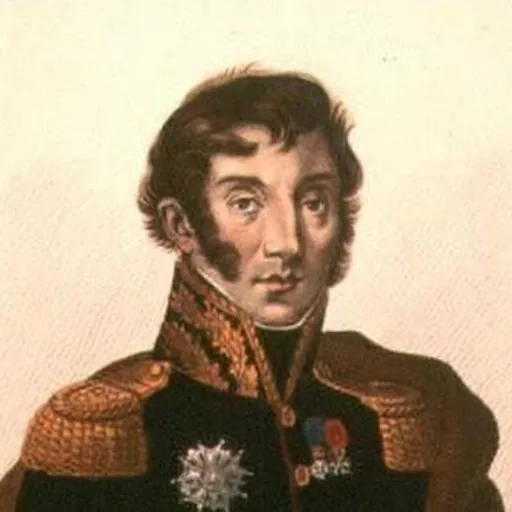
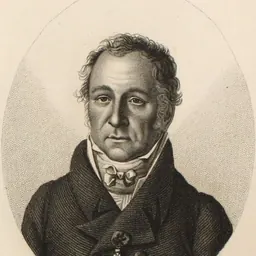
Jean Maximilien Lamarque
French commander of the Napoleonic Wars and politician
About Jean Maximilien Lamarque
Lived 1770 – 1832 (aged 61). Jean Maximilien Lamarque was a French politician, military officer and military personnel.
Divisional-General Jean Maximilien Lamarque (22 July 1770 – 1 June 1832) was a French army officer and politician who served in the French Revolutionary and Napoleonic Wars. Lamarque served with distinction in many of Napoleon's campaigns, and was known for retaking Capri from the British in 1808 and defeating French Royalists in the Vendée in 1815. The latter campaign received great praise from Napoleon, who said Lamarque had "performed wonders, and even surpassed my hopes".
After the Bourbon Restoration in France, Lamarque became an outspoken opponent of the return of the ancien régime. With the overthrow of the Bourbons in the July Revolution of 1830, he was placed in command of a force to suppress any uprisings by their supporters, known as the Legitimists.
However, he soon became a leading critic of the new constitutional monarchy of Louis Philippe I, arguing that it failed to support human rights and political liberty. He also advocated French support for revolutionary struggles in Poland and Italy. Lamarque's views made him a popular figure. His death was the catalyst of the June Rebellion of 1832, which provided the background for events depicted in Victor Hugo's novel Les Misérables.
Early life
Born in Saint-Sever in the Landes department of France, Lamarque was a member of a powerful and influential family. His father Pierre Joseph Lamarque (1733–1802) was a lawyer and seneschal of Saint-Sever. His uncle Jean-Jacques Lamarque (1737–1809) was director of a theological college and was persecuted during the Reign of Terror. Lamarque's father was elected a member of the Third Estate to the Estates General of 1789 and took the Tennis Court Oath. He became a member of the National Constituent Assembly.
Lamarque joined his father in Paris and joined the army in 1791. He was involved in early revolutionary and anti-clerical activity. He was a member of a battalion that gutted and then burned Vabres Cathedral, after removing a marble altar to build a monument for the recently murdered Jean-Paul Marat.
Revolutionary Wars
In January 1792, Lamarque enlisted in the 4th Landes Battalion as a grenadier, and was promoted to lieutenant on 3 April 1793. By May he was a captain of grenadiers, participating in the "colonne infernale" led by Théophile Corret de la Tour d'Auvergne in the Army of the Western Pyrenees. He was wounded twice on 6 February 1794, He was promoted once more and transferred to the Army of the Rhine. He participated with distinction at the battles of Engen (3 May 1800), Messkirch (4-5 May 1800), Biberach (9 May 1800), Höchstädt (19 June 1800) and Hohenlinden (3 December 1800). Lamarque defeated the rebellion at the Battle of Rocheservière, but the victory was nullified by Napoleon's own defeat at the Battle of Waterloo. Napoleon was later to praise Lamarque's efforts highly: "Lamarque, whom I sent there at the height of the crisis, performed wonders, and even surpassed my hopes."
Later life After Waterloo, Napoleon was again exiled from France. Lamarque was proscribed by the restored Bourbons and went into exile, first in Brussels then Amsterdam. Lamarque's defense of constitutional liberties in Poland and Italy was very popular in France. C. A. Fyffe argued that "a great part of the French nation" felt that Louis-Philippe had betrayed the cause of liberty: "it was the unpardonable offence of Louis Philippe against the honour of France that he allowed Poland and Italy to succumb without drawing his sword against their conquerors."
Death and June Rebellion
In 1832 Lamarque contracted cholera, of which there was an epidemic in France at the time. According to historian Mark Traugott, "when the popular Lamarque was struck down by the disease, fear and resentment over the threats to the population's physical and economic well-being had reached a critical stage." He died on 1 June. A group of students took control of the carriage bearing the coffin. The cortege was diverted to the Place de la Bastille where speeches were made in favour of a Republic. When a member of the crowd rose waving a black-bordered red flag with the words "Liberty or Death" on it, the crowd broke into rebellion and shots were exchanged with government troops.
The rioting (on 5–6 June) was provoked by both Bonapartists and republicans and led to an attempted insurrection known as the June Rebellion. It was suppressed by the Army and National Guard; an estimated 800 were killed or wounded during the conflict. While the violence broke out following the funeral of Lamarque, historians view Lamarque's death as simply a convenient excuse for the rebels. There were "simmering discontents, especially strong among republicans, who felt that they had spilled their blood on the 1830 barricades, only to have their revolution 'stolen' by a coterie of opportunists who managed to get Louis-Philippe crowned king".
In Les Misérables Victor Hugo's novel Les Misérables includes a fictional account of the brief uprising which followed General Lamarque's death. In Les Misérables, Hugo views Lamarque as the government's champion of the poor. Hugo says that Lamarque was "loved by the people because he accepted the chances the future offered, loved by the mob because he served the emperor well". Hugo portrays Lamarque as an emblem of French pride and honour:
The treaties of 1815 stirred him up like some personal offence. He hated Wellington with a straightforward hate that pleased the masses; and for seventeen years, scarcely paying any attention to intermediate events, he had magnificently maintained his sadness over Waterloo. In his death throes, at his final hour, he had hugged to his breast a sword that the officers of the Hundred Days had presented to him. Napoleon died uttering the word armée, Lamarque uttering the word patrie – homeland.
The insurrection is a failure in the novel, as it was in history, but is romanticized in the novel and its various adaptations for film, radio, and stage.
Writings During his first exile in Belgium and Holland, Lamarque devoted himself to literature by translating into French verse the poems of Ossian by James Macpherson. In the preface, he describes the culture of the ancient Caledonians and analyses the Ossianic poems in the light of Romantic ideas, drawing comparisons with Virgil, Tasso, Milton and Homer. He also published a Defence of General Maximillian Lamarque, justifying his actions. His autobiographical Mémoires et souvenirs was edited and published by his family in 1835. His analysis of British military formations, Quelques observations sur l'exercice des troupes Anglaises, was published in Baron Juchereau de Saint Denys' Armée britannique : manoeuvres d'infantrie (1828).
Don’t just read it —
keep it.
Full-length biographies made to live with: read them, listen on the way to work, watch them tonight.
- E-book
- Audio
- Video
Instant download · yours to keep · every purchase keeps this site free
Important facts
People in Jean Maximilien Lamarque's life
Named in this biography and alive at the same time
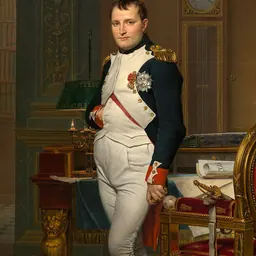

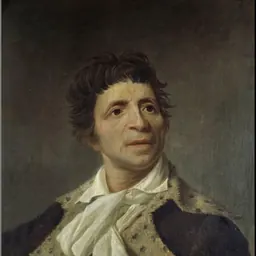
Related people
Same field, nearest in time

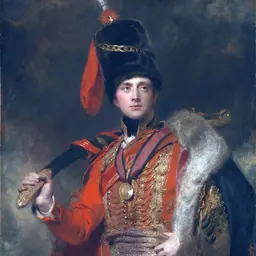


Contemporaries
People whose lives overlapped Jean Maximilien Lamarque's





Frequently asked questions
Who was Jean Maximilien Lamarque?
French commander of the Napoleonic Wars and politician (1770-1832)
When was Jean Maximilien Lamarque born?
Jean Maximilien Lamarque was born on 22 July 1770 in Saint-Sever.
When did Jean Maximilien Lamarque die?
Jean Maximilien Lamarque died on 1 June 1832 in Paris.
What was Jean Maximilien Lamarque's occupation?
Jean Maximilien Lamarque was a politician, military officer and military personnel.
What nationality was Jean Maximilien Lamarque?
Jean Maximilien Lamarque was French.
Sources & further reading
· Wikipedia: Jean Maximilien Lamarque
· DBpedia: Jean Maximilien Lamarque
Cite this page
APA: Biography.guide. (2026). Jean Maximilien Lamarque. https://biography.guide/jean-maximilien-lamarque/
MLA: "Jean Maximilien Lamarque." Biography.guide, https://biography.guide/jean-maximilien-lamarque/.
Chicago: "Jean Maximilien Lamarque." Biography.guide. https://biography.guide/jean-maximilien-lamarque/.
Data last updated: 2026-09-22 · Spot an error? Report a correction.
Portrait: Wikimedia Commons · author & licence
Page generated 2026-09-27 05:02 UTC