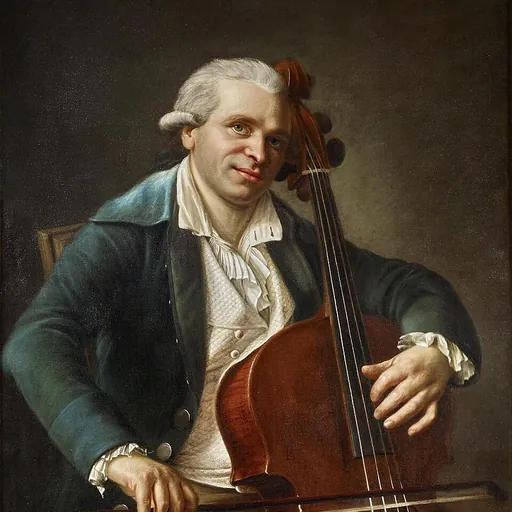
About Jean-Louis Duport
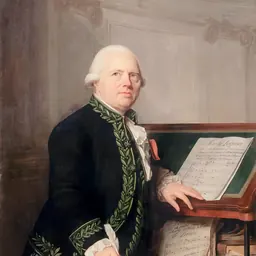
Lived 1749 – 1819 (aged 69). Jean-Louis Duport was a French composer, cellist, musician and cello.
Jean-Louis Duport (4 October 17497 September 1819), sometimes known as Duport the Younger to distinguish him from his older brother (and teacher) Jean-Pierre (1741-1818), was a cellist, pedagogue, and composer.
He is perhaps best known today for his 21 études for solo cello that constitute the final part of the "Essai sur le doigté du violoncelle et sur la conduite de l'archet" ("Essay on the fingering of the violoncello and on the conduct of the bow") (1806), a seminal work of cello technique. He also wrote six cello concertos and his Études pour violoncello.
Duport and Jean-Pierre refined their technique in France under the tutelage of Martin Berteau. His virtuosic ability allowed him to hold many notable positions while living in France, although he was forced to flee to Prussia as a result of the French Revolution. He also collaborated with Ludwig van Beethoven on his Op. 5 cello sonatas, which proved to be a defining point in Beethoven's treatment of the cello in his scores, and also altered the cello's role to become a true solo instrument.
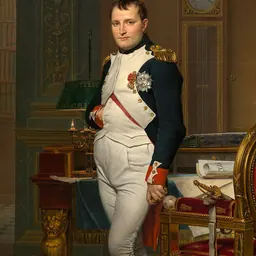
In 1812, Jean-Louis returned to Paris, where he encountered Napoleon, who insisted on trying out Duport's Stradivarius cello, exclaiming, "How the devil do you hold this thing, Monsieur Duport?" Duport was so obviously afraid that Napoleon would damage it, that Napoleon laughingly returned it to the cellist's more careful hands. Actually, Napoleon had made a small dent in the ribs of the cello, which may still be seen in the instrument. It was later owned by Auguste Franchomme and also Mstislav Rostropovich.
"Essay on the fingering of the violoncello and on the conduct of the bow"
"Essai sur le doigté du violoncelle et sur la conduite de l'archet" ("Essay on the fingering of the violoncello and on the conduct of the bow") is a seminal work of cello technique, by Duport, published by Imbault in Paris in 1806. The French text of 175 pages discusses in detail a wide range of aspects of cello technique, and is followed by 21 Etudes for two cellos, of various difficulty levels. The work has been translated into English and German, and is widely accepted as the most influential pedagogical work for the instrument.
Don’t just read it —
keep it.
Full-length biographies made to live with: read them, listen on the way to work, watch them tonight.
- E-book
- Audio
- Video
Instant download · yours to keep · every purchase keeps this site free
Important facts
People in Jean-Louis Duport's life
Named in this biography and alive at the same time



Related people
Same field, nearest in time


Contemporaries
People whose lives overlapped Jean-Louis Duport's





Frequently asked questions
Who was Jean-Louis Duport?
cellist and composer
When was Jean-Louis Duport born?
Jean-Louis Duport was born on 4 October 1749 in Paris.
When did Jean-Louis Duport die?
Jean-Louis Duport died on 7 September 1819 in Paris.
What was Jean-Louis Duport's occupation?
Jean-Louis Duport was a composer, cellist, musician and cello.
What nationality was Jean-Louis Duport?
Jean-Louis Duport was French.
Sources & further reading
· Wikipedia: Jean-Louis Duport
Cite this page
APA: Biography.guide. (2026). Jean-Louis Duport. https://biography.guide/jean-louis-duport/
MLA: "Jean-Louis Duport." Biography.guide, https://biography.guide/jean-louis-duport/.
Chicago: "Jean-Louis Duport." Biography.guide. https://biography.guide/jean-louis-duport/.
Data last updated: 2026-09-23 · Spot an error? Report a correction.
Portrait: Wikimedia Commons · author & licence
Page generated 2026-09-27 05:06 UTC