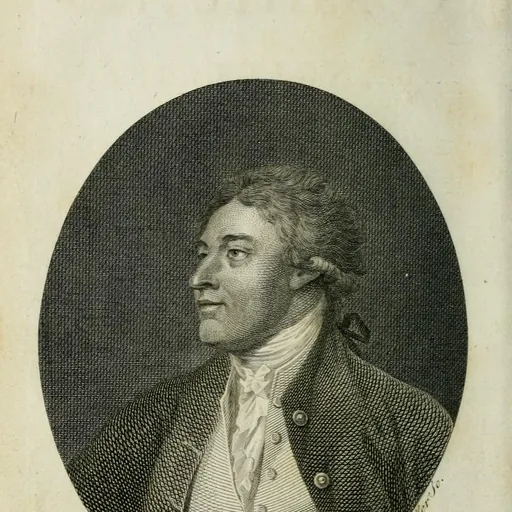
Jean-Louis de Lolme
Genevan and English political theorist and writer on constitutional matters
About Jean-Louis de Lolme
Lived 1740 – 1806 (aged 65–66). Jean-Louis de Lolme was a political theorist, writer, philosopher, jurist and political philosophy.
Jean-Louis de Lolme or Delolme (174016 July 1806) was a Genevan and British political theorist and writer on constitutional matters, born in the then independent Republic of Geneva. As an adult he moved to England, and became a British subject. His most famous work was Constitution de l'Angleterre (The Constitution of England, 1771), which was subsequently published in English as well. He advocated for the English system as an Aristotelian mixed government.
He also praised the element of representative democracy in the constitution, and urged an extension of suffrage. The work influenced many of the framers of the United States Constitution.
Early life De Lolme was born in the then independent Republic of Geneva in 1740. He pursued legal studies and began practicing law, but had to emigrate due to a pamphlet he authored titled "Examen de trois parts de droit" (Examination of Three Parts of Rights), which offended the local authorities. He took refuge in England, where he lived for several years on the meagre and precarious income derived from occasional contributions to various journals.
Writing career
During his protracted exile in England, De Lolme made a careful study of the English constitution, the results of which he published in his Constitution de l'Angleterre (The Constitution of England, Amsterdam, 1771), of which an enlarged and improved edition in English appeared in 1775, and was several times reprinted. The work excited much interest as containing many acute observations on the causes of the excellence of the English constitution as compared with those of other countries. However, it was termed by the 11th edition of the Encyclopædia Britannica (1911) as "wanting in breadth of view, being written before the period when constitutional questions were treated in a scientific manner".
In the book, de Lolme advocated a constitutional form of government enshrining the principle of balanced government, balancing the one, the few, and the many, or the ideas of monarchy, aristocracy, and democracy. He criticised the power of the British parliament and coined an expression which became proverbial: "parliament can do everything but make a woman a man and a man a woman". Nonetheless, de Lolme extolled the British government because, in his view, which was influenced by his own observations and study as well as by the previous writings of Voltaire and Montesquieu, the unwritten constitution of the United Kingdom embodied the ideal of balanced government better than any other government of the time. In particular, he praised the element of representative democracy in the constitution, and urged an extension of suffrage. De Lolme developed and refined his political thinking to a large extent in opposition to the more radical theory of direct democracy advocated by his compatriot, Jean-Jacques Rousseau, whom he accused of being unrealistic. De Lolme is sometimes identified as a probable candidate for being the person behind the pseudonymous political commentator Junius.
De Lolme also wrote in English A Parallel between the English Government and the Former Government of Sweden (1772); The History of the Flagellants (c. 1776), based upon a work by Nicolas Boileau-Despréaux; An Essay, Containing a Few Strictures on the Union of Scotland with England (1787); and one or two smaller works.
Later life In 1775, de Lolme found himself compelled to accept aid from a charitable society to enable him to return home. He died at Seewen, a village in the Canton of Schwyz, on 16 July 1806.
Legacy De Lolme's Constitution de l'Angleterre, along with a translation of David Hume's History of England (1754–1761), supplied philosophers of the time with most of their ideas about the English constitution. It was therefore used somewhat as a political pamphlet. The work has been studied by French bourgeois revolutionary Madame Roland at the age of 22 and influenced many of the framers of the United States Constitution. One Founding Father who was not present in Philadelphia, but whose Defence of the Constitutions of Government of the United States (1787) influenced the delegates there, was John Adams, who praised De Lolme's book as one of the best on the subject of constitutionalism ever written. Some have argued that De Lolme's work also influenced the Constitution of Norway.
Selected works . Later editions: . . . . . .
Don’t just read it —
keep it.
Full-length biographies made to live with: read them, listen on the way to work, watch them tonight.
- E-book
- Audio
- Video
Instant download · yours to keep · every purchase keeps this site free
Important facts
People in Jean-Louis de Lolme's life
Named in this biography and alive at the same time

Related people
Same field, nearest in time





Contemporaries
People whose lives overlapped Jean-Louis de Lolme's




Frequently asked questions
Who was Jean-Louis de Lolme?
Genevan and English political theorist and writer on constitutional matters
When was Jean-Louis de Lolme born?
Jean-Louis de Lolme was born in 1740 in Geneva.
When did Jean-Louis de Lolme die?
Jean-Louis de Lolme died on 16 July 1806 in Seewen.
What was Jean-Louis de Lolme's occupation?
Jean-Louis de Lolme was a political theorist, writer, philosopher, jurist and political philosophy.
What nationality was Jean-Louis de Lolme?
Jean-Louis de Lolme's recorded nationality: Republic of Geneva, Republic and Canton of Geneva.
Sources & further reading
· Wikipedia: Jean-Louis de Lolme
· DBpedia: Jean-Louis de Lolme
Cite this page
APA: Biography.guide. (2026). Jean-Louis de Lolme. https://biography.guide/jean-louis-de-lolme/
MLA: "Jean-Louis de Lolme." Biography.guide, https://biography.guide/jean-louis-de-lolme/.
Chicago: "Jean-Louis de Lolme." Biography.guide. https://biography.guide/jean-louis-de-lolme/.
Data last updated: 2026-09-20 · Spot an error? Report a correction.
Page generated 2026-09-27 05:10 UTC