
About Jean-Louis Curtis
Lived 1917 – 1995 (aged 78). Jean-Louis Curtis was a French novelist, translator, screenwriter, writer and resistance fighter.
Jean-Louis Curtis (22 May 1917 – 11 November 1995), pseudonym of Albert Laffitte, was a French novelist best known for his second novel The Forests of the Night (French: Les Forêts de la nuit), the campaign for the liberation of France.
In 1946, he published his first novel, Les Jeunes Hommes. In 1947, he won the Prix Goncourt for his novel Les Forêts de la nuit. He was one of the founders in 1948 of the literary monthly La Table Ronde. In 1955, he left teaching to devote himself to writing. From 1963 to 1972, he was a member of the Advance Revenue Commission at the National Film Center. In 1972, he received the Grand prix de littérature de l'Académie française for all of his work. As a specialist in Shakespeare, he was responsible for the French subtitling of television adaptations of plays by the English playwright, produced by the BBC between 1978 and 1985, and broadcast in France in the mid-1980s. He was elected a member of the Académie française in 1986. He has written several collections of pastiches on contemporary events such as the student revolts of May 1968 and the socialist victory in France in May 1981.
Martin Seymour-Smith said of Curtis in the early 1980s: He is one of the best of the 'conventional' novelists now writing in France, but is very uneven: he is not worried about originality of technique, and prefers to concentrate on what he can do well, which is to anatomize bourgeois societies and 'artistic' communities. Winner of the Prix Goncourt 1947. Gibier de Potence (1949; Lucifer's Dream) – "an acid picture of postwar Paris". Haute École (1950) Chers corbeaux (1951) – "targets the Parisian bourgeoisie who had done well out of the Nazi occupation" Les Justes Causes (1954; The Side of the Angels) – about the liberation of Paris. L'Échelle de soie (1956) Un Saint au néon (1956) La Parade (1960) – "a devastating satire on rich old provincial upper-class drones". Cygne sauvage (1962) La Quarantaine (1966) Le Jeune couple (1967) – "dealt with the splendours and miseries of .. 'consumer society'". Le Thé sous les cyprès (1969) Un miroir le long du chemin (1969) Le Roseau pensant (1971) La Chine m'inquiète (1972) Questions à la littérature (1973) L'Étage noble (1976) L'Horizon dérobé (1978) La Moitié du chemin (1980) – Volume 2 of L'Horizon dérobé Le Battement de mon cœur (1981) – Volume 3 of L'Horizon dérobé Le Mauvais choix (1984) – "attacked Christian bigotry. It is his only historical novel, set in the third century AD." Le Temple de l'amour (1990) La France m'épuise (1992) Le monde comme il va (1995) Andromède (1996)
Don’t just read it —
keep it.
Full-length biographies made to live with: read them, listen on the way to work, watch them tonight.
- E-book
- Audio
- Video
Instant download · yours to keep · every purchase keeps this site free
Important facts
People in Jean-Louis Curtis's life
Named in this biography and alive at the same time


Related people
Same field, nearest in time
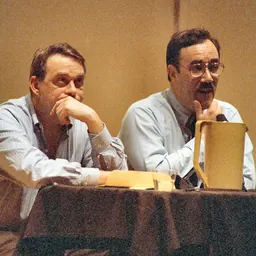


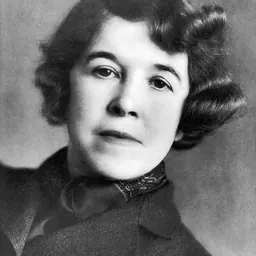
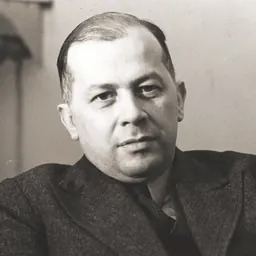

Contemporaries
People whose lives overlapped Jean-Louis Curtis's

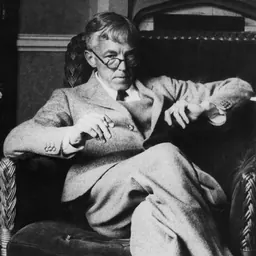
Frequently asked questions
Who was Jean-Louis Curtis?
French novelist (1917–1995)
When was Jean-Louis Curtis born?
Jean-Louis Curtis was born on 22 May 1917 in Orthez.
When did Jean-Louis Curtis die?
Jean-Louis Curtis died on 11 November 1995 in 13th arrondissement of Paris.
What was Jean-Louis Curtis's occupation?
Jean-Louis Curtis was a novelist, translator, screenwriter, writer and resistance fighter.
What nationality was Jean-Louis Curtis?
Jean-Louis Curtis was French.
Sources & further reading
· Wikipedia: Jean-Louis Curtis
Cite this page
APA: Biography.guide. (2026). Jean-Louis Curtis. https://biography.guide/jean-louis-curtis/
MLA: "Jean-Louis Curtis." Biography.guide, https://biography.guide/jean-louis-curtis/.
Chicago: "Jean-Louis Curtis." Biography.guide. https://biography.guide/jean-louis-curtis/.
Data last updated: 2026-09-20 · Spot an error? Report a correction.
Page generated 2026-09-27 05:28 UTC