
About Jean-Jacques Lartigue
Lived 1777 – 1840 (aged 62). Jean-Jacques Lartigue was a Canadian catholic priest and catholic bishop.
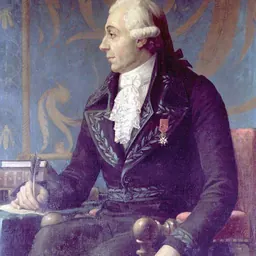
Jean-Jacques Lartigue, S.S., (20 June 1777 – 19 April 1840) was a Canadian Sulpician, who served as the first Catholic Bishop of Montreal.
Early life Lartigue was born to a noted Montreal family, the only son of Jacques Larthigue, a surgeon, and Marie-Charlotte Cherrier. He attended the Collège Saint-Raphaël (later the Petit Séminaire de Montréal), followed by two years at an English school run by the Sulpicians, receiving a solid education. He then clerked for three years with a Montreal law firm where he developed a lifelong interest in the politics of Lower Canada. In this he followed the example of his three uncles who were members of the Canadian legislature, including Joseph Papineau and Denis Viger.
In 1797, Lartigue gave up a promising career in the legal profession and turned toward the Catholic priesthood. He soon received minor orders and later the diaconate from Bishop Pierre Denaut of Quebec and taught at his Saint-Raphaël, while he studied for the priesthood under the Sulpicians. He was assigned to help in the Parish of Notre-Dame which was attached to the Seminary. That same year, Denault's successor, Joseph-Octave Plessis, called upon his legal knowledge to challenge an effort by Attorney General Jonathan Sewell to challenge the legal standing of Catholic parishes created since the British conquest of New France.
In 1819 the Seminary faced a legal challenge from the British governor of the province to its holding of various seigneuries in Quebec, which were its primary means of support. Lartigue was entrusted with the superior of the Seminary with a mission to London to present their case directly to the government in England. The superior chose Lartigue as being particularly qualified for the mission because of his knowledge of the law and his mastery of English. For this he was to accompany Bishop Plessis, who was traveling there to secure letters patent for the establishment of a new seminary and for permission to divide the Diocese of Quebec, which was proving unmanageable. They sailed for London on 3 July 1819 on the George Symes, arriving on 14 August.
Lartigue spent the following two months meeting with various officials of the British government, even the Vicar Apostolic in London, who was the chief authority for the Catholic Church in the United Kingdom. He seemed to be making no progress in his cause, so in late October he traveled to Paris where he spent a month trying to find some way of securing the support of the French government to intercede for them. He returned to Canada, believing his mission a failure. Nothing, however, came of the Canadian governor's efforts to seize the Seminary's holdings.
Bishop Plessis failed to obtain the permission of the Crown to divide his diocese. A compromise was struck, though, by which he would be allowed to be given four auxiliary bishops to help govern the far-flung diocese. He already had Lartigue in mind for one of these positions. Becoming aware of this, Lartigue was reluctant to accept, which would have meant leaving the life of the Sulpician community. The Superior General of the Society in Paris left the decision to the Superior of the Seminary, who eventually granted Plessis' request.
In February 1820 Lartigue was named an auxiliary bishop of the Diocese of Quebec and appointed vicar general for Montreal, for which position he was consecrated as a bishop on 21 January 1821 in the Church of Notre-Dame. He was given the major responsibility for administering the various and many Catholic institutions of the city and region.
His cousin, Denis-Benjamin Viger donated land for a church. The cornerstone of Saint-Jacques Cathedral was laid in May 1823. Lartigue placed his secretary Ignace Bourget in charge of the building project. Bishop Plessis consecrated the cathedral in September 1825.
Death Latirgue served as bishop until his death in 1840, at which point he was succeeded by his associate, Ignace Bourget. He is buried in the crypt of the Cathédrale Marie-Reine-du-Monde.
Don’t just read it —
keep it.
Full-length biographies made to live with: read them, listen on the way to work, watch them tonight.
- E-book
- Audio
- Video
Instant download · yours to keep · every purchase keeps this site free
Important facts
People in Jean-Jacques Lartigue's life
Named in this biography and alive at the same time



Related people
Same field, nearest in time


Contemporaries
People whose lives overlapped Jean-Jacques Lartigue's

Frequently asked questions
Who was Jean-Jacques Lartigue?
Canadian Catholic bishop
When was Jean-Jacques Lartigue born?
Jean-Jacques Lartigue was born on 20 June 1777 in Montreal.
When did Jean-Jacques Lartigue die?
Jean-Jacques Lartigue died on 19 April 1840 in Montreal.
What was Jean-Jacques Lartigue's occupation?
Jean-Jacques Lartigue was a catholic priest and catholic bishop.
What nationality was Jean-Jacques Lartigue?
Jean-Jacques Lartigue was Canadian.
Sources & further reading
· Wikipedia: Jean-Jacques Lartigue
· DBpedia: Jean-Jacques Lartigue
Cite this page
APA: Biography.guide. (2026). Jean-Jacques Lartigue. https://biography.guide/jean-jacques-lartigue/
MLA: "Jean-Jacques Lartigue." Biography.guide, https://biography.guide/jean-jacques-lartigue/.
Chicago: "Jean-Jacques Lartigue." Biography.guide. https://biography.guide/jean-jacques-lartigue/.
Data last updated: 2026-09-20 · Spot an error? Report a correction.
Page generated 2026-09-27 05:30 UTC