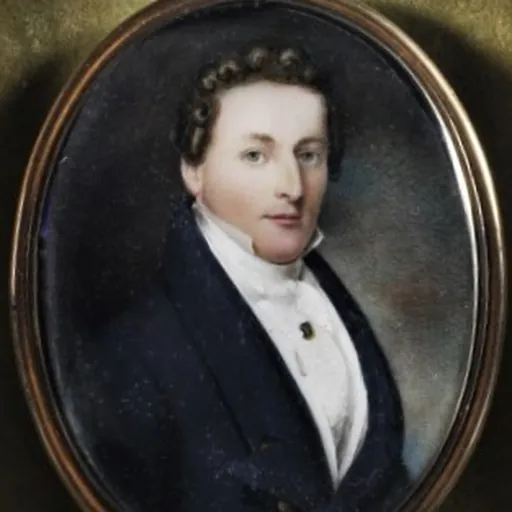
About Jonathan Sewell
Lived 1766 – 1839 (aged 73). Jonathan Sewell was an American and British judge, politician and lawyer.
Jonathan Sewell (born Jonathan Sewall; June 6, 1766 – November 11, 1839) was a lawyer, judge, defensive spymaster and political figure in Lower Canada. Sewell utilized the idea of substantive law (shaping how people should act through distilling punishment) over procedural law (outright punishing the guilty for what was committed) as much as possible when it came to delegating punishment for criminal cases specifically; Sewell saw the certainty of punishment over the seriousness of punishment as enough to alter the intentions of non-violent or non-hardened criminals. In civil suits, Sewell "likely did more than anyone to professionalize the administration of civil justice (in Lower Canada and Montreal) prior to the codification of civil laws in 1866."
Before being highly successful in politics, Sewell proved to be an extremely adept law student, performed as a violinist, and an orchestral composer, who once was selectively placed in "the lead position of an amateur orchestra" by the first member of the British royal family to live in British North America during any term longer than a visit (1791-1800), Prince Edward, Duke of Kent and Strathearn (at the time known as Prince Edward Augustus).
Sewell had attempted to influence the French-Canadian population in Montreal and Quebec (at the time Montreal and the colony of Lower Canada) in the early 1800s through both a failed attack on the legitimacy of the Roman Catholic Church in the colony, and through control of the educational system the colonial government was responsible with delegating.
He died on November 11, 1839, in Quebec City. His residence, at 87 Saint-Louis Street, Quebec City, was designated a National Historic Site of Canada in 1969.
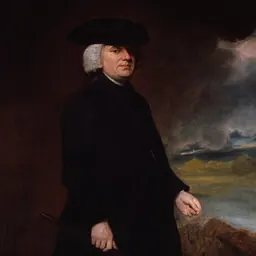
When it came to criminal cases in law, Sewell was much more attracted to the "British Enlightenment arguments of Sir William Blackstone" over the "theological school of selective terror of William Paley." Sewell, more often than not, would strive to lower the severity of legal punishment if the person involved was penitent (sorrowful), the death penalty was involved, or imprisonment with hardened criminals were relevant. His criminal sentences were designed to prevent crime rather than punish the guilty, and he felt that it was the certainty, not the severity, of punishment that deterred crime."
Sewell more than once had "stretched the evidence so as to invite acquittal for non-violent property crimes carrying the death sentence, and in some cases, including convictions for murder, he intervened to save a prisoner from the gallows." Furthermore, until the very end of Sewell's life, he would "persist in efforts to lessen recourse to the death penalty through reduction in the number of crimes punishable by death and through transportation of felons", but more often than not these attempts would be "thwarted by the indifference of the (House of) assembly and the Colonial Administrator."
When it came to civil suits, however, Sewell tended to favour the Crown, especially if government political interests were involved. He called those cases "a pleasure" to do. However, if Sewell's work was biased towards the Crown, it was still done expertly and with elegance, being notably "remarkable for their clarity of expression, their search for general principle, and the depth of scholarship that underpins them."
Sewell was magnificent with civil suits by "probably doing more than anyone to professionalize the administration of civil justice prior to codification of civil law in 1866."
Personal life Sewell also led an amateur orchestra and performed violin in a quartet at Quebec City and opened the Theatre Royal there in 1832. He helped found the Literary and Historical Society of Quebec and served as its president from 1830 to 1831. Sewell was also a member of the Barons' Club and an active shareholder in the Union Company of Quebec (who built the Union Hotel as "a focal point of social life at Quebec)."
Some time in the 1820s "for many years", Sewell presided over the Quebec branch of the British and Foreign Bible Society, and was a leading member within the Cathedral of the Holy Trinity. Sewell had offered to build a new chapel in 1824 as the cathedral was "too small" on the condition that he and his heirs could name the incumbent. Bishop Jacob Mountain accepter the offer and Sewell named his son Edmund Willoughby as incumbent. Sewell then purchased a lot on Rue Saint-Stanislas and constructed a building there based on a model of Ranelagh Chapel in London, called Holy Trinity Chapel. Sewell spent more than 3500 Pound Sterling on the building and it opened in November of 1825. The new chapel held 800. Governor Dalhousie called the chapel "neat" but called Willoughby "unfit and unqualified."
In December 1808, Sewell "assumed the patronage of a literary society formed by (one of his former pupils) Philippe-Joseph Aubert de Gaspe plus other young men of Quebec."
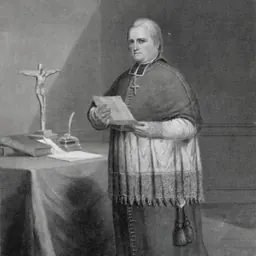
Sewell promoted the theatre and tried to get the Catholic Bishop in Lower Canada, Joseph-Octave Plessis, to repeal the prohibition on theatre for Catholics - Sewell's efforts were not successful and could possibly have been an attempt at anglicizing the French Canadian population because of his previous attempts to control the Catholic Church in Canada by attacking its legitimacy in legislature.
In October 1818, Sewell was appointed to the board of the Royal Institution (of the Advancement of Learning, later McGill University) and headed a meeting of the managers of the Quebec Dispensary.
In 1819, Sewell donated "a fine imported cow and her bull calf" to the Agriculture Society, as it is noted that Sewell was "long a subscriber" to the society.
His brother Stephen was a member of the Legislative Assembly and served as solicitor general for Lower Canada.
Sewell and his wife had 16 children, 12 surviving past infancy, and he, by all accounts, was a fair father and good husband: "Sewell was a highly attentive father; on one occasion, for example, he protested angrily when a son in school received corporal punishment, a means of discipline he abhorred" and "the marriage (of Sewell and his wife Henrietta) was born out of love and would be lived in love."
Sewell preferred the high-society life in Quebec more than that of Montreal and found the high-society life of the latter "scandalous and frivolous" and "particularly deplored the coldness shown to their wives by Montreal’s businessmen, with their male clubs, companies, & coffee houses.”
Sewell was responsible with "helping to introduce Palladian architecture into Quebec, then popular in Britain and the U.S." when he moved his family into a mansion of that style located inside the Porte Saint-Louis (aka the Saint-Louis Gate, an entrance in the fortified walls of Old Quebec) in 1805.
Sewell was in favour of political unity between Lower Canada and Upper Canada and the other (established eastern) colonies of British North America, as he argued that concept to both Sir James Henry Craig and to Prince Edward Augustus, the Duke of Kent. That was first argued (to Craig) at further anglicizeing Lower Canada to "secure the colony for England" and later (to Prince Edward Augustus during the War of 1812) to protect British and Canadian interests against American expansionism in what is modern Canada. The plan would later apparently be published in 1814 under the name A plan for the federal union of British provinces in North America. The plan included concepts like a strong central government, with each province having its own subsequent representatives to the crown as the head of the state, but the plan was amended to include further provincial legislatures themselves, as would be the operation in modern Canada of provincial and municipal levels of government with their own levels of jurisdiction that cannot be infringed upon by the other municipalities, provinces, or federal government if applicable. More often than not, the provinces work together to "cut out the middle man" and keep everything within their jurisdiction.
Sewell believed, following the orthodoxy of the time, that "any fundamentally dishonest or immoral act was a misdemeanor, even though not covered by law," and that serious crime was "on the rise" in Canada due to those acts, and to places like coffee houses, taverns, gambling dens, and brothels.
Sewell was on time and present at work a large amount of the time that he was expected to be as a government official as "from 1809 to 1823 he was present on 90 per cent of all court days during which he was in the colony."
In Paris, France, he purchased 600 volumes of French Law for the Advocates' Library at Quebec.
On Sewell's death, there were some 1,476 books in his personal library; 1,120 were on law, politics, or public administration.
Works An abstract from precedents of proceedings in the British House of Commons (1792) Orders and rules of practice in the Court of King's Bench for the district of Quebec Lower Canada (1809) A plan for the federal union of British provinces in North America (1814) For Mrs Sewell My own dear Jewell An Orderly Room An Essay on the juridical history of France so far as it relates to the law of the province of Lower Canada... (1824) Plan for a general legislative union of the British provinces in North America (1824, with J. B. Robinson)
Honours LL.D. (honoris causa), Harvard (1823) Election to the American Philosophical Society (1830) Member of the Massachusetts Historical Society (1839)
Don’t just read it —
keep it.
Full-length biographies made to live with: read them, listen on the way to work, watch them tonight.
- E-book
- Audio
- Video
Instant download · yours to keep · every purchase keeps this site free
Important facts
People in Jonathan Sewell's life
Named in this biography and alive at the same time


Related people
Same field, nearest in time

Contemporaries
People whose lives overlapped Jonathan Sewell's




Frequently asked questions
Who was Jonathan Sewell?
Canadian politician (1766-1839)
When was Jonathan Sewell born?
Jonathan Sewell was born on 6 June 1766 in Cambridge.
When did Jonathan Sewell die?
Jonathan Sewell died on 11 November 1839 in Quebec City.
What was Jonathan Sewell's occupation?
Jonathan Sewell was a judge, politician and lawyer.
What nationality was Jonathan Sewell?
Jonathan Sewell was American and British.
Sources & further reading
Cite this page
APA: Biography.guide. (2026). Jonathan Sewell. https://biography.guide/jonathan-sewell/
MLA: "Jonathan Sewell." Biography.guide, https://biography.guide/jonathan-sewell/.
Chicago: "Jonathan Sewell." Biography.guide. https://biography.guide/jonathan-sewell/.
Data last updated: 2026-09-23 · Spot an error? Report a correction.
Portrait: Wikimedia Commons · author & licence
Page generated 2026-09-27 05:06 UTC