
About Jean Bon Saint-André
Lived 1749 – 1813 (aged 64). Jean Bon Saint-André was a French politician and diplomat.
Jeanbon Saint-André (; 25 February 1749 10 December 1813) was a French politician of the Revolutionary era.
Early career and role in the National Convention He was born in Montauban (Tarn-et-Garonne), the son of a fuller. Although his parents were Protestants, Saint-André was raised by the Jesuits at Marseille, and got baptized, as required by law. As a young boy, Saint-André had ambition to study the law, but his dream was crushed when the King prohibited Protestants and their children from getting involved in much of the public life, including getting the bar. Saint-André later turned Protestant, and became a prominent pastor in Southern France at Castres in 1773, and afterwards in Montauban in 1788. Saint-André studied theology in Geneva for three years, and married Marie de Suc in 1780. Right before the outbreak of the French Revolution, tension between Protestants and Catholics caused Saint-André to flee. During this time, he drafted an article entitled, "Considérations sur l'organisation civile des Eglises protestantes" (Thoughts on the civil organisation of Protestants), which advocated for protecting Protestants' religious rights within France. Saint-André later returned around December, 1790. He then found The Society of the Friends of the Constitution, and started his political career.
As a member of The Society of the Friends of the Constitution, Saint-André sat on The Mountain, led by Maximilien Robespierre. When King Louis XVI was found guilty of plotting against the Convention and France, he, along with many members of the Convention, voted for the King's execution. In September 1792, he opposed the punishment of the authors of the September Massacres. In January 1793, Saint-André expressed his ideas in a speech called "Sur l'Education nationale," which demanded a variety of changes to the old Catholic-controlled education system. Later that same year in June, when the Jacobins gained control of the Assembly Saint-André became a member of the Committee of Public Safety, and it was he who proposed Maximilien Robespierre for membership shortly afterwards. In July 1793, Saint-André was elected President of the National Convention, and in his capacity, he announced the death of Marat. That same month, Saint-André was sent on a mission to the Armies of the East fighting in the Revolutionary Wars.
While working with the Committee of Public Safety, Jeanbon Saint-André played a pivotal role in the restoration of the naval fleet. He was a former Huguenot pastor and merchant sea captain who was considered the Montagnards’ expert on naval affairs. The Convention granted Saint-André an unlimited amount of power in order to preserve the fleet for the Republic, and to crush all forms of counter-revolutionary opposition.
Reign of Terror On the Committee of Public Safety, his main responsibility was the navy, which he took over from Bertrand Barère. On September 20, 1793, Saint-André obtained a vote of one hundred million francs for constructing vessels; from September 1793 to January 1794, he reorganized the military harbours of Brest and Cherbourg, in the northwestern coast of France.
In 1793, the Federalist Revolt against the National Assembly in the port city of Brest was partly linked to Jeanbon Saint-André as its citizens viewed the Navy divided between the two major clubs, the Montagnards and the Girondins. He reported that the destruction of the French fleet was a form of conspiracy against the Republic. The Western regions of France became problematic to the Revolution. The physical location of Brittany, a peninsula with poorly paved roads, and specifically Brest, made transport of provisions and travel difficult and time-consuming. Aside from the physical aspects of Brittany's separation from the rest of the Nation, the gabelle (the salt tax) played a significant role in isolating the Province. This was a zone of the "redimes," also known as a tax-free zone.
Downfall of Jacobin and later missions
On 31 January 1794, on his return from Brest, Saint-André presented a report to the Convention on the state of the navy. Saint-André did away with the hierarchical system of the old regime's navy, stripping officers of their traditional luxuries, such as food privileges, and emphasizing the need for officers to set an obedient example. An education system was also implemented, utilizing Jacobin propaganda and schoolmasters who taught the sailors to read and write so they could aspire to promotion. Saint-André also eliminated holidays, industrializing the coastal city into a system split into day and night shifts enforced by strict military rule. Royalist officers were imprisoned, discipline restored, and a new regime of training introduced across the navy. The officer corps and civilian administration of the navy were brought up to strength. Lighthouses were built at Penmarch and Groix, and new ships of the line were built. These changes sought to turn Brest into an absolute collectivist city, where all was at service to the Republic. Thanks to this reforming zeal, France was able to build and launch new frigates at three times the rate of the Royal Navy during the same period. By 1794, under Saint-André's watch, fifty ships of the line had been placed into service under the control of the newly appointed fleet commander Villaret de Joyeuse.
Contributing to this success was the presence of Jacques-Noël Sané, a renowned ship engineer who had built Joyeuse's 118-gun flagship Montagne. On 28 July 1794, the Jacobin faction lost support of the crowd and most of its members, most notably Robespierre, were guillotined; the crowd saw that Saint-André had mostly spent his time on mission and had not participated in the decisions made during the Jacobins' control, so he was granted his life. However, with the Jacobin bourgeoisie, he had justified the impediment of the representations of the people, which are the sectional societies: "Our greatest enemies are not outside; we see them: they are in our midst; they want to take revolutionary measures further than we do. "
He was then appointed consul at Algiers and Smyrna (1798) and was kept prisoner by the Ottoman Empire for three years (during the Napoleonic Wars). Released in 1801, Saint-André subsequently became préfet of the department of Mont-Tonnerre (1801) and commissary-general of the three departments on the left bank of the Rhine. Napoleon made him a member of the Légion d'honneur in 1804 and a Baron of the Empire in 1809. He died of typhoid in Mainz.
Don’t just read it —
keep it.
Full-length biographies made to live with: read them, listen on the way to work, watch them tonight.
- E-book
- Audio
- Video
Instant download · yours to keep · every purchase keeps this site free
Important facts
People in Jean Bon Saint-André's life
Named in this biography and alive at the same time


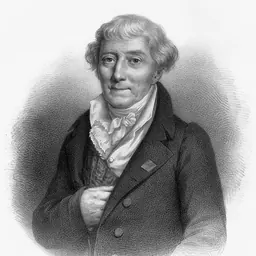

Related people
Same field, nearest in time
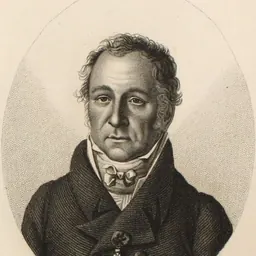



Contemporaries
People whose lives overlapped Jean Bon Saint-André's





Frequently asked questions
Who was Jean Bon Saint-André?
Regicide of Louis XVI (1749-1813)
When was Jean Bon Saint-André born?
Jean Bon Saint-André was born on 25 February 1749 in Montauban.
When did Jean Bon Saint-André die?
Jean Bon Saint-André died on 10 December 1813 in Mainz.
What was Jean Bon Saint-André's occupation?
Jean Bon Saint-André was a politician and diplomat.
What nationality was Jean Bon Saint-André?
Jean Bon Saint-André was French.
Sources & further reading
· Wikipedia: Jean Bon Saint-André
· DBpedia: Jeanbon Saint-André
Cite this page
APA: Biography.guide. (2026). Jean Bon Saint-André. https://biography.guide/jean-bon-saint-andre/
MLA: "Jean Bon Saint-André." Biography.guide, https://biography.guide/jean-bon-saint-andre/.
Chicago: "Jean Bon Saint-André." Biography.guide. https://biography.guide/jean-bon-saint-andre/.
Data last updated: 2026-09-26 · Spot an error? Report a correction.
Page generated 2026-09-27 05:14 UTC