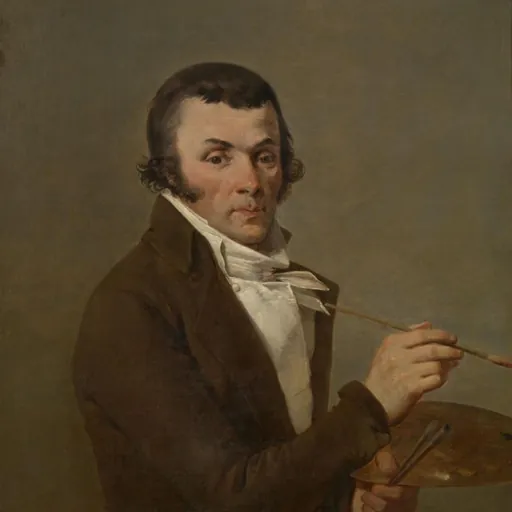
About Jean Baptiste Berré
Lived 1777 – 1839 (aged 62). Jean Baptiste Berré was a Belgian painter and sculptor.
Jean-Baptiste Berré or Jan Baptist Berré Antwerp, 11 February 1777 – Paris, 6 May 1839) was a Flemish painter and sculptor. He trained in Antwerp where he painted mainly still lifes. He later moved to Paris where he made a name as an animalier painter and sculptor. His patrons included members of the court during the First French Empire and the First Restoration. He was employed as an official painter at the Jardin du Roi in Paris. In this role he was chosen as one of the artists invited to portray Sarah Baartman, the 'Hottentot Venus', in 1815.
Life Berré was born in Antwerp on 11 February 1777. He entered the studio of a decorative painter at a very young age. At the same time spent time copying old master paintings. He enrolled at the Academy of Antwerp where he studied, among others, with Balthasar Paul Ommeganck, a renowned animal painter. From 1802 onwards Berré regularly participated in the Antwerp and Ghent Salons. He presented a religious painting (a Mater Dolorosa) in Antwerp in 1802. The majority of his works consisted of still lifes, landscapes and animals.
He sent his works to various exhibitions organized in his home country. He sent the Royal Eagle about to snatch a lamb to the Brussels Salon of 1811, the Monkey and the Cat to the Ghent Salon of 1812, Dogs and Swans to the Ghent Salon of 1814, Stags and Hinds in a Forest to the Brussels Salon of 1821, a Landscape with an Oxen Cart to the Amsterdam Salon of 1822 and Resting Animals and Figures to the Ghent Salon of 1823. His works fetched high prices and were collected throughout Europe. At the Paris Salon of 1814 he exhibited the painting Romulus and Remus suckled by the she-wolf. This harmless painting became politically charged at one point when Berré produced copies of it showing an imperial eagle killing all kinds of animals.
His success did not diminish with the fall of the Empire in 1815. In 1817 he made a painting showing a visit made by the Duke and Duchess of Berry to the menagerie of the Royal Garden, on the occasion of the arrival in Paris of one of the first elephants from India. His paintings were present in all the major collections of the First Restoration and are currently distributed in many French provincial museums. In 1825 he was made an honorary member of the Royal Society of Brussels.
He remained in Paris for the rest of his career and died there on 6 May 1839.
Work
Berré painted still lifes, landscapes and animals. His works were appreciated for their finish and the perfection of their execution.
He was known for the technical quality and finish of his works. Berré's bright and warm colours are in the tradition of Dutch and Flemish painting. The study of nature allowed him to render animals with great fidelity. He typically did not paint the staffage in his works but asked specialist painters to take care of this. Thus in his Romulus and Remus suckled by the she-wolf exhibited in Paris in 1814, the two figures are believed to be by the hand of Mattheus Ignatius van Bree.
Berré also worked as a sculptor. His sculptural work consists entirely of the representation of animals in plaster or bronze.
Don’t just read it —
keep it.
Full-length biographies made to live with: read them, listen on the way to work, watch them tonight.
- E-book
- Audio
- Video
Instant download · yours to keep · every purchase keeps this site free
Important facts
more
Jan Baptist Berré, Jan Baptiste BerréPeople in Jean Baptiste Berré's life
Named in this biography and alive at the same time


Related people
Same field, nearest in time




Contemporaries
People whose lives overlapped Jean Baptiste Berré's


Frequently asked questions
Who was Jean Baptiste Berré?
Flemish painter and sculptor (1777-1839)
When was Jean Baptiste Berré born?
Jean Baptiste Berré was born on 11 February 1777 in Antwerp.
When did Jean Baptiste Berré die?
Jean Baptiste Berré died on 6 May 1839 in Paris.
What was Jean Baptiste Berré's occupation?
Jean Baptiste Berré was a painter and sculptor.
What nationality was Jean Baptiste Berré?
Jean Baptiste Berré was Belgian.
Sources & further reading
· Wikipedia: Jean Baptiste Berré
· DBpedia: Jean-Baptiste Berré
Cite this page
APA: Biography.guide. (2026). Jean Baptiste Berré. https://biography.guide/jean-baptiste-berre/
MLA: "Jean Baptiste Berré." Biography.guide, https://biography.guide/jean-baptiste-berre/.
Chicago: "Jean Baptiste Berré." Biography.guide. https://biography.guide/jean-baptiste-berre/.
Data last updated: 2026-09-23 · Spot an error? Report a correction.
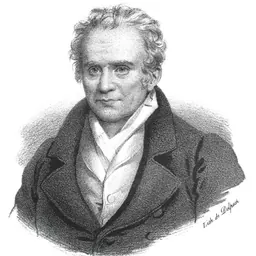
Portrait: Wikimedia Commons · author & licence
Page generated 2026-09-27 05:06 UTC