
About Sarah Baartman
Lived 1789 – 1815 (aged 25–26). Sarah Baartman was a South African performing artist.
Name and identity No contemporary record of Baartman's original Khoekhoe name survives. Some writers have suggested that it may have been Ssehura, but this identification remains unconfirmed. Saartje and Saartjie are Dutch diminutive forms of Sarah. In Cape Dutch, diminutives commonly indicated familiarity, endearment, or contempt. She went through puberty rites and kept a small tortoiseshell necklace, most likely her mother's, until her death in France.
In the 1790s, While working on the farm of Peter Cezar in Cape Town, she was seen by Hendrik Cezar (Peter’s brother) and Alexander Dunlop, an English ship’s surgeon, who were impressed by features of her anatomy. She lived in Cape Town for at least two years, working in households as a washerwoman and a nursemaid, first for Peter Cesars, then in the house of a Dutch man in Cape Town. She finally moved to be a wet-nurse in the household of Peter Cesars' brother, Hendrik Cesars, outside Cape Town in present-day Woodstock. Around 1810, Hendrik persuaded Baartman to travel to England with him and Dunlop to exhibit herself in public. She left Cape Town for England and began being exhibited in London as the "Hottentot Venus", in degrading conditions to satisfy European curiosity about KhoeSan women’s bodies and ongoing racial science-based speculation about ethnicities. Her captors would go on to profit from these exhibits.
There is evidence that she had two children, though both died as babies. (sometimes wrongly cited as William Dunlop ), a Scottish military surgeon in the Cape slave lodge, operated a side business in supplying animal specimens to showmen in Britain, and he suggested she travel to Europe to make money by exhibiting herself. Baartman refused. Dunlop persisted, and Baartman said she would not go unless Hendrik Cesars came too. In 1810 he agreed to go to Britain to make money by putting Baartman on stage. It is unknown whether Baartman went willingly or was forced. Lord Caledon, governor of the Cape, gave permission for the trip, but later said he regretted it after he fully learned the purpose of the trip.
On display in Europe
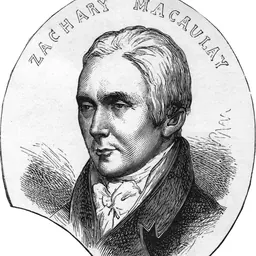
Hendrik Cesars and Alexander Dunlop brought Baartman to London in 1810. The group lived together in Duke Street, St. James, the most expensive part of London. In the household were Sarah Baartman, Hendrik Cesars, Alexander Dunlop, and two African boys, possibly brought illegally by Dunlop from the slave lodge in Cape Town. A handwritten note made on an exhibition flyer by someone who saw Baartman in London in January 1811 indicates curiosity about her origins and probably reproduced some of the language from the exhibition; thus the following origin story should be treated with skepticism: "Sartjee is 22 Years old is 4 feet 10 Inches high, and has (for a Hottentot) a good capacity. She lived in the occupation of a Cook at the Cape of Good Hope. Her Country is situated not less than 600 Miles from the Cape, the Inhabitants of which are rich in Cattle and sell them by barter for a mere trifle. A Bottle of Brandy, or small roll of Tobacco will purchase several Sheep – Their principal trade is in Cattle Skins or Tallow. – Beyond this Nation is an other, of small stature, very subtle & fierce; the Dutch could not bring them under subjection, and shot them whenever they found them. 9 Jany, 1811. [H.C.?]" The tradition of freak shows was well established in Europe at this time, and historians have argued that this is at first how Baartman was displayed. and an account of her appearance in London in 1810 makes it clear that she was wearing a garment, albeit a tight-fitting one. She became a subject of scientific interest, albeit of racist bias frequently, as well as of erotic projection. She was marketed as the "missing link between man and beast". A British abolitionist society, the African Association, conducted a newspaper campaign for her release. The British abolitionist Zachary Macaulay led the protest, with Hendrik Cesars protesting in response that Baartman was entitled to earn her living, stating: "has she not as good a right to exhibit herself as an Irish Giant or a Dwarf?" Macaulay and The African Association took the matter to court and on 24 November 1810 at the Court of King's Bench the Attorney-General began the attempt "to give her liberty to say whether she was exhibited by her own consent." In support he produced two affidavits in court. The first, from William Bullock of Liverpool Museum, was intended to show that Baartman had been brought to Britain by people who referred to her as if she were property. The second, by the Secretary of the African Association, described the degrading conditions under which she was exhibited and also gave evidence of coercion.
Exhibition in France A man called Henry Taylor took Baartman to France around September 1814. Taylor then sold her to a man sometimes reported as an animal trainer, S. Réaux, but whose name was actually Jean Riaux and belonged to a ballet master who had been deported from the Cape Colony for seditious behaviour. but the biography by Crais and Scully only notes that as an uncertain possibility (since she was exhibited, besides other places, at the brothel in Cours des Fontaines).
Display of remains after death Saint-Hilaire applied on behalf of the Muséum d'Histoire Naturelle to retain her remains (Cuvier had preserved her brain, genitalia and skeleton
Four years later, in 1998, South African poet Diana Ferrus, herself of Khoekhoe descent, wrote the poem I've Come to Take You Home, which played a pivotal role in spurring the movement to bring Baartman's remains back to South Africa. thumbnail
France did not immediately agree to Mandela's request. Years of legal negotiations and debate followed in the French National Assembly. During those discussions, the assistant curator of the Musée de l'Homme, Philippe Mennecier, argued against returning the remains, stating: "We never know what science will be able to tell us in the future. If she is buried, this chance will be lost ... for us she remains a very important treasure." According to historian Sadiah Qureshi, Mennecier's statement reflected the continued treatment of Baartman's body as a cultural artifact rather than as the remains of an individual.
Sarah Baartman Center of Remembrance Following her repatriation and burial, the South African government committed to a long-term development of the Sarah Baartman Centre of Remembrance. This initiative sought to honour her and to restore the dignity of the KhoeSan communities and their descendants. Announced in 2009 by the department of Arts and Culture, the project was intended to commemorate with Baartman's life, education and future generations about her experiences and preserve the heritage and cultural history of Khoekhoe and San peoples. The center was planned as part of the national Khoisan heritage route and envisioned as a culture and heritage tourist destination. The costs of this project have reportedly escalated from an initial R161 million to over R221 million. This, along with the costs the new democratic government incurred in preparing, negotiating and implementing her return and burial (approximately R10 350 000), speaks to the financial implications of restitution that African States largely bear.
Sara Baartman’s skeletal remains and soft tissue were buried in her birthplace of Gamtoos River Valley, in Hankey, in the Eastern Cape Province of South Africa in 2002. Her burial site, which has affectionately been named "Saartjie Baartman Memorial", has been declared a National heritage site. It is accessible to the general public, and to the community into which she was born.
Scientific examination and racial science
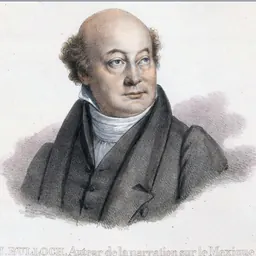
During Baartman's final years in Paris, her public exhibition became increasingly entangled with scientific racism. French scientists were particularly interested in whether she possessed elongated labia, a feature that French explorer and naturalist François Levaillant had previously claimed to have observed among Khoekhoe women at the Cape. He described her shoulders and back as "graceful", her arms as slender, and her hands and feet as "charming" and "pretty".
Despite these observations, Cuvier interpreted her remains as evidencing ape-like traits. He thought her small ears were similar to those of an orangutan and also compared her vivacity, when alive, to the quickness of a monkey.
Colonialism Much speculation and study about colonialist influence relates to Baartman's name and social status, her illustrated and performed presentation as the "Hottentot Venus", although considered an extremely offensive term, and the negotiation for her body's return to her homeland. Many scholars have presented information on how Baartman's life was heavily controlled and manipulated by colonialist and patriarchal language.
Baartman grew up on a farm. There is no historical documentation of her birth name. The Dutch used this word when referencing Khoekhoe people because of the clicking sounds and staccato pronunciations that characterise the Khoekhoe language; these components of the Khoekhoe language were considered strange and "bestial" by Dutch colonisers.
Travelogues that circulated in Europe would describe Africa as being "uncivilised" and lacking regard for religious virtue.
Feminist reception
Traditional iconography of Sarah Baartman and feminist contemporary art Many African female diasporic artists have criticised the traditional iconography of Baartman. According to the studies of contemporary feminists, traditional iconography and historical illustrations of Baartman are effective in revealing the ideological representation of black women in art throughout history. Such studies assess how the traditional iconography of the black female body was institutionally and scientifically defined in the 19th century.
Renee Cox, Renée Green, Joyce Scott, Lorna Simpson, Carrie Mae Weems and Deborah Willis are artists who seek to investigate contemporary social and cultural issues that still surround the African female body. Sander Gilman, a cultural and literary historian states: "While many groups of African Blacks were known to Europeans in the 19th century, the Hottentot remained representative of the essence of the Black, especially the Black female. Both concepts fulfilled the iconographic function in the perception and representation of the world."
"Permitted" is an installation piece created by Renée Green inspired by Sarah Baartman. Green created a specific viewing arrangement to investigate the European perception of the black female body as "exotic", "bizarre" and "monstrous". Viewers were prompted to step onto the installed platform which was meant to evoke a stage, where Baartman may have been exhibited. Green recreates the basic setting of Baartman's exhibition. At the centre of the platform, which there is a large image of Baartman, and wooden rulers or slats with an engraved caption by Francis Galton encouraging viewers to measure Baartman's buttocks. In the installation there is also a peephole that allows viewers to see an image of Baartman standing on a crate. According to Willis, the implication of the peephole, demonstrates how ethnographic imagery of the black female form in the 19th century functioned as a form of pornography for Europeans present at Baartman's exhibit. Feminist artists are interested in re-representing Baartman's image, and work to highlight the stereotypes and ethnocentric bias surrounding the black female body based on art historical representations and iconography that occurred before, after and during Baartman's lifetime. The similarities with the way in which Baartman was represented as the "Hottentot Venus" during the 19th century have prompted much criticism and commentary.
According to writer Geneva S. Thomas, anyone who is aware of black women's history under colonialist influence would consequentially be aware that Kardashian's photo easily elicits memory regarding the visual representation of Baartman.
A People Magazine article in 1979 about his relationship with model Grace Jones describes Goude in the following statement:
Jean-Paul has been fascinated with women like Grace since his youth. The son of a French engineer and an American-born dancer, he grew up in a Paris suburb. From the moment he saw West Side Story and the Alvin Ailey dance troupe, he found himself captivated by "ethnic minorities" — black girls, PRs. "I had jungle fever." He now says, "Blacks are the premise of my work."
Days before the shoot, Goude often worked with his models to find the best "hyperbolised" position to take his photos. His model and partner, Grace Jones, would also pose for days prior to finally acquiring the perfect form. "That's the basis of my entire work," Goude states, "creating a credible illusion."
In response to the November 2014 photograph of Kim Kardashian, Cleuci de Oliveira published an article on Jezebel titled "Saartjie Baartman: The Original Bootie Queen", which claims that Baartman was "always an agent in her own path." Oliveira goes on to assert that Baartman performed on her own terms and was unwilling to view herself as a tool for scientific advancement, an object of entertainment, or a pawn of the state.
Neelika Jayawardane, a literature professor and editor of the website Africa Is a Country, published a response to Oliveira's article. Jayawardane criticises de Oliveira's work, stating that she "did untold damage to what the historical record shows about Baartman". Jayawardane's article is cautious about introducing what she considers false agency to historical figures such as Baartman.
An article titled "Body Talk: Feminism, Sexuality and the Body in the Work of Six African Women Artists", curated by Cameroonian-born Koyo Kouoh, mentions Baartman's legacy and its impact on young female African artists. The work linked to Baartman is meant to reference the ethnographic exhibits of the 19th century that enslaved Baartman and displayed her naked body. Artist Valérie Oka's (Untitled, 2015) rendered a live performance of a black naked woman in a cage with the door swung open, walking around a sculpture of male genitalia, repeatedly. Her work was so impactful it led one audience member to proclaim, "Do we allow this to happen because we are in the white cube, or are we revolted by it?". Oka's work has been described as 'black feminist art' where the female body is a site for activism and expression. The article also mentions other African female icons and how artists are expressing themselves through performance and discussion by posing the question "How Does the White Man Represent the Black Woman?".
Social scientists James McKay and Helen Johnson cited Baartman to fit newspaper coverage of the African-American tennis players Venus and Serena Williams within racist trans-historical narratives of "pornographic eroticism" and "sexual grotesquerie." According to McKay and Johnson, white male reporters covering the Williams sisters have fixated upon their on-court fashions and their muscular bodies, while downplaying their on-court achievements, describing their bodies as mannish, animalistic, or hyper-sexual, rather than well-developed. Their victories have been attributed to their supposed natural physical superiorities, while their defeats have been blamed on their supposed lack of discipline. This analysis claims that commentary on the size of Serena's breasts and bottom, in particular, mirrors the spectacle made of Baartman's body.
Heather Radke's 2022 Butts: A Backstory heavily relied on Baartman's story to examine the cultural history of women's buttocks.
Reclaiming the story In recent years, some black women have found her story to be a source of empowerment, one that protests against the ideals of white mainstream beauty, as curvaceous bodies are increasingly lauded in popular culture and mass media.
Paramount Chief Glen Taaibosch, chair of the Gauteng Khoi and San Council, says that today "we call her our Hottentot Queen" and honour her. a refuge for survivors of domestic violence, opened in Cape Town in 1999. South Africa's first offshore environmental protection vessel, the Sarah Baartman, is also named after her. In 2015 South Africa's former Cacadu District Municipality was renamed Sarah Baartman District Municipality in her honor. On 8 December 2018, the University of Cape Town made the decision to rename Memorial Hall, at the centre of the campus, to Sarah Baartman Hall. This follows the earlier removal of "Jameson" from the hall's name.
Cultural references Literature
William Edmondstoune Aytoun, writing under the pseudonym "Dunshunner", referenced Baartman in the satirical poem "Crinoliniana" (1863), which compares a woman wearing a crinoline to a "Venus" from "the Cape".
Dame Edith Sitwell referred to Baartman allusively in "Hornpipe", a poem in the satirical collection Façade.
Elizabeth Alexander explored Baartman's life and legacy in the poem The Venus Hottentot (1987) and the poetry collection of the same name (1990).
Mordechai Geldman explored Baartman's story in the poem "The Hottentot Venus" (1993), published in his collection Eye.
Diana Ferrus wrote I've Come to Take You Home (1998), a poem that became closely associated with the campaign to repatriate Baartman's remains from France to South Africa.
Douglas Kearney reinterpreted Baartman's story through contemporary language and culture in the poem "Drop It Like It's Hottentot Venus" (2012).
Diane Awerbuck featured Baartman as a central theme in the novel Home Remedies (2013), which reflects on the ways in which her story has been remembered and interpreted.
Non-fiction
Heather Radke used Baartman's life and afterlife to examine the cultural history of women's buttocks in Butts: A Backstory (2022).
Theatre and film
A pantomime titled The Hottentot Venus (1811) was staged at the New Theatre in London while Baartman was still alive and being exhibited in Britain.
Zola Maseko directed the documentary The Life and Times of Sarah Baartman (1998), which examines both her life and her continuing significance in South African history.
Lydia R. Diamond reinterpreted Baartman's life from a postcolonial perspective in the play Voyeurs de Venus (2008).
Zodwa Nyoni debuted the play A Khoisan Woman (2019) at Summerhall, reimagining Baartman's voice and experiences.
Visual art
Lyle Ashton Harris collaborated with Renee Valerie Cox to create the photographic work Hottentot Venus 2000 (2000), which reinterprets Baartman's image and critiques the historical objectification of Black women's bodies.
Brett Bailey included a depiction of Baartman in Exhibit B (2014), a performance installation examining colonialism, racial spectacle, and human exhibitions.
Don’t just read it —
keep it.
Full-length biographies made to live with: read them, listen on the way to work, watch them tonight.
- E-book
- Audio
- Video
Instant download · yours to keep · every purchase keeps this site free
Important facts
People in Sarah Baartman's life
Named in this biography and alive at the same time



Related people
Same field, nearest in time



Contemporaries
People whose lives overlapped Sarah Baartman's



Frequently asked questions
Who was Sarah Baartman?
Khoikhoi woman
When was Sarah Baartman born?
Sarah Baartman was born in 1789 in Gamtoos River.
When did Sarah Baartman die?
Sarah Baartman died on 29 December 1815 in Paris.
What was Sarah Baartman's occupation?
Sarah Baartman was a performing artist.
What nationality was Sarah Baartman?
Sarah Baartman was South African.
Sources & further reading
Cite this page
APA: Biography.guide. (2026). Sarah Baartman. https://biography.guide/sarah-baartman/
MLA: "Sarah Baartman." Biography.guide, https://biography.guide/sarah-baartman/.
Chicago: "Sarah Baartman." Biography.guide. https://biography.guide/sarah-baartman/.
Data last updated: 2026-09-20 · Spot an error? Report a correction.
Page generated 2026-09-27 05:20 UTC