
About Jay Lefkowitz
Born 1962. Jay Lefkowitz is an American lawyer.
Jay Lefkowitz (born 20 November 1962) is an American lawyer. For more than three decades, he was a litigation partner at the Kirkland & Ellis law firm, where he was also a member of the worldwide management committee. He served in both Bush administrations, including as Deputy Assistant to the President for Domestic Policy under George W. Bush, and from 2005 to 2009 was the first Special Envoy for Human Rights in North Korea.
Early life and education Lefkowitz was born in New York City, New York, in 1962. His father, a lawyer and Zionist, spoke to him only in Hebrew during his early childhood. He was educated at Jewish day schools, graduating from the Hebrew Academy of the Capital District in a class of seven students, and completed his secondary education with a program at Bar-Ilan University in Israel.
At Columbia College, Lefkowitz won the James A. Beard Political Science Prize in 1984 and spent a semester of his senior year in the Supreme Court's internship program. He received his B.A. in history in 1984 and his J.D. from Columbia Law School in 1987, where he was named a Harlan Fiske Stone Scholar.
George H. W. Bush administration Lefkowitz served as deputy executive secretary to the Domestic Policy Council and then as director of cabinet affairs for President George H. W. Bush.
In 1992, he pushed for implementation of Communications Workers of America v. Beck, which Bush addressed by executive order that April; Lefkowitz was one of the advisers sustaining the president's domestic agenda.
In 1990, he was a public member of the U.S. delegation to the United Nations Human Rights Commission in Geneva, where he delivered a speech criticizing Iran over its fatwa against the writer Salman Rushdie. In April 2002, The Washington Post profiled him as the administration's domestic policy "point man," describing his path from hard-nosed commercial litigator to senior White House adviser.
He was credited as the architect of Bush's 2001 decision to permit limited federal funding for research using human embryonic stem cells.
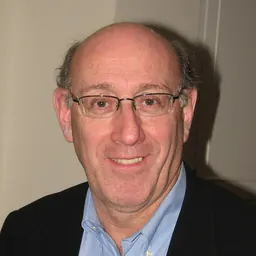
Following the September 11 attacks, Lefkowitz served as the White House architect of the September 11th Victim Compensation Fund, where he worked closely with Kenneth Feinberg, the fund's special master; Feinberg later described him as the fund's "secret weapon." By the end of 2003, ninety-seven percent of eligible families had opted into the fund rather than pursue litigation.
He was given responsibility for the search that led to the appointment of Joseph O'Neill to run the White House Office of National AIDS Policy, and worked with deputy national security adviser Gary Edson on the program's architecture—including the decision to house it in the State Department under a single coordinator accountable to the president.
After leaving the White House in 2003, he was twice offered West Wing jobs. Lefkowitz returned to Kirkland & Ellis, joining the firm's New York office. Lefkowitz remained at the firm until March 2026, when he announced his retirement after roughly three decades.
North Korea On August 19, 2005, President Bush appointed Lefkowitz the first Special Envoy for Human Rights in North Korea, a position created by the North Korean Human Rights Act of 2004. He held the post part-time while continuing his law practice in New York, serving until the end of the Bush administration in January 2009.
As envoy for North Korean human rights (2005–2009), Lefkowitz referred to the North Korean government as a "deeply oppressive nation". He criticized the creation of the Kaesong Industrial Region as exploitative, since it failed to bring true economic reform to North Korea and allowed South Korean corporations to pay North Korean workers as little as $2 a day.
He expanded on these criticisms in an April 2006 Wall Street Journal op-ed, raising concerns about worker exploitation at Kaesong, including wages paid indirectly through the North Korean state. The article prompted a South Korean official to publicly warn him against interfering in domestic affairs.
During his tenure, U.S. funding for Korean-language broadcasting by Radio Free Asia and Voice of America doubled, from $4 million in fiscal year 2006 to $8.1 million in fiscal year 2008, expanding broadcasts into North Korea to ten hours per day. The first North Korean refugees were admitted to the United States under the 2004 Act.
Secretary of State Condoleezza Rice publicly rejected Lefkowitz's assessment, stating that he was not involved in the six-party negotiations.
Lefkowitz's position nevertheless received prominent support. Washington Post columnist Michael Gerson wrote that Lefkowitz had stated the obvious about North Korea's unwillingness to disarm and reported that State Department officials had attempted to limit his involvement in policy discussions and soften the department's reporting on North Korean human rights abuses.
The Wall Street Journals editorial board also defended him after Rice's public rebuke, framing his American Enterprise Institute speech as unwelcome truth-telling and portraying the administration's diplomacy as a failing exchange in which Pyongyang won concessions at no cost to itself. Concluding that Rice's approach had produced no results, the editorial argued that "Mr. Bush would do better to listen to Mr. Lefkowitz," and—answering Rice's suggestion that Chinese and Russian officials would not recognize his name—proposed that she be the one to introduce him.
Lefkowitz continued to press for a stronger human rights focus, later describing freedom for North Koreans as a "pragmatic security necessity" for the United States. He remained special envoy until the end of the Bush administration.
Notable litigation In 1998, Lefkowitz argued Jackson v. Benson before the Wisconsin Supreme Court on behalf of the state, defending the expansion of the Milwaukee Parental Choice Program—the first modern private school voucher program in the United States—to include religious schools. The court upheld the program, and the U.S. Supreme Court declined to review the decision.
In two major cases before the Supreme Court of the United States, PLIVA, Inc. v. Mensing, 564 U.S. 604 (2011), and Mutual Pharmaceutical Co. v. Bartlett, 570 U.S. 472 (2013), as lead trial and appellate counsel Lefkowitz succeeded in persuading the Supreme Court that because federal law absolutely demands that generic drugs precisely follow the FDA-approved labels of the related brand-name drug produced by another manufacturer, states may not impose liability on generic manufacturers who do nothing but use the labels federal law requires them to use. Both cases were decided 5–4.
Lefkowitz represented Teva in the Lamictal direct purchaser antitrust litigation, winning dismissal in December 2012 of a proposed class action alleging that a settlement between Teva and GlaxoSmithKline was an anticompetitive pay-for-delay agreement, for which The American Lawyer named him Lawyer of the Week.
In Corber v. Xanodyne Pharmaceuticals Inc., the United States Court of Appeals for the Ninth Circuit, sitting en banc, ruled in favor of Lefkowitz's client, Teva Pharmaceuticals. Hundreds of plaintiffs had brought actions against Teva in various California state courts and had asked that the cases be coordinated before one state court judge "for all purposes."
The defendants sought to remove the cases to federal court pursuant to the Class Action Fairness Act ("CAFA"), on the ground that the plaintiffs had proposed a joint trial. But the District Court and a three-judge panel of the Ninth Circuit held that the cases were not removable because the plaintiffs had not explicitly asked that the cases be tried together, which is essential to the definition of a removable "mass action" under CAFA. The Ninth Circuit granted en banc review and ruled in favor of Lefkowitz's client, that the plaintiffs' request for coordination "for all purposes" necessarily encompassed a request for a joint trial. Hence, the case was properly removed to federal court.
In Association for Accessible Medicines v. Frosh, Lefkowitz secured a major victory on behalf of his client in the United States Court of Appeals for the Fourth Circuit. During its 2017 legislative session, the Maryland General Assembly had passed a law prohibiting a manufacturer or wholesale distributor from "engag[ing] in price gouging in the sale of an essential off-patent or generic drug." Md. Code Ann. Health Genera; § 2-802(a). The Court ruled that the statute violated the Commerce Clause of the United States Constitution because a state may not regulate transactions that occur completely out of that state. In the case of the Maryland statute, the state statute was impermissibly regulating transactions between manufacturers and distributors that took place wholly outside of Maryland.
In 2025, Lefkowitz, alongside then Kirkland & Ellis colleague Matt Owen, was retained by Columbia University and negotiated the settlement agreement between Columbia University and the Trump administration after Trump froze $400 million in grants to the university.
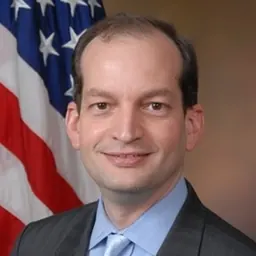
Representing Jeffrey Epstein in 2006 Florida case Lefkowitz represented Jeffrey Epstein in a 2006 Florida case, and negotiated with Alexander Acosta, then U.S. Attorney for the Southern District of Florida and formerly an associate at Kirkland & Ellis, over the federal non-prosecution agreement.
Epstein ultimately pleaded guilty in state court to soliciting a prostitute and procuring a person under 18 for prostitution. The latter felony conviction required him to register as a sex offender in Florida and in other jurisdictions where he maintained residences, including New York.
In 2019, The Wall Street Journal reported on the extent of Lefkowitz's work for Epstein, including efforts by Epstein's defense team to challenge allegations made by Florida police and to argue that Epstein was not a typical sex offender.
Notable pro bono representation Lefkowitz has been deeply involved in the pro bono representation of New York parents who assert that the teacher-tenure system in place has led to inadequate education for countless students across the State because it often precludes dismissal of ineffective teachers. In 2018, a New York appellate court ruled that the case could go on, rejecting the State's argument that some changes the New York State Legislature had enacted necessarily served to solve the problems.
Following that decision, Lefkowitz said that New York's constitution guarantees every child in the state a sound basic education and that the existing teacher employment statutes were "failing our children by keeping ineffective teachers" in public schools, adding that the ruling would allow the plaintiffs to obtain evidence from the State.
In 2013–14, Lefkowitz provided pro bono representation to a group of Hassidic storekeepers who had posted signs on their stores with a dress code involving modest clothing. The New York City Commission on Human Rights imposed significant daily fines on the storekeepers, asserting that the dress code constituted gender-based discrimination even though it applied to both men and women, and even though dress codes that actually do distinguish between genders are prevalent in many settings, including the courts and restaurants.
On the eve of trial, following a ruling in the storekeepers' favor by the administrative judge, the Commission agreed to abandon its efforts to prosecute the storeowners.
Academic positions Lefkowitz has taught at Columbia Law School since at least 2010, where he serves as a lecturer in law. He has taught a seminar on the Supreme Court that uses a simulation method whereby students act in the roles of Supreme Court justices, hearing arguments and writing opinions in cases pending before the Court. He has also taught a course on presidential decision-making and administrative law.
He is a member of the visiting faculty of the Tikvah Fund, an educational foundation focused on Jewish thought and leadership.
Writings Lefkowitz has written widely on law and public policy for The Wall Street Journal, Commentary, the Jewish Review of Books, among others.
In 2014, Lefkowitz authored an article for Commentary titled "The Rise of Social Orthodoxy: A Personal Account." The article describes a phenomenon in which some adherents of Jewish modern orthodoxy are motivated to adhere to certain ritual practices by a strong desire to belong to a social group with traditions, as opposed to being motivated by a commitment to abide by God's commandments and demands. Indeed, some members of the group, even those who pray regularly, may not even believe in a God who issues such decrees.
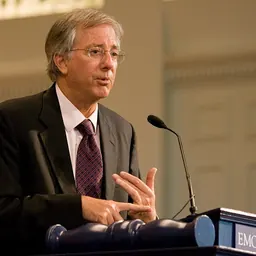
In 2009, Lefkowitz authored an article in Commentary titled "AIDS and the President—An Inside Account." He has also contributed essays and reviews to the Jewish Review of Books, including a review of Dennis Ross's Doomed to Succeed on the history of the U.S.–Israel relationship across successive presidencies.
In December 2012, he was named Lawyer of the Week by The American Lawyer. In 2013, he was named as one of "The 100 Most Influential Lawyers in America".
He was named a Law360 "MVP of the Year" in 2011 for his appellate practice and in 2012, 2013, 2014, 2015 and 2016 for his life sciences work, one of three of the 189 MVPs named to the list six years in a row.
Lefkowitz has received the Judge Joseph M. Proskauer Award from the UJA-Federation of New York (2019), the Gershom Mendes Seixas Award from Columbia/Barnard Hillel (2010), and the Public Service Award from the Orthodox Union (2004).
Boards and affiliations Lefkowitz has served on the boards of several organizations connected to his professional and communal interests. He has been a trustee of the Tikvah Fund, a foundation supporting Jewish thought, education, and leadership, where he has also taught as a member of its visiting faculty. and on the advisory boards of the Manhattan Institute, a New York–based public policy think tank, and of Columbia/Barnard Hillel, the Jewish student organization at his alma mater.
Personal life Lefkowitz is an Orthodox Jew. He married Elena, a journalist who later became a documentary film producer, in 1991. They have three children and live in New York.
His Shabbat observance was accommodated during his White House service. For a White House dinner honoring the U.S. Holocaust Memorial Museum, Laura Bush arranged kosher catering and the purchase of new china so that observant guests could dine from the same service—reportedly the first formal dinner in the State Dining Room held without the White House china.
Selected works
Don’t just read it —
keep it.
Full-length biographies made to live with: read them, listen on the way to work, watch them tonight.
- E-book
- Audio
- Video
Instant download · yours to keep · every purchase keeps this site free
Important facts
People in Jay Lefkowitz's life
Named in this biography and alive at the same time





Related people
Same field, nearest in time

Contemporaries
People whose lives overlapped Jay Lefkowitz's






Frequently asked questions
Who is Jay Lefkowitz?
American lawyer
When was Jay Lefkowitz born?
Jay Lefkowitz was born on 20 November 1962.
What is Jay Lefkowitz's occupation?
Jay Lefkowitz is a lawyer.
What nationality is Jay Lefkowitz?
Jay Lefkowitz is American.
Sources & further reading
Cite this page
APA: Biography.guide. (2026). Jay Lefkowitz. https://biography.guide/jay-lefkowitz/
MLA: "Jay Lefkowitz." Biography.guide, https://biography.guide/jay-lefkowitz/.
Chicago: "Jay Lefkowitz." Biography.guide. https://biography.guide/jay-lefkowitz/.
Data last updated: 2026-09-20 · Spot an error? Report a correction.
Page generated 2026-09-27 05:32 UTC