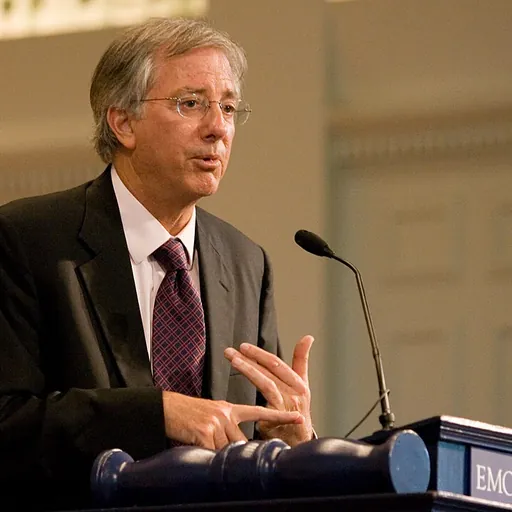
About Dennis Ross
Born 1948. Dennis Ross is an American politician, diplomat, writer, political adviser and political scientist.
Dennis B. Ross (born November 26, 1948) is an American diplomat and author. He served as the Director of Policy Planning in the State Department under U.S. President George H. W. Bush, the special Middle East coordinator under President Bill Clinton, and was a special adviser for the Persian Gulf and Southwest Asia (including Iran) to former U.S. Secretary of State Hillary Clinton. Ross is currently a fellow at The Washington Institute for Near East Policy, a pro-Israel think tank, and co-chairs the Jewish People Policy Institute think tank's board of directors.
Early life and education Ross was born in San Francisco, California, and grew up in Belvedere, California. His mother is Jewish and his stepfather is Catholic.
Ross graduated from the University of California, Los Angeles in 1970 and did graduate work there, writing a doctoral dissertation on decision-making in the Soviet Union. He became religiously Jewish after the Six-Day War. During the Reagan administration, Ross served as director of Near East and South Asian affairs in the U.S. National Security Council and Deputy Director of the Pentagon's Office of Net Assessment (1982–84). In the summer of 1993 U.S. President Bill Clinton named Ross Middle East envoy. He helped the Israelis and Palestinians reach the 1995 Interim Agreement on the West Bank and the Gaza Strip and brokered the Protocol Concerning the Redeployment in Hebron in 1997. He facilitated the Israel–Jordan peace treaty, and also worked on talks between Israel and Syria.
Ross was criticized by people on both sides of the conflict. Former Palestinian Foreign Minister Nabil Shaath described him as being more "pro-Israeli than the Israelis." Occasional references to his Jewish ancestry were brought up within the Arab world (although Ross maintains this was not a problem with other heads of state during negotiations), while some conservative Israelis branded him "self-hating"—each questioning his ability to be unbiased, though Palestinians involved in the negotiation process would insist that his perceived lack of objectivity had little to do with his religion. Describing Ross, Roger Cohen wrote that "Balance is something this meticulous diplomat [Ross] prizes.” But a recurrent issue with Ross, who embraced the Jewish faith after being raised in a non-religious home by a Jewish mother and Catholic stepfather, has been asked whether he is too close to the American Jewish community and Israel to be an honest broker with Iran or Arabs. Aaron David Miller, after years of working with Ross, concluded in a book that he 'had an inherent tendency to see the world of Arab–Israeli politics first from Israel's vantage point rather than that of the Palestinians.' Another former senior State Department official, who requested anonymity ... told me, "Ross's bad habit is pre-consultation with the Israelis."
Post-Clinton-era activities After leaving his position as envoy, Ross returned to The Washington Institute for Near East Policy think tank as counselor and Ziegler Distinguished Fellow. He became chair of the Jerusalem-based think tank, the Jewish People Policy Planning Institute, funded and founded in 2002 by the Jewish Agency for Israel, the operative branch of the World Zionist Organization (WZO).
During these years he taught classes at Marquette University, Brandeis University, Harvard University's Kennedy School, and Georgetown University's Walsh School of Foreign Service, where he served as a Distinguished Professor in the Practice of Diplomacy. He also wrote frequently for publications such as The Washington Post, The New York Times, The Jerusalem Post, The New Republic, USA Today, and The Wall Street Journal and worked as a foreign affairs analyst for the Fox News channel.
Ross was a noted supporter of the 2003 Iraq war, and signed two Project for a New American Century (PNAC) letters in support of the war in March 2003. However, he opposed some of the Bush administration's policies for post-war reconstruction. He also opposed Bush's policy of avoiding direct talks with Iran. It was viewed as the Democratic nominee's most expansive on international affairs.
Ross was appointed Special Advisor for the Persian Gulf and Southwest Asia to U.S. Secretary of State Hillary Clinton on February 23, 2009. On June 25, 2009 the White House announced that Ross was leaving the State Department to join the National Security Council staff as a Special Assistant to the President and Senior Director for the Central Region, with overall responsibility for the region. The Central Region includes the Middle East, the Persian Gulf, Afghanistan, Pakistan, and South Asia.
Haaretz reported that Ross's work as a Middle East aide in the Obama administration was burdened by tension with special envoy George Mitchell, to the point that Ross and Mitchell sometimes refused to speak to each other. This report indicated that the tension was caused, at least in part, by Ross's occasional efforts to conduct negotiations with Israeli government officials without notifying Mitchell. For example, in both September and November 2010, Ross was said to have tried to persuade Prime Minister Benjamin Netanyahu to freeze settlement construction during negotiations with the Palestinian National Authority, in exchange for unspecified private assurances and a major military arms transfer from the United States.
Palestinian officials reportedly viewed Ross as beholden to the Israeli government, and not as an even-handed facilitator of negotiations. For a period, Ross refrained from meeting Palestinian Authority officials, while continuing to hold talks with Israeli officials during his visits to the region. He rejoined The Washington Institute as William Davidson Distinguished Fellow, Counselor, Irwin Levy Family Program on the U.S.-Israel Strategic Relationship. He currently serves on the advisory board for the non-profit America Abroad Media.
Controversies
In their 2006 paper The Israel Lobby and U.S. Foreign Policy, John Mearsheimer, political science professor at the University of Chicago, and Stephen Walt, academic dean of the Harvard Kennedy School at Harvard University, named Ross as a member of the "Israeli lobby" in the United States. Ross in turn criticized the academics behind the paper. His 2007 book, Statecraft: And How to Restore America's Standing in the World, criticizes the administration of U.S. President George W. Bush for its failure to use the tools of statecraft to advance U.S. national interests. He advocates instead for a neoliberal foreign policy which relies on a much broader and more effective use of statecraft. While he has worked under both Republican and Democratic administrations, Ross himself is a Democrat.
Ross states in The Missing Peace that he and other American negotiators pushed Israeli Prime Minister Ehud Barak to accept Palestinian sovereignty over Arab neighborhoods of East Jerusalem during the Middle East Peace Summit at Camp David. Ross wrote part of Barack Obama's speech to the American Israel Public Affairs Committee during the 2008 Presidential campaign, and the speech stated that "Jerusalem is Israel's capital" and that it should not be divided again. The Jerusalem Post reported in November 2008 that, according to Ross, these were "facts." However, Ross stated that the "third point," which is the position of the United States since the Camp David Accords, is that the final status of the city will be resolved by negotiations.
In February 2018, he penned an opinion piece in The Washington Post strongly supportive of the Saudi crown prince Muhammad bin Salman, calling him "a Saudi revolutionary" and opining that he saw "him as more like Mustafa Kemal Atatürk—a leader who revolutionized Turkey by taking away the power of the religious base and secularizing the country."
Aaron David Miller and Ambassador Daniel Kurtzer, two of the most senior officials (and Ross' long time collaborators during the peace process) would later attribute the failures of the peace process to Ross.
Affiliations Ross co-founded the advocacy group United Against Nuclear Iran (UANI) with Ambassador Richard Holbrooke, former CIA director R. James Woolsey Jr., and former U.S. ambassador to the United Nations for Management and Reform Mark Wallace. He is currently on the advisory board of UANI as well as on the Counter Extremism Project, a non-profit non-governmental organization that combats extremist groups. Ross is currently a fellow at The Washington Institute for Near East Policy, a pro-Israel think tank, and co-chairs the Jewish People Policy Institute think tank's board of directors.
Works – the Washington Institute's first policy paper
Foreword for:
Myths, Illusions, and Peace: Finding a New Direction for America in the Middle East, with David Makovsky, Viking, 2009. Doomed to Succeed: The U.S.-Israel Relationship from Truman to Obama Farrar, Straus, and Giroux. October 2015 Trump and the Middle East: Prospects and Tasks, Fathom, Winter 2016 Critical Reflections on the Trump Peace Plan, Fathom, April 2019 Statecraft 2.0: What America Needs to Lead in a Multipolar World, Oxford University Press, May 2025,
Awards
2015: National Jewish Book Award in the History category for Doomed to Succeed: The U.S.-Israel Relationship from Truman to Obama
Don’t just read it —
keep it.
Full-length biographies made to live with: read them, listen on the way to work, watch them tonight.
- E-book
- Audio
- Video
Instant download · yours to keep · every purchase keeps this site free
Important facts
People in Dennis Ross's life
Named in this biography and alive at the same time


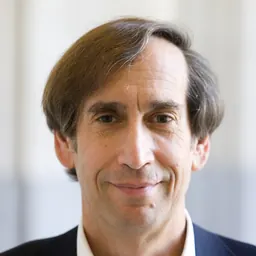
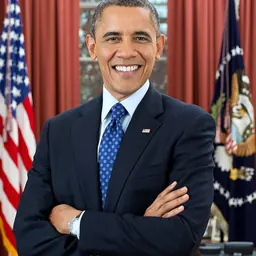



Related people
Same field, nearest in time






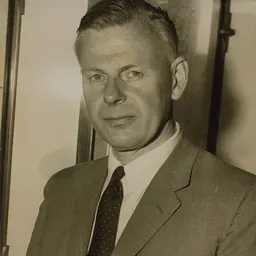
Contemporaries
People whose lives overlapped Dennis Ross's



Frequently asked questions
Who is Dennis Ross?
American diplomat
When was Dennis Ross born?
Dennis Ross was born on 26 November 1948 in San Francisco.
What is Dennis Ross's occupation?
Dennis Ross is a politician, diplomat, writer, political adviser and political scientist.
What nationality is Dennis Ross?
Dennis Ross is American.
Sources & further reading
Cite this page
APA: Biography.guide. (2026). Dennis Ross. https://biography.guide/dennis-ross/
MLA: "Dennis Ross." Biography.guide, https://biography.guide/dennis-ross/.
Chicago: "Dennis Ross." Biography.guide. https://biography.guide/dennis-ross/.
Data last updated: 2026-09-22 · Spot an error? Report a correction.
Portrait: Wikimedia Commons · author & licence
Page generated 2026-09-27 05:03 UTC