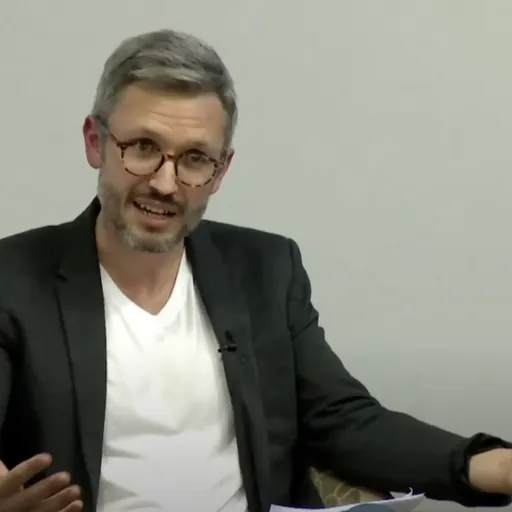
About Jason Hickel
Born 1982. Jason Hickel is an American anthropologist and ethnographer.
Background Hickel was born and raised in Swaziland (now Eswatini) where his parents, Jack and Josie Hickel were doctors. He is the grandson of former Alaska Governor Wally Hickel. He received his PhD in anthropology from the University of Virginia in August 2011. His doctoral thesis was entitled Democracy and Sabotage: Moral Order and Political Conflict in KwaZulu-Natal, South Africa. As of 2020 he serves on the Harvard-Lancet Commission on Reparations and Redistributive Justice, on the Statistical Advisory Panel for the UN Human Development Report, and on the advisory board for the Green New Deal for Europe.
Scholarship
Poverty and development
Noah Smith has criticized Hickel for using a single threshold of poverty ($7.40 per day) and ignoring increases in incomes below that threshold. Smith states that an increase in income from $1.90 per day to $7.39 per day would be life-changing, but would not count as poverty alleviation for Hickel.
Colonialism Writing for a piece published in the journal World Development
According to sociologist Tibor Rutar, the relationship between capitalism and colonialism is more complex than is often suggested. He argues that many colonial powers (such as Spain and Portugal) in the early modern period were still pre-capitalist. Moreover, he claims that these powers rarely introduced capitalist institutions into their colonies. Only in a few settler colonies, such as the United States and Australia, did a genuine capitalist development take place. According to Rutar, economic profit motives alone are insufficient to classify colonialism as a specifically capitalist practice. Balance of payments analyses also show that colonial plunder generally did not play a necessary or decisive role in Europe's economic growth—except in the case of settler colonies.
According to Hickel, the focus on aid as a tool for international development depoliticises poverty and misleads people into believing that rich countries are benevolent toward poorer countries. In reality, he says, financial flows from rich countries to poor countries are outstripped by flows that go in the opposite direction, including external debt service, tax evasion by multinational companies, patent licensing fees and other outflows resulting from structural features of neoliberal globalisation. Moreover, Hickel argues that poor countries suffer significant losses due to international trade and finance rules (such as under structural adjustment programmes, free trade agreements, and the WTO framework) which depress their potential export revenues and prevent them from using protective tariffs, subsidies, and capital controls as tools for national economic development. According to Hickel, global poverty is ultimately an artefact of these structural imbalances. Focusing on aid distracts from the substantive reforms that would be necessary to address these problems.
Journalist Kelsey Piper wrote that Jason Hickel argues most trade between rich and poor countries is extractive rather than mutually beneficial. According to Piper, this view rests on a speculative assumption about how developing countries could grow without trade with rich nations — an assumption that, she noted, is not widely shared by democratically elected leaders in those countries. Piper further argued that the global economy is much more interconnected than Hickel suggests. As an example, she pointed to the COVID-19 pandemic, during which the decline in consumption in wealthy countries led to severe side effects in poorer nations, such as rising hunger and child mortality.
Climate change, ecological economics and degrowth In 2020, Hickel published research in The Lancet Planetary Health based on 2015 data. It asserted that a small number of high-income countries are responsible for the overwhelming majority of historical CO2 emissions in excess of the planetary boundary (350 ppm). His analysis concluded that the US was responsible for 40%, the EU was responsible for 29%, the most industrialized countries were responsible for 90%, and the Global North as a group was responsible for 92%. He has also argued that high-income nations are disproportionately responsible for other forms of global ecological breakdown, given their high levels of resource use. Critics of Hickel argue that economic growth can occur while emissions decrease, pointing to data that shows that many countries have transitioned to green forms of energy while still experiencing economic growth. Hickel and his colleagues argue that high-income nations need to scale down excess energy and resource use (i.e., "degrowth") in order to achieve a rapid transition to 100% renewable energy and to reverse ecological breakdown. He has argued that high-income nations do not need economic growth in order to achieve social goals; they can reduce excess resource and energy use while at the same time improving human well-being, by distributing income more fairly, expanding universal public goods, shortening the working week, and introducing a public job guarantee. Hickel has also suggested that modern monetary theory (MMT) could help finance a degrowth transition. In a 2022 comment published in Nature, Hickel, Kallis and others say that both the IPCC and the IPBES "suggest that degrowth policies should be considered in the fight against climate breakdown and biodiversity loss, respectively."
In 2020, Hickel proposed a Sustainable Development Index, which adjusts the Human Development Index by accounting for nations' ecological impact, in terms of per capita emissions and resource use. Hickel has also criticized the Sustainable Development Goals Index (SDG Index)
Human ecologist Rikard Warlenius argues in the scientific journal Ecological Economics that the pessimistic assessment of Hickel regarding decoupling is not based on robust arguments but rather on mystifications of what decoupling entails. They assume a maximum annual reduction in the carbon intensity of GDP of 4%, combined with the notion that global GDP must decline or converge. Based on these assumptions, limiting global warming to 1.5 °C would be impossible, and even the 2 °C target would only be achievable if high-income countries reduced their economies by more than 90%, and middle-income countries by around 70%. However, such a scenario is widely considered politically unrealistic, which could in turn jeopardize the climate targets themselves. According to Warlenius, their pessimism is also unfounded. There are already examples of absolute decoupling where emissions declined faster than the 4% threshold proposed by Hickel. Moreover, he argues that no compelling reasons are given as to why strong policy measures would not be able to achieve higher rates of decoupling. He finds it surprising that scholars such as Hickel and Kallis could not imagine more "aggressive policies" than those used in their model. Under normal conditions, economic growth increases emissions (while carbon intensity declines), and degrowth (recession) stabilizes emissions. At the same time, however, growth is likely better positioned than degrowth to create the conditions necessary for ambitious climate action, such as the deep, transformative, and costly transitions outlined by the IPCC.
Journalist Kelsey Piper argues that Hickel’s vision in Less Is More is based on the assumption that societies can stop pursuing economic growth while better meeting human needs than ever before. She describes this as a “wildly optimistic” idea, disconnected from actual policy results, and even more out of touch with reality than the “sustainable development” models degrowthers themselves criticize. She adds that, in the world today, economic growth is strongly associated with welfare outcomes of every kind. GDP, though imperfect, is the best predictor of well-being indicators such as life expectancy, health care, and leisure time — the very things degrowthers care about. In a similar vein, Max Roser of Our World in Data has stated that economic growth ultimately concerns the production of goods and services that people need. Piper further notes that Less Is More is “surprisingly sparse” in explaining how his vision could achieve its stated goals. She describes Hickel's proposals to shorten the workweek and reform tax policy as solid ideas, but considers the other suggested measures — such as ending planned obsolescence, advertising, food waste, and student debt — “laughably inadequate” to the scale of the climate challenge. According to Piper, Hickel’s work is “relentlessly pessimistic” about the potential for reform within the current system, yet “oddly optimistic” about the feasibility of his own alternative.
Senior Fellow of the neoliberal think tank Adam Smith Institute, Tim Worstall, argued that Hickel does not understand economics, adding that Hickel's "economics is wrong because he doesn’t have the base, the footing, in the subject." He also described Hickel as an example of the dangers of pontificating beyond one’s field.
In a review for Deutschlandfunk Kultur, German economics journalist Ursula Weidenfeld described Hickel’s book The Divide as “radically one-sided,” portraying capitalism as a centuries-long history of exploitation. She wrote that it tells a history of capitalism as a powerful conspiracy theory, centering on Hickel’s depiction of industrialization and globalization as instruments of domination that enabled the rich to subjugate the world. According to Weidenfeld, Hickel “denies reports that global poverty has drastically declined in the past twenty years,” calling such claims “sleight-of-hand tricks by interested parties.” She argued that Hickel ignores the disastrously failed attempt at an alternative economic system — communism — and that only for this reason can he recommend a kind of “feel-good socialism” as a remedy, a utopian vision lacking nothing.
Journalism Hickel writes on global development and political economy, and has contributed to The Guardian, Foreign Policy, Al Jazeera, Jacobin, Monthly Review and other media outlets.
Awards Association of Social Anthropologists of the UK and the Commonwealth (ASA) Annual Award for Teaching and Lecturing in Anthropology, 2013.
Books
(2018). The Divide: Global Inequality from Conquest to Free Markets. WWNorton.
Don’t just read it —
keep it.
Full-length biographies made to live with: read them, listen on the way to work, watch them tonight.
- E-book
- Audio
- Video
Instant download · yours to keep · every purchase keeps this site free
Important facts
People in Jason Hickel's life
Named in this biography and alive at the same time





Related people
Same field, nearest in time




Contemporaries
People whose lives overlapped Jason Hickel's



Frequently asked questions
Who is Jason Hickel?
economic anthropologist (born 1982)
When was Jason Hickel born?
Jason Hickel was born on 26 December 1982 in Eswatini.
What is Jason Hickel's occupation?
Jason Hickel is an anthropologist and ethnographer.
What nationality is Jason Hickel?
Jason Hickel is American.
Sources & further reading
Cite this page
APA: Biography.guide. (2026). Jason Hickel. https://biography.guide/jason-hickel/
MLA: "Jason Hickel." Biography.guide, https://biography.guide/jason-hickel/.
Chicago: "Jason Hickel." Biography.guide. https://biography.guide/jason-hickel/.
Data last updated: 2026-09-22 · Spot an error? Report a correction.
Portrait: Wikimedia Commons · author & licence
Page generated 2026-09-27 05:02 UTC