
About Janus Djurhuus
Lived 1881 – 1948 (aged 67). Janus Djurhuus was a Danish poet, poet lawyer and advocate.
Jens Hendrik Oliver Djurhuus, called Janus Djurhuus, (26 February 1881, Tórshavn – 1 September 1948, Tórshavn) was the first modern Faroese poet. He and his younger brother Hans Andreas Djurhuus, also a poet, are called the Áarstova brothers after the house where they grew up.
Life and work Djurhuus's parents were Óla Jákup Djurhuus (1832–1909) and Else Marie née Poulsen, from Hósvík (1847–1897). He was a great-grandson of Jens Christian Djurhuus.
Djurhuus said that his "poetic baptism" came in school, when he heard Jákup Dahl (later a provost and Bible translator and author of the first school grammar of the Faroese language) declaim Jóannes Patursson's Nú er tann stundin komin til handa (Now is the hour come for acting), the anthem of the Christmas Meeting of 1888 which began the rise of Faroese nationalism.
Djurhuus trained as a lawyer. After passing the preliminary examinations in 1897, he went to Denmark for university preparation, first in Copenhagen and then in Bornholm. He passed the qualifying examinations in 1900, graduated with the cand. jur. degree in 1911, and then practised in Copenhagen until the late 1930s, when he returned to the Faroes to practise there. However, he kept in touch with his homeland through students. He published four further collections of poems.
Djurhuus had also studied classical philology, and also published accomplished Faroese translations of Ancient Greek and Latin works, including some of Plato's Dialogues and poetry by Sappho, and (posthumously) a poetic translation of the Iliad. (He also published translations of poetic works by Goethe, Dante, Heinrich Heine and Gustaf Fröding). There is a story that on one occasion when a Greek steamer called at Tórshavn, he went on board and sent a cabin boy for the captain. On his arrival, he began to recite the Odyssey in Ancient Greek. The astonished captain joined in. The language of his poems draws on both modern Faroese and the language of the traditional ballads, as well as ancient and modern poetry in other Scandinavian languages; their rhythm is also influenced by ancient Greek and modern German poetry.
Literary reputation Djurhuus's poetry represented the breakthrough into modern literature in Faroese. His poetry has been judged "among the best" of modern Scandinavian writing, "splendid... of great vision and musicality" and some consider him the greatest Faroese poet,
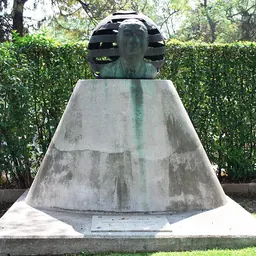
He was a national romantic, but his works show what has been described as poetic idealisation and love of his homeland conflicting with "something of a revulsion from [its] reality" It was chosen as the popular favourite amongst their stamp issues for the year.
Don’t just read it —
keep it.
Full-length biographies made to live with: read them, listen on the way to work, watch them tonight.
- E-book
- Audio
- Video
Instant download · yours to keep · every purchase keeps this site free
Important facts
People in Janus Djurhuus's life
Named in this biography and alive at the same time
Related people
Same field, nearest in time

Contemporaries
People whose lives overlapped Janus Djurhuus's




Frequently asked questions
Who was Janus Djurhuus?
Faroese poet
When was Janus Djurhuus born?
Janus Djurhuus was born on 26 February 1881 in Tórshavn.
When did Janus Djurhuus die?
Janus Djurhuus died on 31 August 1948 in Tórshavn.
What was Janus Djurhuus's occupation?
Janus Djurhuus was a poet, poet lawyer and advocate.
What nationality was Janus Djurhuus?
Janus Djurhuus was Danish.
Sources & further reading
Cite this page
APA: Biography.guide. (2026). Janus Djurhuus. https://biography.guide/janus-djurhuus/
MLA: "Janus Djurhuus." Biography.guide, https://biography.guide/janus-djurhuus/.
Chicago: "Janus Djurhuus." Biography.guide. https://biography.guide/janus-djurhuus/.
Data last updated: 2026-09-20 · Spot an error? Report a correction.
Page generated 2026-09-27 05:34 UTC