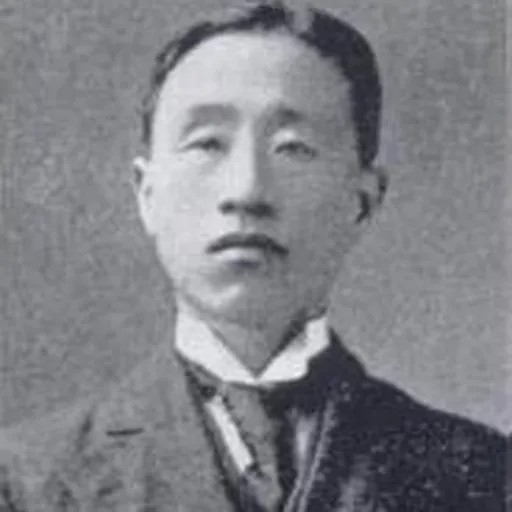
About Jang In-hwan
Lived 1880 – 1930 (aged 49–50). Jang In-hwan was a Korean criminal.
Jang In-hwan (; March 30, 1875 – April 24, 1930) was a Korean independence activist. He is best known along with Jeon Myeong-un for his role in the 1908 assassination of Durham Stevens, a former American diplomat, employee of the Japanese colonial office in Korea, and pro-Japan lobbyist.
Incident Jang, a Christian, emigrated from Korea to Hawaii in February 1905, and from there to the continental United States in August 1906. He became involved with the Korean independence movement while living there, and joined the Daedong Bogukhoe. In March 1908, infuriated by Stevens' remarks about Japanese rule in Korea, the Daedong Bogukhoe held a joint meeting with the Dongnip Hyeophoe, another local association of Koreans of which Jeon was a member. Yang Ju-eun, a fellow member of the association, recalled in a 1974 interview that Jang, in contrast to Jeon, did not say a single word during that meeting; Jang had a reputation as a "quiet and shy Christian gentleman." However, he purchased a gun from his roommate in order to circumvent laws which prevented Asians from owning guns.
On March 23, 1908, Jeon and Jang approached Stevens at the Port of San Francisco as he prepared to embark on a ferry to Oakland to make a rail connection to Washington, D.C. Jeon fired his revolver at Stevens first, but missed, and instead rushed at him, using his weapon as a club to hit Stevens in the face. Jang then accidentally fired into the melee, striking Stevens twice in the back; Jeon was also shot in the confusion. The crowd which had gathered urged that they be lynched on the spot; Jang was arrested and held without bail on a charge of murder, while Jeon was sent to the hospital for treatment. He received news of Stevens' death two days later with "manifest delight".
Trial Because there was insufficient evidence to prove that Jeon and Jang had conspired with each other, Jeon was released in June, and Jang ordered to stand trial as the sole defendant.
During Jang's trial, the defense described Japan's subordination of Korea in great detail. According to press reports, several members of the all-white jury were moved to tears. The prosecution reminded the jury that Jang, not Japan, was on trial. They presented four experts in psychiatric disorders, all of whom testified that Jang was not insane when he shot Stevens, and had been feigning insanity during the proceedings. Nevertheless, the jurors were divided on Jang's fate. While none of them were willing to acquit him outright, only three of the jurors wanted to convict him of first degree murder. Five wanted to convict him of second degree murder, and the remaining four wanted to convict him of manslaughter. Eventually, on December 23, 1908, the jurors agreed to find Jang guilty of second degree murder. At sentencing, Jang himself requested to the judge through an interpreter to change his sentence to death, a request which was not possible under the law. "I do not want to live if I am to be sent to prison for a long time. If sent to prison, I will do nothing but weep for my country's wrong. I do not want to live. I wanted to give up my life for my country. I am only a poor man, but I want to die, and I love Korea." Jang was sentenced to 25 years in prison. He served his sentence at San Quentin State Prison, and was released on parole in 1919, having served 10 years. Jang was repatriated to Korea in 1927, where he attended the wedding of Cho Man-sik and established an orphanage in Sonchon, North Pyongan Province. However, under pressure from the Japanese government of Korea, he returned to the United States. An impoverished and broken man, Jang committed suicide in San Francisco in 1930, and was buried there.
Jang was posthumously awarded the Order of Merit for National Foundation by South Korea's Ministry of Patriots' and Veterans' Affairs in 1962. In 1975, South Korean president Park Chung Hee ordered that he be reburied in the Seoul National Cemetery.
Don’t just read it —
keep it.
Full-length biographies made to live with: read them, listen on the way to work, watch them tonight.
- E-book
- Audio
- Video
Instant download · yours to keep · every purchase keeps this site free
Important facts
People in Jang In-hwan's life
Named in this biography and alive at the same time
Related people
Same field, nearest in time



Contemporaries
People whose lives overlapped Jang In-hwan's





Frequently asked questions
Who was Jang In-hwan?
Korean independence activist (1880–1930)
When was Jang In-hwan born?
Jang In-hwan was born in 1880 in Pyongyang.
When did Jang In-hwan die?
Jang In-hwan died on 24 April 1930.
What was Jang In-hwan's occupation?
Jang In-hwan was a criminal.
What nationality was Jang In-hwan?
Jang In-hwan was Korean.
Sources & further reading
Cite this page
APA: Biography.guide. (2026). Jang In-hwan. https://biography.guide/jang-in-hwan/
MLA: "Jang In-hwan." Biography.guide, https://biography.guide/jang-in-hwan/.
Chicago: "Jang In-hwan." Biography.guide. https://biography.guide/jang-in-hwan/.
Data last updated: 2026-09-20 · Spot an error? Report a correction.
Portrait: Wikimedia Commons · author & licence
Page generated 2026-09-27 04:57 UTC