
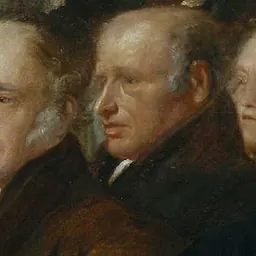
James Webbe Tobin
English slavery abolitionist
About James Webbe Tobin
Lived 1767 – 1814 (aged 46–47). James Webbe Tobin was a British abolitionist.
James Webbe Tobin (1767–1814) was an English abolitionist, the son of a plantation owner on Nevis. He was a political radical, and friend of leading literary men.
Life He was the eldest son of James Tobin of Bristol and his first wife Elizabeth Webbe; George Tobin and John Tobin were his brothers.
Tobin was educated at King Edward VI School, Southampton and Wadham College, Oxford, where he matriculated in 1787, and graduated B.A. in 1792. From 1795, until his brother John's death in 1804, they lived together in London.
In the 1790s Tobin befriended Samuel Taylor Coleridge and William Wordsworth; Wordsworth knew, through Basil Montagu and Francis Wrangham, the sons of John Pretor Pinney, and may have met Tobin through Montagu, or the Pinneys. Tobin brought Tom Wedgewood to meet Coleridge and Wordsworth in September 1797; Wedgwood later became Coleridge's patron. In letters of 1798, Wordsworth announced to Tobin, then James Losh, his major poetic project under the working title The Recluse.
Tobin had a degenerative eye condition, and at this period he was only partially sighted, ruling out a career. During 1799 he took part in the nitrous oxide experiments of Humphry Davy. He was an observer when Davy experimented with other inhalations.
From 1807 Tobin and his family were on Nevis. Huggins was acquitted; Tobin made his views known, writing in particular to Hugh Elliot, the Governor of the Leeward Islands, claiming that the jury was packed. The Christian Observer noted that Tobin's blindness meant he could not be challenged to a duel for his stand. James Stephen wrote that others who backed him did not escape feuds.
Works Tobin contributed to The Annual Anthology edited by Robert Southey, and edited its third volume (1802). In 1812 he wrote a Reply to the pamphlet A plain statement of the motives which gave rise to the public punishment of several negroes (1811), by Thomas John Cottle, son-in-law of Edward Huggins.
Family Tobin married Jane Mallet or Mullett (1784–1837) in 1807. She was the daughter of Thomas Mullett (1745–1814), a Bristol stationer connected by marriage to Caleb Evans, a Particular Baptist minister in Bristol. They had at least four children, including the eldest son John James, born 1808/9, the friend of Humphry Davy.
After her husband's death, Jane Tobin and her family returned to England.
Don’t just read it —
keep it.
Full-length biographies made to live with: read them, listen on the way to work, watch them tonight.
- E-book
- Audio
- Video
Instant download · yours to keep · every purchase keeps this site free
Important facts
People in James Webbe Tobin's life
Named in this biography and alive at the same time
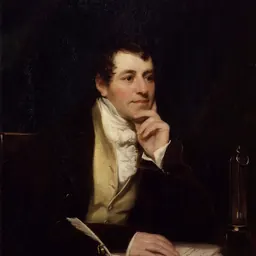


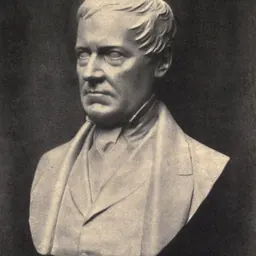
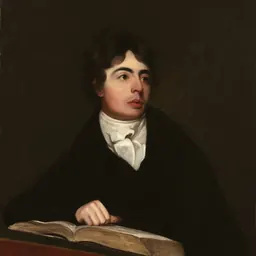


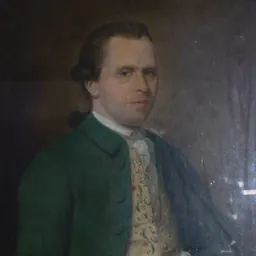
Related people
Same field, nearest in time

Contemporaries
People whose lives overlapped James Webbe Tobin's






Frequently asked questions
Who was James Webbe Tobin?
English slavery abolitionist
When was James Webbe Tobin born?
James Webbe Tobin was born in 1767.
When did James Webbe Tobin die?
James Webbe Tobin died in 1814.
What was James Webbe Tobin's occupation?
James Webbe Tobin was an abolitionist.
What nationality was James Webbe Tobin?
James Webbe Tobin was British.
Sources & further reading
· Wikipedia: James Webbe Tobin
Cite this page
APA: Biography.guide. (2026). James Webbe Tobin. https://biography.guide/james-webbe-tobin/
MLA: "James Webbe Tobin." Biography.guide, https://biography.guide/james-webbe-tobin/.
Chicago: "James Webbe Tobin." Biography.guide. https://biography.guide/james-webbe-tobin/.
Data last updated: 2026-09-20 · Spot an error? Report a correction.
Page generated 2026-09-27 05:29 UTC