
James Tilly Matthews
British businessman
About James Tilly Matthews
Lived 1770 – 1815 (aged 44–45). James Tilly Matthews was a British wholesaler.
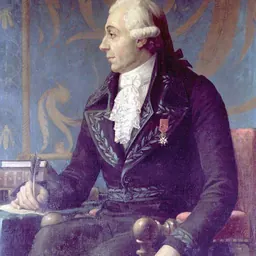
James Tilly Matthews (1770 – 10 January 1815) was a British merchant who was committed to the Bethlem Royal Hospital in 1797 after developing politically charged delusions which led him to disrupt sessions of the House of Commons of Great Britain. These delusions were documented in an 1810 book titled Illustrations of Madness, including Matthews' belief that a group of spies were using an "air loom" to secretly torment him from a distance. Modern historians consider Matthews to be the first fully documented case of schizophrenia.
Life
Voyage to France In the early 1790s, concerned at the likelihood of war between Britain and France, Matthews travelled to France with the radical David Williams, who was acquainted with such Girondins as Jacques Pierre Brissot and Charles-François Lebrun. Williams made efforts at mediation which failed, whereupon Matthews took the lead. He gained the trust of the French government for a short time.
On 2 June 1793 the Girondists were displaced by the Jacobins and Matthews fell under suspicion for his Girondist associations and also because he was suspected of being a double agent. He was arrested and imprisoned for three years during the height of The Terror and was reportedly terrified of the guillotine, like all others. This lasted until 1796 when the French authorities concluded that he was a lunatic and released him.
Committal Returning to London, Matthews wrote two letters to Lord Liverpool, in which he accused the Home Secretary of treason and complained about conspiracies directed against his life. After interrupting a debate in the House of Commons by shouting "Treason" at Lord Liverpool from the Public Gallery, he was arrested and held at Tothill Fields Bridewell, a secure house of correction in Tothill Fields, Westminster before being admitted to the Bethlem (Bedlam) hospital on 28 January 1797.
In 1809 his family and friends petitioned for his release, on the grounds that he was no longer insane, but their petition was rejected by the Bethlem authorities. They therefore took out a suit of habeas corpus and two doctors, George Birkbeck and Henry Clutterbuck examined Matthews, declaring him sane. John Haslam, the resident apothecary at Bethlem, begged to differ and maintained that Matthews' delusions, particularly on political matters, rendered him a danger both to public figures and the general public. Haslam intended to settle the dispute over Matthews' sanity; his book contains verbatim accounts of Matthew's beliefs and hallucinatory experiences and is considered the original description of the symptoms of paranoid schizophrenia. The book documented the first full study of a single psychiatric patient in medical history and has become a classic in the medical literature.
The "Air Loom"
Matthews believed that a gang of criminals and spies skilled in pneumatic chemistry had taken up residence at London Wall in Moorfields (close to Bethlem) and were tormenting him by means of rays emitted by a machine called the "Air Loom" or gaseous charge generator. The torments induced by the rays included "Lobster-cracking", during which the circulation of the blood was prevented by a magnetic field; "Stomach-skinning" and "Apoplexy-working with the nutmeg grater" which involved the introduction of fluids into the skull. His persecutors bore such names as "the Middleman" (who operated the Air Loom), "the Glove Woman" and "Sir Archy" (who acted as "repeaters" or "active worriers" to enhance Matthews' torment or record the machine's activities) and their leader, a man called "Bill, or the King".
Matthews' delusions had a definite political slant: he claimed that the purpose of this gang was espionage, and that there were many other such gangs armed with Air Looms all over London, using "pneumatic practitioners" to "premagnetize" potential victims with "volatile magnetic fluid". According to Matthews, their chief targets (apart from himself) were leading government figures. By means of their "rays" they could influence ministers' thoughts and read their minds. Matthews declared that William Pitt was "not half" susceptible to these attacks
It should also be noted that while Haslam kept notes on Matthews, Matthews kept notes on Haslam and his treatment in Bethlem. This formed part of the evidence looked at by the House of Commons 'Committee On the Better Regulation of Madhouses in England' in 1815, the findings of which led to Haslam's dismissal and reform of the treatment of patients in the Bethlem Hospital.
Matthews was also important in the history of psychiatry for more practical reasons. During his involuntary confinement he took part in a public competition to design plans for the rebuilding of Bethlem hospital. Bethlem's governors thought so well of the 46 pages of designs submitted by Matthews that they paid him £50 and the drawings finally used to build the new hospital show some features proposed by Matthews. In 2002, the British artist Rod Dickinson built a re-creation of the air loom from Matthews' original plans. Greg Hollingshead's novel Bedlam (2004) concerns the changing relationship between John Haslam and Matthews and is narrated in first-person from the perspective of Haslam, Matthews, and Matthews' wife. The CSI episode "Lab Rats" (2007), Grissom uses Matthews' condition as an analogy in describing The Miniature Killer, a serial killer obsessed with bleach. Robert Rankin's 2007 novel The Da-da-de-da-da Code features a group of villains known as the Air Loom Gang, as well as a doctor named Doctor Archy, a pub called "The Middle Man" and a beer called "King Billy". A short animated film about Matthews was produced by Leo Bridle and Mike Jay in 2014 in collaboration with the Wellcome Collection. The game Amnesia: A Machine for Pigs from 2013 makes several references to both James Tilly Matthews, the Air Loom and Bedlam. The song "Snake Oil" from Lovejoy's 2026 EP Second to One makes a reference to the Air Loom.
Don’t just read it —
keep it.
Full-length biographies made to live with: read them, listen on the way to work, watch them tonight.
- E-book
- Audio
- Video
Instant download · yours to keep · every purchase keeps this site free
Important facts
People in James Tilly Matthews's life
Named in this biography and alive at the same time



Related people
Same field, nearest in time



Contemporaries
People whose lives overlapped James Tilly Matthews's




Frequently asked questions
Who was James Tilly Matthews?
British businessman
When was James Tilly Matthews born?
James Tilly Matthews was born in 1770.
When did James Tilly Matthews die?
James Tilly Matthews died on 10 January 1815 in London.
What was James Tilly Matthews's occupation?
James Tilly Matthews was a wholesaler.
What nationality was James Tilly Matthews?
James Tilly Matthews was British.
Sources & further reading
· Wikipedia: James Tilly Matthews
· DBpedia: James Tilly Matthews
Cite this page
APA: Biography.guide. (2026). James Tilly Matthews. https://biography.guide/james-tilly-matthews/
MLA: "James Tilly Matthews." Biography.guide, https://biography.guide/james-tilly-matthews/.
Chicago: "James Tilly Matthews." Biography.guide. https://biography.guide/james-tilly-matthews/.
Data last updated: 2026-09-20 · Spot an error? Report a correction.
Page generated 2026-09-27 05:23 UTC