
About James Theodore Holly
Lived 1829 – 1911 (aged 81). James Theodore Holly was an American anglican priest, christian missionary and missionary.
James Theodore Augustus Holly (3 October 1829 in Washington, D.C. – 13 March 1911 in Port-au-Prince, Haiti) was the first African-American bishop in the Protestant Episcopal church, and spent most of his episcopal career as missionary bishop of Haiti.
Early life and career Holly's parents were freed slaves of African descent, and he was born and raised in Washington, D.C. He attended public and private schools. Holly was raised Catholic.
When he was 14, he moved with his parents to Brooklyn, New York, and his father taught him to be a shoemaker. While in the national capital and New York City, Holly met several prominent abolitionists, including Frederick Douglass, and by 1848 was working with Lewis Tappan. In 1850, he and his brother Joseph opened their own bootmaking shop.
In 1851 Holly married his wife Charlotte and also withdrew from the Catholic Church because it refused to ordain black priests. They joined the Protestant Episcopal Church in 1852. The young family soon moved to Windsor, Ontario, across from Detroit, where Holly helped Henry Bibb as associate editor of the Voice of the Fugitive, a weekly paper. Holly helped organize the Amherstburg Convention of free blacks in Canada. In 1854, Holly returned to the United States to become principal of a public school in Buffalo, New York.
He also attended the first National Emigration Convention in Cleveland that year as an Episcopalian, and became a commissioner of the National Emigration Board.
Religious career
Holly studied theology and received holy orders. Ordered a deacon on 17 June 1855 at St. Mathew's Church in Detroit, he was ordained a priest on 2 January 1856 in New Haven, Connecticut. Meanwhile, Holly co-founded the Protestant Episcopal Society for Promoting the Extension of the Church Among Colored People, which worked to have the General Convention adopt a position against slavery and eventually became the Union of Black Episcopalians.
Holly served as rector of St. Luke's Church, New Haven, Connecticut, from 1856 until 1861, during which time he made several trips to Haiti, the world's first black republic. In 1857, he published a series of lectures as Vindication of the Capacity of the Negro Race for Self Governance and Civilized Progress and in 1859 he lobbied Congressman Frank Blair for funds to establish the emigrant colony. However, that was denied, and the Board of Missions also denied his fund-raising requests. However, yellow fever, typhoid, malaria and poor living conditions plagued the emigrants. Holly lost his mother, wife and two of his children, among the forty-three prospective settlers who died during the first year. Many of the emigrants returned to the United States, despite the American Civil War.
Nonetheless, Holly remained in Haiti with his two sons and other dedicated American emigrants. By 1863, they established Holy Trinity Church and schools, and soon other churches as well as pastoral training and rural medicine programs. and was also named bishop of the Episcopal Church in the Dominican Republic (two years before the assassination of General Ulises Heureaux, who had brought relative peace to that portion of the island).
Death and legacy Jack Holly died in his diocese, at Port-au-Prince, Haiti on March 13, 1911, several months before the assassinations of Anténor Firmin in Haiti, and strongman Ramón Cáceres in the Dominican Republic.
These events plunged Hispaniola into another round of civil war, and eventually led to the United States occupation of the Dominican Republic (1916–24). The bishop is buried on the grounds of St. Vincent’s School for Handicapped Children in Port-au-Prince. In 1936, the Haitian government recognized Holly for his five decades of work for Haiti, 25 years after his death, and awarded him its highest honor, Commander in the National Order of Honor and Merit. (Lesser Feast) on March 13, the anniversary of his death, although some churches translate the celebration of his life and accomplishments to November 8, the anniversary of his ordination as well as less affected by Lenten observances.
Works
Holly, James Theodore. A Vindication of the Capacity of the Negro Race for Self-Government and Civilized Progress as Demonstrated by Historical Events of the Haytian Revolution; and Subsequent Acts of that People since their National Independence. New Haven: Afric-American Printing Co., 1857. Holly, James Theodore. Facts about the Church’s Mission in Haiti. 1897. Thomas Whittaker. New York. Holly, James Theodore and J. Dennis Harris. Black separatism and the Caribbean, 1860. University of Michigan Press and Longmans Canada. ISBN 0-472-45500-1.
Don’t just read it —
keep it.
Full-length biographies made to live with: read them, listen on the way to work, watch them tonight.
- E-book
- Audio
- Video
Instant download · yours to keep · every purchase keeps this site free
Important facts
People in James Theodore Holly's life
Named in this biography and alive at the same time





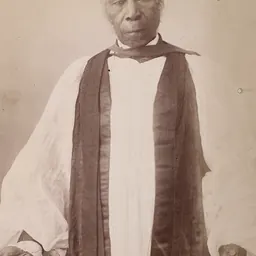
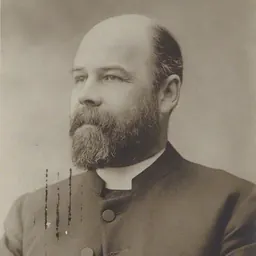
Related people
Same field, nearest in time

Contemporaries
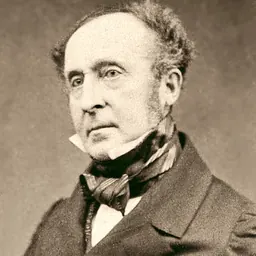
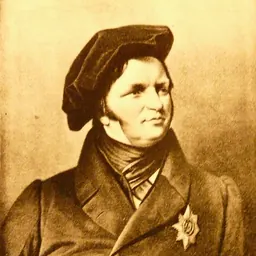
People whose lives overlapped James Theodore Holly's




Frequently asked questions
Who was James Theodore Holly?
American bishop (1829-1911)
When was James Theodore Holly born?
James Theodore Holly was born on 3 October 1829 in Washington, D.C..
When did James Theodore Holly die?
James Theodore Holly died on 13 March 1911 in Port-au-Prince.
What was James Theodore Holly's occupation?
James Theodore Holly was an anglican priest, christian missionary and missionary.
What nationality was James Theodore Holly?
James Theodore Holly was American.
Sources & further reading
· Wikipedia: James Theodore Holly
· DBpedia: James Theodore Holly
Cite this page
APA: Biography.guide. (2026). James Theodore Holly. https://biography.guide/james-theodore-holly/
MLA: "James Theodore Holly." Biography.guide, https://biography.guide/james-theodore-holly/.
Chicago: "James Theodore Holly." Biography.guide. https://biography.guide/james-theodore-holly/.
Data last updated: 2026-09-24 · Spot an error? Report a correction.
Page generated 2026-09-27 05:04 UTC