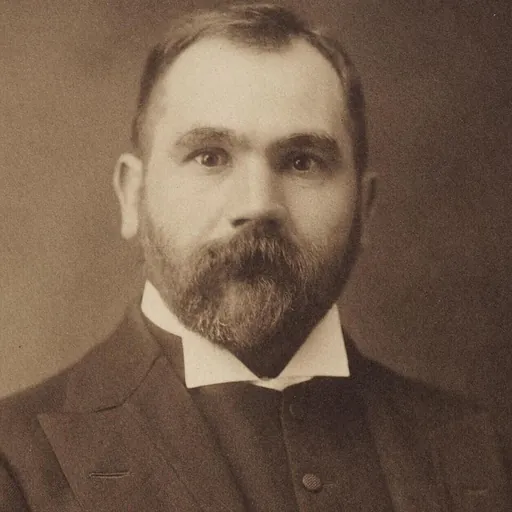
About James Ronald
Lived 1861 – 1941 (aged 79). James Ronald was an Australian and British politician and cleric.
James Black Ronald (27 August 1861 – 27 July 1941) was an Australian politician and Presbyterian minister. He was a member of the House of Representatives from 1901 to 1906, representing the seat of Southern Melbourne as one of the inaugural members of the Australian Labor Party (ALP). He unsuccessfully stood for re-election at the 1906 federal election as an independent, after losing ALP endorsement. He later spent over 15 years in unsuccessful litigation against his former parliamentary colleague and fellow Presbyterian Robert Harper.
Early life Ronald was born in Linlithgow, Scotland on 27 August 1861. He was reportedly born on the estate of the Earls of Hopetoun, and claimed to have been a childhood acquaintance of John Hope, 1st Marquess of Linlithgow, who became the first governor-general of Australia.
Education and religious ministry Ronald attended his local parish school and went on to study arts at the University of Edinburgh. After five years he gained entry to the New College to study divinity, becoming a licentiate of the Free Church of Scotland. He was licensed as a Presbyterian Church minister in 1891 and subsequently served as a minister at Oakleigh for five years. In 1897 he took over the Clarendon Street Presbyterian Church in South Melbourne and was credited with reviving its attendance. He resigned his post upon his election to federal parliament in 1901. At the inaugural federal election in 1901, he was elected to the House of Representatives as the member for Southern Melbourne.
Ronald joined the parliamentary Australian Labor Party (ALP) upon its creation, He reportedly favoured a "snow-white Australia".
Ronald retained Southern Melbourne for the ALP at the 1903 federal election. but in September 1906 was defeated for ALP preselection by James Mathews. Ronald attributed his defeat in part to the efforts of the Orange Order and called for its members to be banned from the ALP. He subsequently announced he would stand as an independent and publicly denounced the ALP. He failed to win re-election, placing third behind Mathews and the Protectionist Party candidate. Ronald subsequently appealed to the full bench of the Supreme Court on the grounds that the presiding judge had misdirected the jury, without success. The High Court of Australia refused to hear a further appeal, ruling in the 1910 case Ronald v Harper that it had no authority to review any evidence not presented at the original trial.
After his defeat in court, Ronald alleged that several of Harper's witnesses had perjured themselves or unduly influenced other witnesses. In November 1909, William Harrison, a witness against Ronald, was convicted of perjury over his testimony and imprisoned for three months. A similar attempt to prosecute another witness, Patrick Kerrigan, failed when Ronald failed to get his own witnesses to appear at the committal hearing. In 1910, Patrick Hill was convicted of perjury and subornation of perjury. The Victorian government then charged Harper and several others with conspiring to defeat the ends of justice. Harper was found not guilty at the resulting trial, with the presiding judge directing the jury to acquit him and laying the responsibility for the tainted evidence with Hill. A further prosecution of witnesses several months later resulted in seven others being convicted of perjury and sentenced to two years' imprisonment.
In 1913, Ronald launched a renewed suit against Harper, seeking damages of £10,000 and to overturn the previous verdicts on the grounds of proven perjury. Both the Supreme Court and High Court refused to accept his case, finding that the outcome of the previous libel suit would have been the same even if the tainted evidence was excluded. He nonetheless continued his attempts at relitigation, unsuccessfully petitioning the state government to introduce legislation to allow him a second trial.
Personal life Ronald died on 27 July 1941 at his home on St Kilda Road in Melbourne, aged 79. He had four sons, one of whom was killed in World War I. He was interred at Oakleigh Cemetery.
Don’t just read it —
keep it.
Full-length biographies made to live with: read them, listen on the way to work, watch them tonight.
- E-book
- Audio
- Video
Instant download · yours to keep · every purchase keeps this site free
Important facts
People in James Ronald's life
Named in this biography and alive at the same time
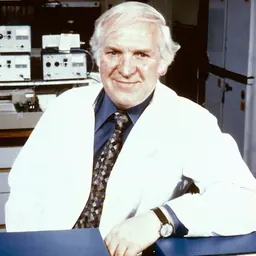

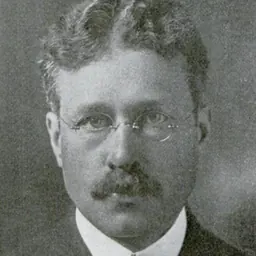




Related people
Same field, nearest in time

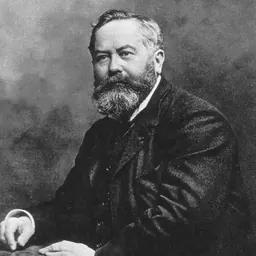

Contemporaries
People whose lives overlapped James Ronald's


Frequently asked questions
Who was James Ronald?
Australian politician (1861-1941)
When was James Ronald born?
James Ronald was born on 27 August 1861 in Scotland.
When did James Ronald die?
James Ronald died on 27 July 1941.
What was James Ronald's occupation?
James Ronald was a politician and cleric.
What nationality was James Ronald?
James Ronald was Australian and British.
Sources & further reading
Cite this page
APA: Biography.guide. (2026). James Ronald. https://biography.guide/james-ronald/
MLA: "James Ronald." Biography.guide, https://biography.guide/james-ronald/.
Chicago: "James Ronald." Biography.guide. https://biography.guide/james-ronald/.
Data last updated: 2026-09-20 · Spot an error? Report a correction.
Portrait: Wikimedia Commons · author & licence
Page generated 2026-09-27 04:57 UTC