
About James Ronald Chalmers
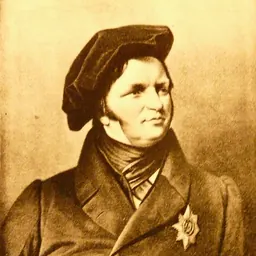
Lived 1831 – 1898 (aged 67). James Ronald Chalmers was an American politician and lawyer.
James Ronald Chalmers (January 11, 1831 – April 9, 1898) was an American politician, slaveowner, and general in the Confederate States Army who commanded infantry and cavalry in the Western Theater of the American Civil War.
After the war, Chalmers served as a state senator in Mississippi and United States Congressman for several terms from the state's 6th congressional district, beginning in 1876. He was re-elected in 1880 but the election was contested by his Republican African-American opponent, John R. Lynch. Congress awarded the seat to Lynch because of marked election fraud by the Democrats. In 1882 Chalmers ran as an Independent Democrat on a fusionist ticket, with support by Republicans and Greenbackers. He contested the victory of the regular Democrat, and Congress finally awarded the seat to Chalmers, seating him in 1884. He left politics after losing election in the fall of 1884.
Early life, education and career James Ronald Chalmers was born in Halifax County, Virginia, January 11, 1831. His father was Joseph Chalmers, who, having moved to Mississippi with his family when James was a boy, settled in Holly Springs in 1839. The older Chalmers was first appointed by the governor to fill a term, then elected by the state legislature as U. S. Senator. James R. Chalmers attended South Carolina College at Columbia, where he graduated in 1851.
Chalmers returned to Holly Springs to read law with an established firm, and was admitted to the bar in 1853. After a few years of practice, Chalmers was elected as district attorney in 1858. By 1860 he held forty four people as slaves. He was elected as a delegate to the Mississippi secession convention which voted to take the state out of the Union on January 9, 1861. Chalmers was a pro-slavery Democrat, like his father, and he voted in favor of secession.
American Civil War
Chalmers entered the Confederate States Army as a captain and was soon promoted to Colonel of the 9th Mississippi Infantry in 1861.
When Bragg advanced into Kentucky in the summer of 1862 Chalmers' command was a part of his force, fighting at the Battle of Murfreesboro at the end of the year. In April, 1863, at the request of John C. Pemberton, he was transferred to the Department of Mississippi and East Louisiana and placed in command of the Fifth Military District. The district consisted of the top two tiers of counties in Mississippi. In 1864 he was assigned to the command of cavalry brigades of Jeffrey Forrest and McCulloch, forming the first division of Forrest's Cavalry Corps. This cavalry division was subsequently enlarged by the addition of Rucker's Brigade.
Chalmers played an important role in the campaigns of Forrest in north Mississippi, west Tennessee and Kentucky. He also led forces in Hood's Tennessee Campaign. On February 18, 1865, Chalmers was put in command of all the Mississippi cavalry in the Confederate service in Mississippi and west Tennessee. Chalmers was assigned to capture the fort, which was mostly defended by Black soldiers of the United States Colored Troops. After the Confederates demanded the fort's unconditional surrender and the Union commanding officer refused, Chalmers launched an assault and the fort was quickly overrun in less than 30 minutes. Both sides suffered combat casualties during the Confederate assault, but according to witnesses the surrendering Black soldiers were singled out for execution by Chalmers' troops rather than being treated as prisoners of war. The same officer reported that Chalmers admitted that his men had shot down the Black soldiers in cold blood: "One of the gun-boat officers who accompanied us asked General Chalmers if the most of the negroes were not killed after they (the enemy) had taken possession. Chalmers replied that he thought they had been, and that the men of General Forrest's command had such a hatred toward the armed negro that they could not be restrained from killing the negroes after they had captured them. He said they were not killed by General Forrest's or his orders, but that both Forrest and he stopped the massacre as soon as they were able to do so. He said it was nothing better than we could expected so long as we persisted in arming the negro."
Of the Union troops present at the fort, 66 percent of the Black soldiers and 35 percent of the white soldiers were killed. Neither Chalmers nor Forrest were ever held criminally responsible for the killings.
Mississippi State Senate In the waning days of the Reconstruction era, Chalmers was elected to the State Senate in 1875 and 1876. Democrats regained control of the House of Representatives in 1875 on the national level, for the first time since the Civil War. The campaign seasons in Mississippi were accompanied by increasing violence. Chapters of Red Shirts, a paramilitary group working for the Democratic Party that sought to disrupt and suppress Republican voting, helped Democrats win seats in Mississippi and the Carolinas.
U.S. House of Representatives In 1876 Chalmers was elected as Representative from Mississippi's 6th congressional district to the Congress of the United States, serving in the Forty-fifth and Forty-sixth Congresses, from March 4, 1877 – March 3, 1881.
Lynch served the remainder of the term.
In the fall of 1882, Chalmers ran as an Independent Democrat as part of a fusion ticket supported by Republicans and the Greenback Party, to the Forty-eighth Congress. Democrat Van H. Manning claimed victory, and Chalmers contested the legality of the election. Chalmers finally was verified by Congress as the winner and allowed to take his seat on June 25, 1884. He was unsuccessful in running for re-election in 1884.
Chalmers wrote to Republican President Chester A. Arthur in December 1882 about how to defeat the regular Democrats in Mississippi. Independents like him sometimes affiliated with Greenbackers, other men who had left the regular party, and even Republicans in a fusionist ticket. In this period, Senator William Mahone of Virginia had gathered various factions into what was called the Readjuster Party, which was prominent in Virginia politics. Chalmers proposed the same for Mississippi. Neither he nor Mahone were successful in breaking up Mississippi Democrats or the Solid South.
Later life After failing to win election in 1884, Chalmers left politics, returning to full-time practice of law. He moved his practice to Memphis, Tennessee, where he died in April 1898.
Don’t just read it —
keep it.
Full-length biographies made to live with: read them, listen on the way to work, watch them tonight.
- E-book
- Audio
- Video
Instant download · yours to keep · every purchase keeps this site free
Important facts
People in James Ronald Chalmers's life
Named in this biography and alive at the same time

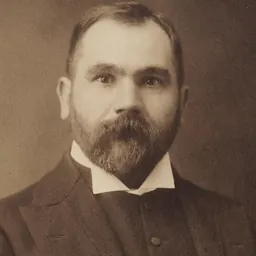

Related people
Same field, nearest in time
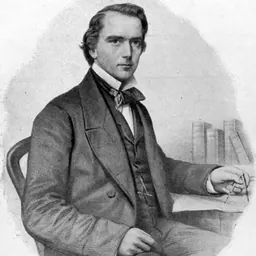




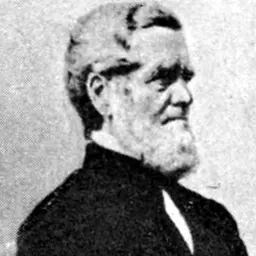
Contemporaries
People whose lives overlapped James Ronald Chalmers's



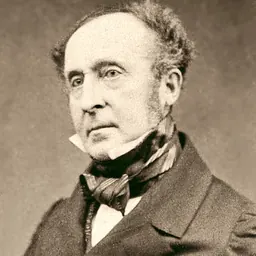

Frequently asked questions
Who was James Ronald Chalmers?
American politician (1831-1898)
When was James Ronald Chalmers born?
James Ronald Chalmers was born on 11 January 1831 in Halifax County.
When did James Ronald Chalmers die?
James Ronald Chalmers died on 9 April 1898 in Memphis.
What was James Ronald Chalmers's occupation?
James Ronald Chalmers was a politician and lawyer.
What nationality was James Ronald Chalmers?
James Ronald Chalmers was American.
Sources & further reading
· Wikipedia: James Ronald Chalmers
· DBpedia: James Ronald Chalmers
Cite this page
APA: Biography.guide. (2026). James Ronald Chalmers. https://biography.guide/james-ronald-chalmers/
MLA: "James Ronald Chalmers." Biography.guide, https://biography.guide/james-ronald-chalmers/.
Chicago: "James Ronald Chalmers." Biography.guide. https://biography.guide/james-ronald-chalmers/.
Data last updated: 2026-09-26 · Spot an error? Report a correction.
Page generated 2026-09-27 05:14 UTC