
About James J. Montague
Lived 1873 – 1941 (aged 68). James J. Montague was an American poet, editor, satirist, theatre critic, journalist and critic.
James Jackson Montague (April 16, 1873 – December 16, 1941) was an American journalist, satirist, and poet. Renowned as a "versifier", Montague is best known for his column "More Truth Than Poetry", which was published in a wide number of newspapers for nearly 25 years.
Montague's journalism career began in 1896 at The Oregonian, where he started as a copy boy. He was soon promoted to reporter and eventually took over the column "Slings and Arrows". In 1902 he was hired by William Randolph Hearst to work at the New York American and New York Evening Journal, where he debuted "More Truth Than Poetry". Montague wrote the column six days a week, in addition to articles on topics such as politics, theater and sports. Later in Montague's career, his whimsical pieces were often carried by the Bell Syndicate.
Early life
James Jackson Montague was born in Mason City, Iowa on April 16, 1873, the sixth child and third son of John Vose Wood Montague and Martha Washington Jackson.
In Mason City the father worked as a cashier of the First National Bank until it began to lose money in the recession of 1887. Consequently, he never attended university, but he made up for his lack of formal education through a love of literature. In the memoir Memory Street, his son Richard wrote: "He was an omnivorous reader, especially of the works of Shakespeare, Conrad, Mark Twain, O. Henry, Shelley, Keats, Coleridge, Byron [and] Burns" Through an agent, Hearst offered Montague a position in New York City but he declined, preferring to remain in Portland. Hearst was insistent, however, and the writer named what he thought was a prohibitive price, $60 a week — double his salary at the time — and was "flabbergasted" when it was accepted. where their second son, James Lee Montague, was born. They finally built their own house at 204 Drake Avenue, moving in around 1904.
In New York, Montague's work appeared in both the New York American and New York Evening Journal. He produced a poetry column six times a week, in addition to writing a wide range of articles on politics, books, and theater. During his working life, he compiled many binders of his work, of which six from the 1900s survive. Of these, the vast majority are his poetry column. During the time Montague was working on the manuscript, Cody was a frequent visitor to the writer's New Rochelle home, "usually just in time for lunch or dinner." This friendliness ended when an installment of the autobiography characterized Wild Bill Hickok as a "bandit," something Cody hadn't approved of and didn't appreciate. As Montague's son Richard wrote in his memoir:
"Father claimed that [Cody had] re-armed himself with his old six guns and was stalking our sire with intent to kill. For several weeks after that we kids lived in delicious dread half-believing that father was in deadly danger. When we went out on a walk with him he'd send us on ahead to look around corners and behind trees to see if Bill Cody was waiting in ambush. The fact that he wasn't only made it more likely that he would be there next time. But he never was."
By this time the circulation wars between the Hearst and Pulitzer papers were past their "yellow journalism" zenith of the late 1800s, but the two continued to battle for market share and talent. Montague had originally been recruited by Hearst in 1902, and now The World came calling. On June 15, 1919, the paper announced that Montague would join them, bringing with him his poetry column. In the article, Montague was referred to as the "Aladdin of the Newspaper Poets" and a "successor to James Whitcomb Riley," a characterization he may not have appreciated. The book ran 160 pages with a preface by Irvin S. Cobb, and included classic poems such as "The Sleepytown Express", and the 1915 libel case between Albany Times-Union owner and publisher William Barnes Jr., and former President Theodore Roosevelt. Because Montague worked for Hearst, who had no liking of Roosevelt, he had to exercise caution when covering the trial. In Eugene Thwing's 1919 book The Life and Meaning of Theodore Roosevelt, the author wrote:
"At the Barnes-Roosevelt libel trial in Syracuse I came across James J. Montague, a hardened reporter on a highly anti-Roosevelt newspaper, walking up and down and cursing. I asked him what moved him to these expletives. 'Roosevelt, damn him,' said Montague; 'I can't keep hating him if I get anywhere within twenty feet of him, and I'm always accidentally doing it. He's spoiling my story.' "
Working for Hearst's publications and wire service, Montague covered the national political conventions of 1912 and 1916. Despite his reputation as a "hardened reporter," Montague had friends in all the political parties of his day — Democratic, Republican, Bull Moose, Socialist and Farmer Labor. "Although Hearst's editorials bitterly denounced most of the principals in these organizations from time to time, the victims never held it against [Montague]."
Together with Montague, New York theater impresario John Golden organized the "Knot-Very Social and Musical Frat." The organization had only four other members: Newspaperman and publisher John Neville Wheeler, sports journalist and writer Ring Lardner, American Magazine editor John Sidall, and Grantland Rice. For the members, none of whom had attended college, the organization was miniature fraternity, as much social as athletic. The club's letterhead, designed by Golden, featured a knotted rope above the names of its members, the largest being that of its president, Montague.
Their dreams of pigeon-born wealth went anything but smoothly, however: A local mobster reputedly demanded a portion of the proceeds, while hotels had a habit of canceling orders. Friends were interested, but more in eating squab than paying for them. Not long after, Phillips contracted tuberculosis, and he and his wife left for Europe. Now sole manager of the farm, Montague put in thousands more to keep it afloat. Salvation came in the form of Westchester County, which wanted to buy the land to construct the Hutchinson River Parkway.
Death
While Montague once seemed tireless, his health began to fail in the 1930s. His last daily poem appeared in the New York Herald Tribune on May 16, 1936. "When he retired, the newspaper used free-lance verse rather than attempt to find a permanent successor", wrote The New York Times. His wife, Helen, died in January 1937 after nearly 40 years of marriage. As his health worsened, Montague went to the McLean Hospital in Belmont, Massachusetts. He died there on December 16, 1941, survived by his two sons and daughter as well as seven grandchildren.
Don’t just read it —
keep it.
Full-length biographies made to live with: read them, listen on the way to work, watch them tonight.
- E-book
- Audio
- Video
Instant download · yours to keep · every purchase keeps this site free
Important facts
People in James J. Montague's life
Named in this biography and alive at the same time

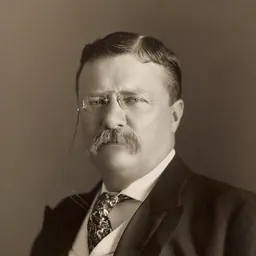

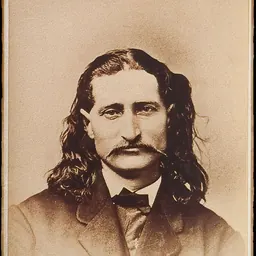
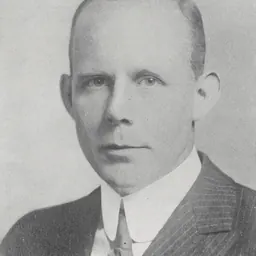
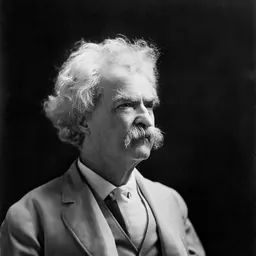

Related people
Same field, nearest in time

Contemporaries
People whose lives overlapped James J. Montague's



Frequently asked questions
Who was James J. Montague?
American writer (1873–1941)
When was James J. Montague born?
James J. Montague was born on 16 April 1873 in Mason City.
When did James J. Montague die?
James J. Montague died on 16 December 1941 in Belmont.
What was James J. Montague's occupation?
James J. Montague was a poet, editor, satirist, theatre critic, journalist and critic.
What nationality was James J. Montague?
James J. Montague was American.
Sources & further reading
· Wikipedia: James J. Montague
Cite this page
APA: Biography.guide. (2026). James J. Montague. https://biography.guide/james-j-montague/
MLA: "James J. Montague." Biography.guide, https://biography.guide/james-j-montague/.
Chicago: "James J. Montague." Biography.guide. https://biography.guide/james-j-montague/.
Data last updated: 2026-09-20 · Spot an error? Report a correction.
Page generated 2026-09-27 05:34 UTC