
About James Hartness
Lived 1861 – 1934 (aged 72). James Hartness was an American astronomer, inventor, politician and engineer.
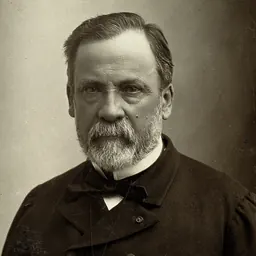
James Hartness (September 3, 1861 – February 2, 1934) was an American business executive, inventor, mechanical engineer, entrepreneur, amateur astronomer, and politician who served as the 58th governor of Vermont from 1921 to 1923.
Early life and education Hartness was born in Schenectady, New York, one of three sons of John William Hartness and Ursilla (Jackson) Hartness. His family moved to Cleveland, Ohio, in 1863, where his father worked as a foreman in the city's machine shops. Hartness was educated in the public schools of Cleveland until he was 16, when he became an apprentice machinist.
He built his Springfield home in 1904, which is an example of shingle style architecture. An inn and restaurant since 1954, it is listed on the National Register of Historic Places for its connection to him.
Engineering and entrepreneurship Hartness 3x36 flat turret lathe with cross sliding head, equipped for bar work. James Hartness with his most successful invention, the flat turret lathe. Jones & Lamson publicity photo.
During the winter of 1888–1889, he worked briefly for several companies: Pratt & Whitney in Hartford, Connecticut; Eaton, Cole and Burnham Co. in Bridgeport, Connecticut, and a plant in Scottdale, Pennsylvania. The flat turret lathe improved upon earlier turret lathes via greater rigidity, allowing higher precision, higher speeds and feeds, and longer cuts. Hartness also developed an array of highly advanced tooling to complement the lathe, including improved roller bar feed and die head designs. All of these advantages allowed better parts to be made faster, and thus less expensively, which made the lathe highly desirable to manufacturers. This time, Hartness was prepared to defend his interest in his patent. He arranged with J&L to receive a $100 royalty on each machine.
Hartness changed J&L's business model from making a wide variety of machines to order to specializing in the manufacturing and improving of this one product. With rapid acceptance of this machine tool, orders reached 10 units per day from the manufacturing sector. As a result, Hartness reportedly received up to $1,000 per day in royalties. He also introduced appealing and informative catalogues to market the new Jones and Lamson products. Hartness acquired a large interest in J&L. He became manager in 1896 and president in 1901 until his retirement in 1933. showed that J&L offered several models of Hartness flat turret lathe, an automatic chucking lathe, an automatic die, a screw-thread comparator, and the Fay automatic lathe. J&L had offices in Springfield, Vermont, San Francisco, California, and London, England, plus agents in five other countries. an optical comparator, a device that applies the principles of optics to the inspection of manufactured parts by projecting the magnified silhouette of a part onto a screen where its dimensions and geometry of the part are measured against prescribed limits. Traditionally, mechanics used a mechanical gauge to assess whether screws were to specifications. Hartness employed his knowledge of optics and magnification to devise a much more practical optical method for measurement.
Mentor of machine tool entrepreneurs Hartness encouraged talented inventors in his employ at J&L to strike out on their own as entrepreneurs. These included three Springfield companies and one Windsor, Vermont company: Edwin R. Fellows, founder of the Fellows Gear Shaper Company William L. Bryant, founder of the Bryant Chucking Grinder Company Fred P. Lovejoy, founder of the Lovejoy Tool Company George O. Gridley, founder of the National Acme Company
The companies started by these men helped make Springfield and Windsor a prosperous manufacturing region, thanks not to its access to raw materials or markets, but due to a pool of talented engineers and machinists. Joseph Roe ranked Hartness in the class of Henry Maudslay and Elisha K. Root for his mentorship of a younger generation of machine tool builders.
Management
His son-in-law, Ralph Flanders, reported that Hartness examined "some of the elements which go into making workmen both contented and productive" in his book The Human Factor in Works Management.
Affiliations, degrees and medals James Hartness with Charles Lindbergh at Springfield, Vermont's airport in July, 1927. Image courtesy of Springfield Art & Historical Society. Hartness was an active member of the following engineering, scientific, and arts societies: American Society of Mechanical Engineers, which elected him president in Fall 1913 to serve the 1914–1915 term American Engineering Council (formerly the Federated American Engineering Societies), which elected him president in 1924 to serve the following two-year term British Institution of Mechanical Engineers recognizing his invention of the Hartness screw thread comparator.
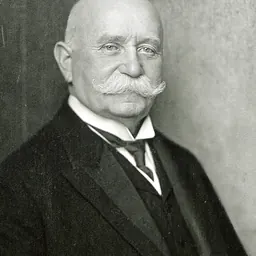
Aviation Hartness first flew in Germany in 1913 in a hydrogen-filled airship, designed by Ferdinand von Zeppelin. In 1914, Hartness learned to fly a Wright Flyer near Garden City, New York. Hartness then obtained his pilot's license from the Aero Club of America. He encouraged, and served as president of, the Vermont Aero Club. He donated the land for the Springfield Aerodrome to the state, establishing the first airfield in Vermont—Hartness State Airport.
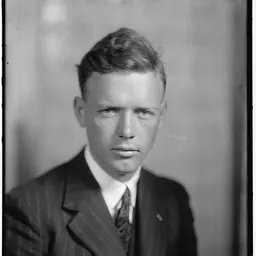
After his trans-Atlantic flight, Charles Lindbergh toured the United States in the Spirit of St. Louis to promote aviation. He landed in Springfield on July 26, 1927 in his visit to Vermont and spoke at a large gathering at the airport. Hartness hosted Lindbergh at his home.
Politics and government Hartness was a member of the Vermont Board of Education from 1914 until 1920, and served as its chairman from 1915 to 1920. Under his leadership, the board took steps to standardize teacher training and improve the physical condition of Vermont's small rural schools. During World War I, he was appointed Federal Food Administrator for Vermont. Food administrators were responsible for contributing to the war effort by leading campaigns to promote food conservation and production among the public, including "Meatless Monday" and "Wheatless Wednesday", as well as the cultivation of Victory gardens.
Governor of Vermont A Republican, in 1920, Hartness ran for the party's gubernatorial nomination. An advocate of passing the Nineteenth Amendment to the United States Constitution, he decided to take advantage of the expanded electorate when women were permitted to vote, as well as the primary elections that had replaced state party conventions, to bypass the party's Mountain Rule and campaign directly for the nomination. In the primary, Hartness obtained 39 percent of the vote, defeating three well-established candidates. During his 1921 to 1923 term, he worked to improve Vermont's road network and promote manufacturing as the key to expanding the state's economy. Hartness adhered to the Mountain Rule provision that limited governors to one term and did not seek reelection in 1922.
Death and burial Hartness died in Springfield on February 2, 1934. He was buried at Summer Hill Cemetery in Springfield.
Don’t just read it —
keep it.
Full-length biographies made to live with: read them, listen on the way to work, watch them tonight.
- E-book
- Audio
- Video
Instant download · yours to keep · every purchase keeps this site free
Important facts
People in James Hartness's life
Named in this biography and alive at the same time


Related people
Same field, nearest in time


Contemporaries
People whose lives overlapped James Hartness's


Frequently asked questions
Who was James Hartness?
American engineer and Vermont politician (1861–1934)
When was James Hartness born?
James Hartness was born on 3 September 1861 in Schenectady.
When did James Hartness die?
James Hartness died on 2 February 1934 in Springfield.
What was James Hartness's occupation?
James Hartness was an astronomer, inventor, politician and engineer.
What nationality was James Hartness?
James Hartness was American.
Sources & further reading
Cite this page
APA: Biography.guide. (2026). James Hartness. https://biography.guide/james-hartness/
MLA: "James Hartness." Biography.guide, https://biography.guide/james-hartness/.
Chicago: "James Hartness." Biography.guide. https://biography.guide/james-hartness/.
Data last updated: 2026-09-26 · Spot an error? Report a correction.
Page generated 2026-09-27 05:14 UTC