
About James Fitzjames
Lived 1813 – 1900. James Fitzjames was an explorer and naval officer.
James Fitzjames (27 July 1813 – ) was a British Royal Navy officer and explorer.
The illegitimate son of a man with ties to the Navy, Fitzjames distinguished himself in an ill-conceived expedition to establish a steamship line in Mesopotamia in the 1830s, and in combat during the Egyptian–Ottoman War and the First Opium War. In 1845, Fitzjames was tapped by Sir John Barrow as a potential leader of an expedition to the Northwest Passage, but was instead named as captain of under Sir John Franklin.
Known as Franklin's lost expedition, both ships that had embarked on that voyage became trapped in the Arctic ice off King William Island in 1846. Following Franklin's death the next year, Fitzjames became second-in-command to Captain Francis Crozier of . The ships were abandoned in April 1848 and the survivors set out for the Canadian mainland. Fitzjames and twelve others died in the vicinity of Erebus Bay, from where they had abandoned the ships. His remains were rediscovered in 1993 and forensically identified in September 2024.
Early life
Family and birth James Fitzjames was born the illegitimate son of Sir James Gambier on 27 July 1813.
The identification of his true family had been unknown until Battersby's publication in 2010. In different sources it had been suggested that he was a foundling; that he was of Irish extraction, an illegitimate son of Sir James Stephen, or a relative of the Coninghams.
Although not always successful, the Gambier family were prominent in the Royal Naval service. Sir James' cousin was Admiral of the Fleet Lord Gambier. His father, and James Fitzjames' grandfather, was Vice Admiral James Gambier.
Sir James Gambier had married Jemima Snell in 1797 and the couple had 12 children altogether. At the time of Fitzjames' birth, Sir James was in grave financial difficulties. He had been appointed British Consul-General in Rio de Janeiro in 1809 and held this office until 1814. However the Gambiers returned to England in 1811 on account of Lady Gambier's health, never to return to Brazil. Cut off from the revenues he expected to receive in Rio, Sir James ran up enormous debts, only saved from bankruptcy when a syndicate of his relatives and creditors, led by Admiral Lord Gambier himself, William Morton Pitt and Samuel Gambier, took over his financial affairs and placed them in trust. In 1815, with his financial affairs in the hands of trustees, Sir James resumed a diplomatic career by being appointed Consul-General to the Netherlands at The Hague, a position he held until 1825.
Adoptive family Presumably shortly after his birth, Fitzjames was given into the care of the Reverend Robert Coningham and his wife Louisa Capper, who wrote philosophical and poetical works. The Coninghams were well-off members of an extended family of Scots/Irish ancestry.
The Coningham family lived at Watford and Abbots Langley in Hertfordshire, and also at Blackheath. In 1832 they acquired a substantial 30 acre country estate called Rose Hill in Abbots Langley. Robert and Louisa had one son, William Coningham, who was James Fitzjames' closest friend; the two boys were brought up together as brothers. The Coninghams were a well-educated couple who had extensive connections in British intellectual circles of the time. Robert Coningham was a Cambridge-educated clergyman although he never took a living. His nephew was the author John Sterling, a friend of such intellectuals as Julius Hare and Thomas Carlyle. Before she married, Louisa Coningham had taught at the Rothsay House girls' school in Kennington and was the author of two books.
This intellectual background enabled them to provide Fitzjames and William Coningham with an exceptionally high level of education. William Coningham was briefly sent to Eton College while Fitzjames was away at sea serving on . On Fitzjames' return to the Coningham household, William Coningham was withdrawn from Eton and the boys' education was provided at home by private tutors, including a son of Robert Towerson Cory, who later tutored the Prince of Wales for Queen Victoria and Prince Albert. Fitzjames was brought up by the Coningham family as a son, and he always referred to them as 'uncle' and 'aunt'.
Naval career
Under captains Gambier and Sartorius Fitzjames entered the Royal Navy at the age of 12 in July 1825 as a volunteer of the second class on , a frigate under the command of captain Robert Gambier. He served on Pyramus until , being promoted to volunteer of the first class on . Captain Robert Gambier was James Fitzjames' second cousin, and it was through this covert family connection that he obtained this position. This captain resigned his position a year later due to the unexpected death of his wife, leaving Fitzjames vulnerable as he had no connection with the new captain, George Sartorius.
Fitzjames won the confidence of Captain Sartorius, who promoted him to Volunteer of the First Class in 1828. During this commission Pyramus first sailed to Central America and the United States on diplomatic missions and was then involved in scientific research as part of the Experimental Squadron under Admiral Sir Thomas Hardy. Later, the Pyramus served as British guardship at Lisbon.
After this Fitzjames was determined to resume his Royal Naval career and eventually took the position of Midshipman on from 1830 to 1833.
Sir John Barrow, a prime mover of what became the Franklin expedition, campaigned to have Fitzjames appointed to lead it. He asked for his friend Edward Charlewood to be appointed as second in command. Barrow was unable to provide the Board of Admiralty with a persuasive argument to support these appointments, and Fitzjames was discounted due to his relatively young age, so after some prevarication Sir John Franklin and Francis Crozier were appointed instead.
Fitzjames was appointed to serve under Franklin as the Captain of .
The ships sailed from Greenhithe on 19 May 1845. One of the ports they stopped at on the way north was Stromness, Orkney. Fitzjames gave permission to two Orcadian sailors — Captain of the Foretop Robert Sinclair and Able Seaman Thomas Work — to row ashore and visit their families in Kirkwall. Fitzjames wrote daily letters, which he had sent home when the ships came into port in Disko Bay, Greenland.
The ship were last seen by Europeans at the end of July 1845, when two whalers sighted them in northern Baffin Bay. The Admiralty promoted Fitzjames to the rank of Captain on 31 December 1845, but he was in the Arctic at the time and never learned of it.
Captaincy and death After the death of Sir John Franklin on , Captain Francis Crozier of became the expedition leader. Fitzjames became second in command of the expedition, as well as command of Erebus. Fitzjames wrote an addendum to the 'Victory Point note' explaining their circumstances. Crozier indicated after Fitzjames that they were headed for Back's Fish River.
Fitzjames died on King William Island, in the vicinity of Erebus Bay, likely in May or June 1848, alongside Erebus engineer John Gregory and at least eleven other sailors from the expedition, only eighty kilometres south of Victory Point.
In September 2024, researchers Douglas Stenton, Stephen Fratpietro, and Robert W. Park, from the University of Waterloo and Lakehead University, announced that they had positively identified a skeletal mandible as belonging to Fitzjames through DNA testing. An unbroken Y-chromosome DNA match was made from a living descendant of Fitzjames's great-grandfather James Gambier; the DNA donor, Nigel Gambier of Bury St Edmunds, is second cousin five times removed to Fitzjames. By doing genealogical research, historian Fabiënne Tetteroo determined that Nigel Gambier was an eligible match for Fitzjames. Tetteroo contacted Nigel Gambier and he agreed to provide the DNA sample that conclusively identified Fitzjames. Fitzjames is the first expedition member to be identified as a victim of cannibalism.
In popular culture James Fitzjames appears as a character in the 2007 novel, The Terror by Dan Simmons, a fictionalized account of Franklin's lost expedition, as well as the 2018 television adaptation, where he is portrayed by Tobias Menzies.
Don’t just read it —
keep it.
Full-length biographies made to live with: read them, listen on the way to work, watch them tonight.
- E-book
- Audio
- Video
Instant download · yours to keep · every purchase keeps this site free
Important facts
People in James Fitzjames's life
Named in this biography and alive at the same time




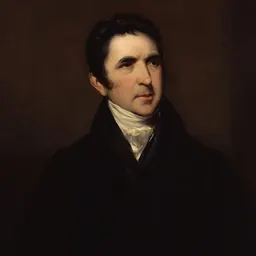
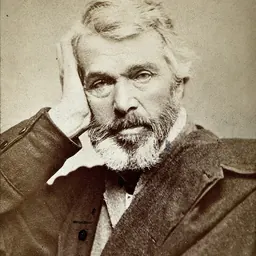
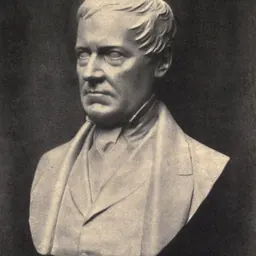

Related people
Same field, nearest in time


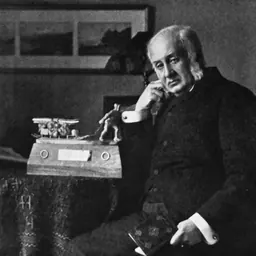
Contemporaries
People whose lives overlapped James Fitzjames's





Frequently asked questions
Who was James Fitzjames?
British navy officer and explorer
When was James Fitzjames born?
James Fitzjames was born on 27 July 1813 in London.
When did James Fitzjames die?
James Fitzjames died in 1900.
What was James Fitzjames's occupation?
James Fitzjames was an explorer and naval officer.
Sources & further reading
Cite this page
APA: Biography.guide. (2026). James Fitzjames. https://biography.guide/james-fitzjames/
MLA: "James Fitzjames." Biography.guide, https://biography.guide/james-fitzjames/.
Chicago: "James Fitzjames." Biography.guide. https://biography.guide/james-fitzjames/.
Data last updated: 2026-09-20 · Spot an error? Report a correction.
Page generated 2026-09-27 05:33 UTC