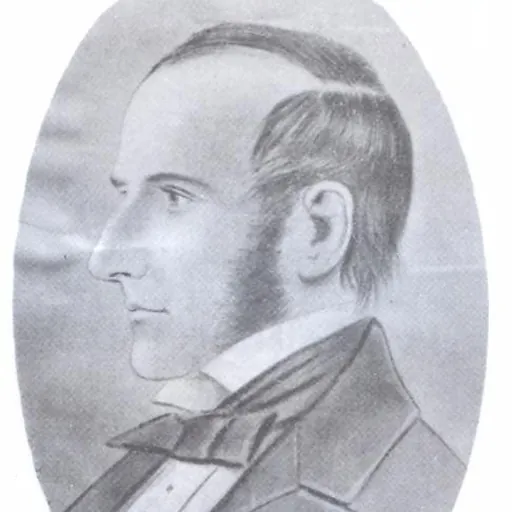
About James Fintan Lalor
Lived 1807 – 1849 (aged 42). James Fintan Lalor was a British journalist, writer and revolutionary.
James Fintan Lalor (in Irish, Séamas Fionntán Ó Leathlobhair) (10 March 1809 – 27 December 1849) was an Irish revolutionary, journalist, and “one of the most powerful writers of his day.” A leading member of the Irish Confederation (Young Ireland), he was to play an active part in both the Rebellion in July 1848 and the attempted Rising in September of that same year. Lalor's writings were to exert a seminal influence on later Irish leaders such as Michael Davitt, James Connolly, Pádraig Pearse, and Arthur Griffith.
Early life
James Fintan Lalor was born in Tinnakill House (Fintan Lalor always referred to his birthplace as Tenakill), Raheen, County Laois (known at the time as Queen's County) on 10 March 1807. The first son of Patrick "Patt" Lalor and Anne Dillon (daughter of Patrick Dillon of Sheane near Maryborough). Patrick and Anna were to have twelve children. Patrick was to become the first Catholic M.P. for Laois in 1832 - 1835, and was to lead a campaign of passive resistance to the payment tithes. Patrick was to outlive his eldest son by six years, dying in 1856, and his mother Anna was to die in 1835, the same year as his brother Joseph. What is known though, is that there is no real definite account at all about him for several years.
Conner was finally charged with making a seditious speech at Mountmellick in 1841 for which he received a sentence of six months’ imprisonment. As a result of his activities, Conner was expelled from the Repeal Association because he proposed that Repealers should not pay rent, county cess, rent charge, tithe poor rate or any other charge arising out of land until repeal was granted. Fintan Lalor agreed with Conner and it was at this stage that his political differences with his Father really began. Writing from Tenakill, his family home, Fintan Lalor put forward his views on current affairs and in particularly on land reform. His manner and style of writing quickly caught the attention of both its readers and staff. T. F. O’Sullivan commented that “the journal realise that a new force had arisen in the political world.” In the first letter, Fintan Lalor stated that contrasted with the question of the land, Repeal “was a petty, parish question.” On this he was quite emphatic “I will never contribute one shilling, or give my name, heart or hand for such an object as the simple Repeal.”
Commenting on the Irish Confederation, which was about to be formed he advocated that its policy should be one of “national independence.” He then proceeded to outline the policy he would approve on obtaining independence, “in what form of words you please; but denounce nothing—proscribe nothing, more especially of your own freedom of action. Leave yourselves free individually and collectively.” He continued “if any resolution, or pledge, be adopted to seek Legislative independence by moral force and legal proceedings alone, with a denunciation, or renunciation of all or any other means or proceedings, you may have millions better and stronger men than I to join you; but you won’t have me. . . . There has already, I think, been too much giving in on this question of means and force.” The bronze statue of Lalor holding a pamphlet aloft was sculpted by Mayo-based artist Rory Breslin. The inscription on the limestone plinth reads: His ideas were the ideological underpinning of the Irish National League during the Land War.
Family
James Fintan's brother Richard Lalor born in 1823, became a Young Irelander who later supported Parnell. He was an M.P. for Queen's County from 1880 until 1892. He died in the family home in November 1893.
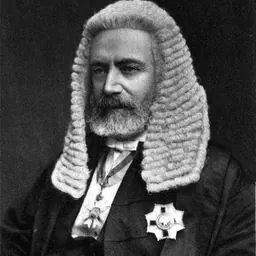
Peter (1827–1889), James' youngest brother, went to Melbourne in the colony of Victoria, Australia in 1852. In 1854 Peter led immigrant gold miners in an armed uprising at the Eureka Stockade, Ballarat going on to become a Member of the Victorian Legislative Assembly (1856–1887). In 1880 he succeeded Charles Gavan Duffy, who had come out to the colony in 1856, as Speaker of the Assembly. His cousins included Alice Lalor (1768–1846), an early American religious leader, Dr Joseph Lalor (1811–86) an Irish mental health reformer, and Joseph O'Lawlor (1768–1850) a Spanish general.
Don’t just read it —
keep it.
Full-length biographies made to live with: read them, listen on the way to work, watch them tonight.
- E-book
- Audio
- Video
Instant download · yours to keep · every purchase keeps this site free
Important facts
People in James Fintan Lalor's life
Named in this biography and alive at the same time



Related people
Same field, nearest in time


Contemporaries
People whose lives overlapped James Fintan Lalor's





Frequently asked questions
Who was James Fintan Lalor?
Irish revolutionary and journalist (1807–1849)
When was James Fintan Lalor born?
James Fintan Lalor was born on 10 March 1807 in County Laois, Tenakill House.
When did James Fintan Lalor die?
James Fintan Lalor died on 27 December 1849 in Dublin.
What was James Fintan Lalor's occupation?
James Fintan Lalor was a journalist, writer and revolutionary.
What nationality was James Fintan Lalor?
James Fintan Lalor was British.
Sources & further reading
· Wikipedia: James Fintan Lalor
Cite this page
APA: Biography.guide. (2026). James Fintan Lalor. https://biography.guide/james-fintan-lalor/
MLA: "James Fintan Lalor." Biography.guide, https://biography.guide/james-fintan-lalor/.
Chicago: "James Fintan Lalor." Biography.guide. https://biography.guide/james-fintan-lalor/.
Data last updated: 2026-09-22 · Spot an error? Report a correction.
Portrait: Wikimedia Commons · author & licence
Page generated 2026-09-27 05:03 UTC