
About Joseph O'Lawlor
Lived 1768 – 1850 (aged 82). Joseph O'Lawlor was a Spanish military personnel.
Joseph O’Lawlor (sometimes O’Lalor; 11 July 1768 – 19 October 1850) was an Irish-born Spanish general who fought under the Duke of Wellington during the Napoleonic Wars and later served as Governor of Granada.
Early life He was born on 11 July 1768 at Clonaheen in the parish of Rosenallis, County Laois, Ireland, to Peter Lalor and Elizabeth Brenan. Because Rosenallis is part of the Catholic diocese of Kildare and Leighlin, O’Lawlor's birthplace is sometimes incorrectly given as Kildare. and also of Alice Lalor (1769–1846), founder of the Order of Visitation Nuns in the United States.
Wellington specifically recommended O'Lawlor for promotion in 1814: "to these I have to add, Brig. Gen. O'Lawlor, an officer of great merit, who has served most meritoriously during the whole war, attached to the British headquarters, and whom I had sent in the month of January last to the late Regency with dispatches, containing accounts of the military successes gained at that period. Contrary to the usual practice, he was not promoted upon that occasion, and I beg leave now to draw your Excellency's attention to his merits".
Joseph O’Lawlor was later entrusted by the Duke to manage his estate Soto de Roma which was given to him in gratitude by the Spanish Government, which he managed until 1844. O'Lawlor was present at the battles of Talavera and Arapiles and the taking of Ciudad Rodrigo. He rose to the rank of field marshal by the end of the war, and was finally promoted to lieutenant general in 1846. As well as Spanish honours, Joseph O'Lalor was awarded the British military honour of Honorary Companion of the Order of the Bath (C.B.) in 1819.
Later career At the end of the war, in 1814, he was named, first, military governor and, later, Captain General of the kingdom of Granada, an office he held until 1833. During this period, "...he was required to execute the repression orders given from Madrid to suffocate the conspiracies and rebellions of which Granada was an important focus, but he also did what he could to temper the rigors of the law on behalf of the condemned. For example, his efforts (in vain) to intervene with King Ferdinand VII in the case of Mariana Pineda to save her from the gallows (were) recognized even by foreign authors who had harshly criticized that unjust sentence. At the death of King Ferdinand, O'Lawlor resigned his post." His hidalguia, or application for ennoblement as an hidalgo solariego, was lodged in 1833 in the Archivo de la Real Chancillería de Granada, and lists five generations of ancestors of his four grandparents.
An account of his life at this time records: "General O'Lawlor, on account of his birth, his military renown and polished education, frequented the best circles of Granada and Madrid, and his home in the former place was the rendezvous of good society. In 1834 he changed his place of residence to Madrid, residing there until his death. In 1849, one year before his death, the Queen conferred high rank upon him. As an example of his loyalty it may be stated that he refused securing his pay from the English government when attached to the British army, saying that as a Spanish soldier he would be duly recompensed by the government of his country. In reality, however, he received at the end of the campaign but a very slight part of what was owing to him. General O'Lawlor married, in 1817, Dona Donisia Caballero y Crooke, daughter of Don Juan Caballero, a gentleman of an old and noble family of Malaga, whose fortune, though still ample, had been largely diminished by the exactions of the French army."
Joseph O'Lawlor died in Madrid on 19 October 1850.
Family Joseph O’Lawlor and Donisia Caballero y Crooke had five daughters and three sons, many of whom married into the Spanish nobility. He served as a Deputy in the Cortes and as a Senator (1893-1908). he was a political ally of two major Spanish liberal leaders of the time – Leopoldo O'Donnell, 1st Duke of Tetuan) and Francisco Serrano, Duke de la Torre.
His youngest daughter, María de la Encarnación O’Lawlor y Caballero (ca. 1830 – 16 July 1908), married Manuel Bermúdez de Castro y Díez (1811–1870), a senator and Minister for the Interior and Foreign Affairs. Their son Salvador Bermúdez de Castro y O'Lawlor (1 November 1863 – 20 January 1946), Duke of Ripalda and Marquis de Lema, was a prominent Spanish author, politician and nobleman. He inherited his titles from his paternal uncle. He was Minister for Foreign Affairs 1919–21, 1917, 1913–15; Mayor of Madrid 1903–4 and Governor of the Bank of Spain (1922–3). He was also the author of numerous works including De la Revolución a la Restauración, Spain since 1815 and the autobiographical Mis recuerdos 1801–1901.
Don’t just read it —
keep it.
Full-length biographies made to live with: read them, listen on the way to work, watch them tonight.
- E-book
- Audio
- Video
Instant download · yours to keep · every purchase keeps this site free
Important facts
People in Joseph O'Lawlor's life
Named in this biography and alive at the same time

Related people
Same field, nearest in time
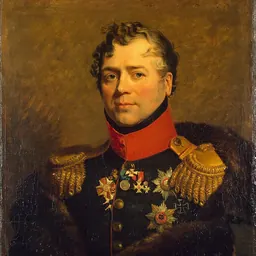

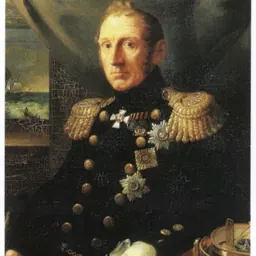

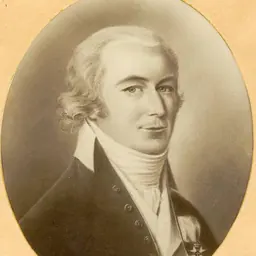
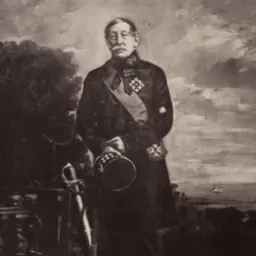
Contemporaries
People whose lives overlapped Joseph O'Lawlor's





Frequently asked questions
Who was Joseph O'Lawlor?
Spanish general (1768-1850)
When was Joseph O'Lawlor born?
Joseph O'Lawlor was born on 11 July 1768.
When did Joseph O'Lawlor die?
Joseph O'Lawlor died on 19 October 1850.
What was Joseph O'Lawlor's occupation?
Joseph O'Lawlor was a military personnel.
What nationality was Joseph O'Lawlor?
Joseph O'Lawlor was Spanish.
Sources & further reading
Cite this page
APA: Biography.guide. (2026). Joseph O'Lawlor. https://biography.guide/joseph-o-lawlor/
MLA: "Joseph O'Lawlor." Biography.guide, https://biography.guide/joseph-o-lawlor/.
Chicago: "Joseph O'Lawlor." Biography.guide. https://biography.guide/joseph-o-lawlor/.
Data last updated: 2026-09-20 · Spot an error? Report a correction.
Page generated 2026-09-27 05:04 UTC