
About James F. Thomson
Lived 1921 – 1984 (aged 62–63). James F. Thomson was an academic.
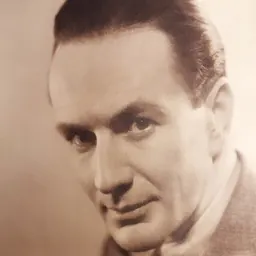
James F. Thomson (1921–1984) was a British philosopher who devised the puzzle of Thomson's lamp, to argue against the possibility of supertasks (a word he also coined)
Academic career
Thomson was born in London in 1921 and graduated from the University of London in 1949. He was an assistant in the Department of Philosophy, and John Stuart Mill Scholar at University College, London, from 1949–1950. He was Commonwealth Fund Fellow at Harvard and Princeton from 1950–1951; assistant lecturer at University College from 1951–1953 and University Lecturer in Moral Science at the University of Cambridge from 1953–1956. Thomson was appointed Fellow and Tutor in Philosophy, Corpus Christi College, Oxford, in 1956, and also University Lecturer at Columbia University. He was visiting professor at Columbia from 1961–1962, and in 1963 he was appointed professor of philosophy at MIT.
Family life In 1962 he married the American philosopher Judith Jarvis Thomson. They separated in 1976 and divorced in 1980; they remained colleagues until James Thomson’s death in 1984.
Thomson's lamp
In a seminal 1954 article which followed on from the work of Max Black, Thomson considered the successful completion of an infinite number of tasks within a given time, to which he gave the name supertasks.
To disprove the possibility of supertasks, he introduced Thomson's lamp, a thought experiment similar to Zeno's paradoxes. This problem involves the mathematical summation of an infinite divergent series such as Grandi's.
A lamp (which may be on or off at the start of the thought-experiment) is flicked on and off an infinite number of times within a 2-minute period. This corresponds to the ordered sequence t=0, t=0.5, t=0.75, t=0.875...
According to Thomson, although the lamp must be either on or off at the end of the experiment when t=1, the state of the lamp – after an infinite number of switches – is also completely undetermined (i.e. the sequence has no limit). This apparent contradiction led him to reject the possibility of the experiment, and therefore the possibility of supertasks.
However, Paul Benacerraf in a 1962 paper successfully criticised Thomson's argument, by pointing out that the states of the lamp during the experiment do not logically determine the final state of the lamp when t=1. Thomson's conditions for the experiment are insufficiently complete, since only instants of time before t≡1 are considered. Benacerraf's essay led to a renewed interest in infinity-related problems, set theory and the foundation of supertask theory.
Selected bibliography A note on truth. Analysis, 1949 The argument from analogy and our knowledge of other minds. Mind, 1951 Some Remarks on Synonymy. Analysis, 1952 Symposium: Reducibility. (with Warnock, G. J. and Braithwaite, R. B.) Aristotelian Society, 1952 On Referring. The Journal of Symbolic Logic, 1953 Tasks and super-tasks. Analysis, 1954 Recent Criticisms of Russell's Analysis of Existence. The Journal of Symbolic Logic, 1956 What Achilles should have said to the Tortoise. Ratio, 1960 On some paradoxes. Analytical Philosophy, 1962 Is existence a predicate? Aquinas Society, 1963 What is the will? in Freedom and the Will (ed Pears, D.F.) New York: St. Martin's Press, 1963 In defense of material implication. Journal of Philosophy, 1966 Truth-bearers and the Trouble about Propositions. The Journal of Philosophy, 1969 Comments on Professor Benacerraf's Paper in Zeno's Paradoxes (ed. Salmon, W.), Bobbs-Merrill, 1970 In Defense of ⊃. (1963/4) The Journal of Philosophy, 1990 (posth.)
Don’t just read it —
keep it.
Full-length biographies made to live with: read them, listen on the way to work, watch them tonight.
- E-book
- Audio
- Video
Instant download · yours to keep · every purchase keeps this site free
Important facts
People in James F. Thomson's life
Named in this biography and alive at the same time





Related people
Same field, nearest in time




Contemporaries
People whose lives overlapped James F. Thomson's





Frequently asked questions
Who was James F. Thomson?
British philosopher (1921–1984)
When was James F. Thomson born?
James F. Thomson was born in 1921.
When did James F. Thomson die?
James F. Thomson died in 1984.
What was James F. Thomson's occupation?
James F. Thomson was an academic.
Sources & further reading
· DBpedia: James F. Thomson (philosopher)
Cite this page
APA: Biography.guide. (2026). James F. Thomson. https://biography.guide/james-f-thomson/
MLA: "James F. Thomson." Biography.guide, https://biography.guide/james-f-thomson/.
Chicago: "James F. Thomson." Biography.guide. https://biography.guide/james-f-thomson/.
Data last updated: 2026-09-20 · Spot an error? Report a correction.
Page generated 2026-09-27 05:17 UTC