
About Max Black
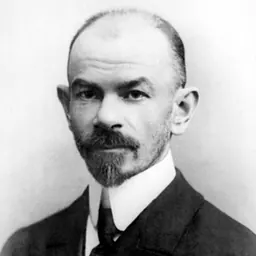
Lived 1909 – 1988 (aged 79). Max Black was an American philosopher, university teacher and mathematician.
Max Black (February 24, 1909 – August 27, 1988) was a Russian-born British-American philosopher who was a leading figure in analytic philosophy in the years after World War II. He made contributions to the philosophy of language, the philosophy of mathematics and science, and the philosophy of art, also publishing studies of the work of philosophers such as Frege. His translation (with Peter Geach) of Frege's published philosophical writing is a classic text.
Early life and education Black was born Max Tcherny on February 24, 1909, in Baku, then within the Russian Empire and now the capital of Azerbaijan, to a wealthy Jewish family. The family left Baku whilst he was very young, emigrating to England in 1912 after spending a short time in Paris, France. The family name was changed to Black (a direct translation of "Tcherny") in 1911 or 1912. A younger brother, Misha, became an architect.
He first attended a free school in north London, but at age nine was awarded a scholarship to Dame Alice Owen's School, where he remained until the age of eighteen.
He studied mathematics at Queens' College at the University of Cambridge, where he was drawn to analytic philosophy. Bertrand Russell, Ludwig Wittgenstein, G. E. Moore, and Frank P. Ramsey were all at Cambridge at that time and were influential on much of Black's later thought.
He graduated in 1930, and was awarded a fellowship for research at the University of Göttingen for a year.
Career From 1931 to 1936, Black was mathematics master at the Royal Grammar School, Newcastle.
His first book was The Nature of Mathematics (1933), a critical exposition of Principia Mathematica and a critical analysis of the formalist and intuitionist schools of mathematics.
Black lectured in mathematics at the Institute of Education in London from 1936 to 1940.
In 1940 he moved to the United States and joined the Philosophy Department at the University of Illinois at Urbana–Champaign. In 1946, he accepted a professorship in philosophy at Cornell University. In 1948, he became a naturalized citizen of the United States.
Amongst the PhD dissertations he supervised was that of novelist William H. Gass.
Death and family Black was the elder brother of the architect Misha Black and the public relations manager Sam Black.
In 1933 he married Michal (or Mabel) Landesberg (1911–1985) with whom he had a daughter and a son. Black presents an objection to Leibniz' law – the principle of the identity of indiscernibles that states that no two distinct things can exactly resemble each other. He does so, as Peter Forrest notes, by suggesting "there could be a universe containing nothing but two exactly resembling spheres" and that in "such a completely symmetrical universe the two spheres would be indiscernible".
He is also known for his interaction theory of metaphor.
Works (1933) The Nature of Mathematics: A Critical Survey (2nd edition, 1950) (1937). "Vagueness: An exercise in logical analysis". Philosophy of Science 4: 427–55. Reprinted in R. Keefe, P. Smith (eds.): Vagueness: A Reader, MIT Press 1997, (1938). "The Evolution of Positivism" Modern Quarterly, Vol. 1. No. 1. (1939). "Relations between Logical Positivism and the Cambridge School of Analysis" Erkenntnis, Vol. 8. (1946). Critical Thinking, An Introduction to Logic and Scientific Method, Prentice-Hall Inc. Publishers, Prentice-Hall Philosophy Series, New York (revised edition, 1952) (1949). Language and philosophy: Studies in method, Ithaca: Cornell University Press. (1954). "Metaphor", Proceedings of the Aristotelian Society, 55, pp. 273–94. (1954). Problems of Analysis: Philosophical Essays, Cornell University Press (1959) "Linguistic relativity: The views of benjamin lee whorf", The Philosophical Review. Vol. 68, No. 2, (April 1959). pp. 228–38. (1962). Models and metaphors: Studies in language and philosophy, Ithaca: Cornell University Press. (1964). A Companion to Wittgenstein's Tractatus, Cornell University Press (1968). The Labyrinth of Language, Praeger (1970). Margins of Precision: Essays in Logic and Language, Cornell University Press (1975). Caveats and Critiques: Philosophical Essays in Language, Logic, and Art, Cornell University Press (1977). “More about Metaphor.” Dialectica, vol. 31, no. 3/4, 1977, pp. 431–57. Reprinted in: A. Ortony (ed): Metaphor and Thought. (1979) (1981). Language and Philosophy: Studies in Method, Praeger (1985). The Prevalence of Humbug and Other Essays, Cornell University Press (1990). Perplexities: Rational Choice, the Prisoner's Dilemma, Metaphor, Poetic Ambiguity, and Other Puzzles, Cornell University Press
Don’t just read it —
keep it.
Full-length biographies made to live with: read them, listen on the way to work, watch them tonight.
- E-book
- Audio
- Video
Instant download · yours to keep · every purchase keeps this site free
Important facts
People in Max Black's life
Named in this biography and alive at the same time




Related people
Same field, nearest in time


Contemporaries
People whose lives overlapped Max Black's

Frequently asked questions
Who was Max Black?
British-American philosopher
When was Max Black born?
Max Black was born on 24 February 1909 in Baku.
When did Max Black die?
Max Black died on 27 August 1988 in Ithaca.
What was Max Black's occupation?
Max Black was a philosopher, university teacher and mathematician.
What nationality was Max Black?
Max Black was American.
Sources & further reading
Cite this page
APA: Biography.guide. (2026). Max Black. https://biography.guide/max-black/
MLA: "Max Black." Biography.guide, https://biography.guide/max-black/.
Chicago: "Max Black." Biography.guide. https://biography.guide/max-black/.
Data last updated: 2026-09-20 · Spot an error? Report a correction.
Page generated 2026-09-27 05:05 UTC