
About Paul Benacerraf
Lived 1931 – 2025 (aged 93). Paul Benacerraf was an American and French mathematician, philosopher and university teacher.
Paul Joseph Salomon Benacerraf (; 26 March 1930 – 13 January 2025) was a French-born American philosopher working in the field of the philosophy of mathematics who taught at Princeton University his entire career, from 1960 until his retirement in 2007. Benacerraf was appointed Stuart Professor of Philosophy in 1974, and retired as the James S. McDonnell Distinguished University Professor of Philosophy.
Life and career Benacerraf was born in Paris on 26 March 1930,
When the family returned to Caracas, Benacerraf remained in the United States, boarding at the Peddie School in Hightstown, New Jersey. He attended Princeton University for both his undergraduate and graduate studies.
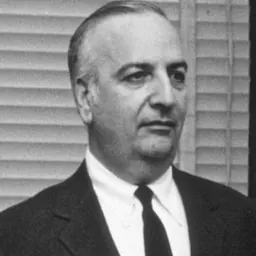
Benacerraf died on 13 January 2025, at the age of 94. His older brother was the Venezuelan Nobel Prize-winning immunologist Baruj Benacerraf.
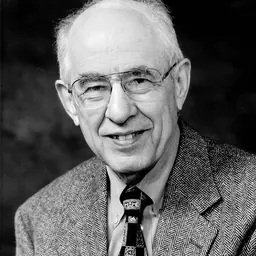
Philosophical work Benacerraf was perhaps best known for his two papers "What Numbers Could Not Be" (1965) and "Mathematical Truth" (1973), and for his anthology on the philosophy of mathematics, co-edited with Hilary Putnam.
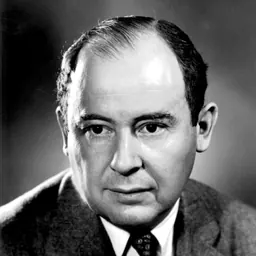
In "What Numbers Could Not Be" (1965), Benacerraf argues against a Platonist view of mathematics, and for structuralism, on the ground that what is important about numbers is the abstract structures they represent rather than the objects that number words ostensibly refer to. In particular, this argument is based on the point that Ernst Zermelo and John von Neumann give distinct, and completely adequate, identifications of natural numbers with sets (see Zermelo ordinals and von Neumann ordinals). This argument is called Benacerraf's identification problem.
In "Mathematical Truth" (1973), he argues that no interpretation of mathematics offers a satisfactory package of epistemology and semantics; it is possible to explain mathematical truth in a way that is consistent with our syntactico-semantical treatment of truth in non-mathematical language, and it is possible to explain our knowledge of mathematics in terms consistent with a causal account of epistemology, but it is in general not possible to accomplish both of these objectives simultaneously (this argument is called Benacerraf's epistemological problem ). He argues for this on the grounds that an adequate account of truth in mathematics implies the existence of abstract mathematical objects, but that such objects are epistemologically inaccessible because they are causally inert and beyond the reach of sense perception. On the other hand, an adequate epistemology of mathematics, say one that ties truth-conditions to proof in some way, precludes understanding how and why the truth-conditions have any bearing on truth.
Publications Benacerraf, Paul (1960) Logicism, Some Considerations, Princeton, Ph.D. Dissertation, University Microfilms. ———— (1965) "What Numbers Could Not Be", The Philosophical Review, 74:47–73. ———— (1967) "God, the Devil, and Gödel", The Monist, 51: 9–33. ———— (1973) "Mathematical Truth", The Journal of Philosophy, 70: 661–679. ———— (1981) "Frege: The Last Logicist", The Foundations of Analytic Philosophy, Midwest Studies in Philosophy, 6: 17–35. ———— (1985) "Skolem and the Skeptic", Proceedings of the Aristotelian Society, Supplementary Volume 56: 85–115. ———— and Putnam, Hilary (eds.) (1983) Philosophy of Mathematics : Selected Readings 2nd edition, Cambridge University Press: New York. ———— (1996) "Recantation or Any old ω-sequence would do after all", Philosophia Mathematica, 4: 184–189. ———— (1996) What Mathematical Truth Could Not Be – I, in Benacerraf and His Critics, A. Morton and S. P. Stich, eds., Blackwell's, Oxford and Cambridge, pp 9–59. ———— (1999) What Mathematical Truth Could Not Be – II, in Sets and Proofs, S. B. Cooper and J. K. Truss, eds., Cambridge University Press, pp. 27–51.
Don’t just read it —
keep it.
Full-length biographies made to live with: read them, listen on the way to work, watch them tonight.
- E-book
- Audio
- Video
Instant download · yours to keep · every purchase keeps this site free
Important facts
People in Paul Benacerraf's life
Named in this biography and alive at the same time


Related people
Same field, nearest in time


Contemporaries
People whose lives overlapped Paul Benacerraf's

Frequently asked questions
Who was Paul Benacerraf?
American philosopher
When was Paul Benacerraf born?
Paul Benacerraf was born on 26 March 1931 in 16th arrondissement of Paris.
When did Paul Benacerraf die?
Paul Benacerraf died on 13 January 2025 in Princeton.
What was Paul Benacerraf's occupation?
Paul Benacerraf was a mathematician, philosopher and university teacher.
What nationality was Paul Benacerraf?
Paul Benacerraf was American and French.
Sources & further reading
Cite this page
APA: Biography.guide. (2026). Paul Benacerraf. https://biography.guide/paul-benacerraf/
MLA: "Paul Benacerraf." Biography.guide, https://biography.guide/paul-benacerraf/.
Chicago: "Paul Benacerraf." Biography.guide. https://biography.guide/paul-benacerraf/.
Data last updated: 2026-09-20 · Spot an error? Report a correction.
Page generated 2026-09-27 05:12 UTC