
About James De Ville
Lived 1777 – 1846 (aged 69). James De Ville was a British engineer and sculptor.
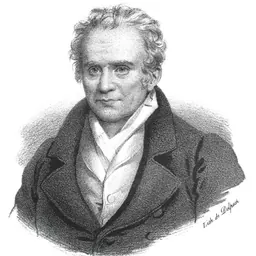
James De Ville (12 March 1777 – 6 May 1846) was a British lamp maker, sculptor and plaster-caster, known also as a phrenologist. He acquired moulds and busts for business purposes, manufacturing reproductions, and also built up a renowned phrenological collection.
Early life From a Swiss Protestant background on his father's side, he was born in Hammersmith, the son of James Louis De Ville and his wife Mary Bryant. His family fell on hard times, and as a boy De Ville was fostered by an uncle who had a brickmaking business there.
Businessman De Ville set up a plaster works in Soho in 1803, moving on after two years to Great Newport Street in the Covent Garden–Leicester Square area. In the 1810s he was in business as a lampmaker and plaster caster, dealing also in lighthouse fittings. From 1814, he had business premises at 367 Strand, London, opposite Fountain Court.
In other lines of business, De Ville dealt in architectural metal wares, and supplied lights for the Menai Bridge. He joined the Institute of Civil Engineers in 1823. From the late 1820s he provided gas fittings to Hanwell Asylum. He also engaged in radical politics.
Caster, moulder, sculptor While still young, De Ville worked for the sculptor Joseph Nollekens on casting. He later bought the moulds for busts made by Nollekens. In 1817 Bryan Donkin, representing an early British phrenological group, commissioned him to do some reproductive moulding work.
De Ville's first life-mask was that of William Blake, taken 1 August 1823. He travelled to Devon to take another, of the teenage William Makepeace Thackeray, in 1824–5; it was much later used by Joseph Boehm and Onslow Ford.
In the period 1823 to 1826, De Ville showed busts at the Royal Academy. His sitters included Harford Jones-Brydges. In 1829 Johann Spurzheim referred to his collection as data supporting phrenology. Franz Joseph Gall sent a wax mould of a dissected brain. In a room adjacent to his shop, De Ville gave public shows of part of his collection of casts and skulls.
De Ville campaigned against penal transportation, at the same time involving himself with phrenological examination of convicts. In 1826 James Wardrop hired him to examine convicts about to be transported in the England to Australia. Of 148 convicts, De Ville provided notes on around one-third, to the ship's surgeon George Thomson. Wardrop's intention was to discredit De Ville's evaluations: in the event, there was a plot among the convicts to take over the ship, and the effect, according to Thomson's notes, was to validate De Ville's prediction of troublemakers.
Joseph d'Ortigue and Ludwig Rellstab, early biographers of Franz Liszt, recount how Liszt at age 15 was examined in 1825 by De Ville. As a phrenological practitioner, he examined a large number of heads including those of John Elliotson, Hermann Prince of Pückler-Muskau, Charles Bray, George Eliot, William Blake, Richard Dale Owen, Richard Carlile, the Duke of Wellington and Prince Albert.
De Ville also took an interest in the heads of criminals, such as François Benjamin Courvoisier. He had a cast of the head of Daniel Good (provenance not clear), another convicted murderer who was convicted in 1842.
In the mid-1830s De Ville lectured on phrenology at Sass's Academy, where William Powell Frith was in his audience. In 1840 he became a member of the Phrenological Association. He resigned in 1842 on the schism among British phrenologists. It occurred when William Collins Engledue (1813–1858), in a speech before the Association, announced that phrenology and materialism were the same. "Mr De Ville's Collection", Phrenological Journal, 14 (1841), pp. 19–23 Cooter, R., Phrenology in the British Isles: An Annotated, Historical Bibliography and Index (1989). Pückler-Muskau, Briefe eines Verstorbenen: Ein fragmentarisches Tagebuch aus Deutschland, Holland, England, Wales, Irland und Frankreich, geschrieben in den Jahren 1826 bis 1829 (1830).
Family De Ville married in 1797 Jane Smith, and they had five children, including sons William and George, daughters Emily and Jane, who married William Matthews, and a further daughter.
Don’t just read it —
keep it.
Full-length biographies made to live with: read them, listen on the way to work, watch them tonight.
- E-book
- Audio
- Video
Instant download · yours to keep · every purchase keeps this site free
Important facts
People in James De Ville's life
Named in this biography and alive at the same time


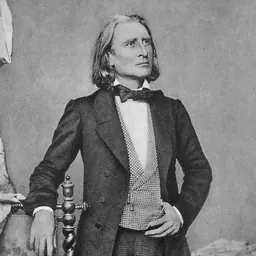
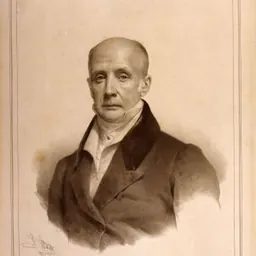
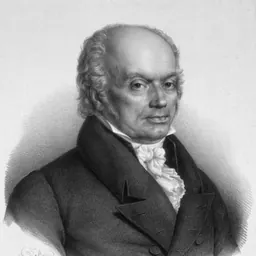

Related people
Same field, nearest in time
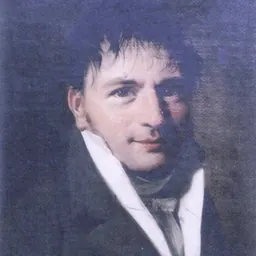
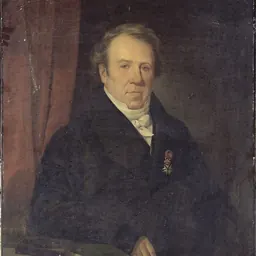
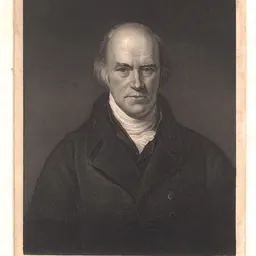
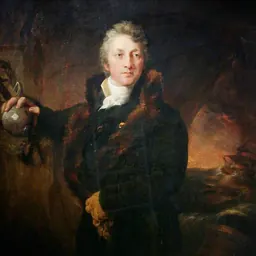
Contemporaries
People whose lives overlapped James De Ville's

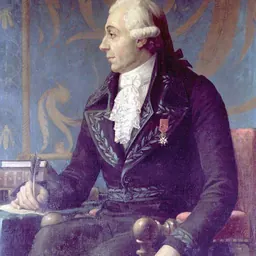

Frequently asked questions
Who was James De Ville?
British phrenologist
When was James De Ville born?
James De Ville was born on 12 March 1777 in Hammersmith.
When did James De Ville die?
James De Ville died on 6 May 1846 in London.
What was James De Ville's occupation?
James De Ville was an engineer and sculptor.
What nationality was James De Ville?
James De Ville was British.
Sources & further reading
Cite this page
APA: Biography.guide. (2026). James De Ville. https://biography.guide/james-de-ville/
MLA: "James De Ville." Biography.guide, https://biography.guide/james-de-ville/.
Chicago: "James De Ville." Biography.guide. https://biography.guide/james-de-ville/.
Data last updated: 2026-09-20 · Spot an error? Report a correction.
Page generated 2026-09-27 05:27 UTC