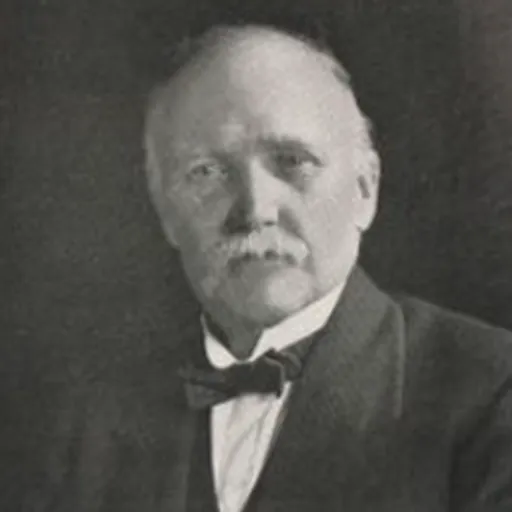
About James Brown
Lived 1862 – 1939 (aged 76). James Brown was a British politician.
James Brown, OBE, DL (16 December 1862 – 21 March 1939) was a Scottish Labour politician.
Early life James Brown was born in the Whitletts area of Ayr, to James Brown (1839-1895) and Christina O'Hara (1840-1923). At that time Whitletts was a mining village separate from Ayr, however Whitletts became part of Ayr in 1935. His father had been a weaver in Ayr, and had later in life had managed to become a colliery manager. Brown had strong Scottish and Irish roots on both sides of his family. He lived most of his life in Annbank where he went to school. In 1888 he married his wife Catherine "Katie" MacGregor Steel. They had five children together.
Career Brown started working as a miner from the age of 12. He would later become Secretary of the Ayrshire Miners' Union and of its national affiliate, the National Union of Scottish Mineworkers. He unsuccessfully contested North Ayrshire in January 1910 and was the Member of Parliament (MP) for South Ayrshire from 1918–1931 and from 1935 until his death in 1939. He was awarded the OBE in 1917, appointed a Privy Counsellor in 1930.
He was a member of the Scottish National War Memorial committee formed in 1918 by the then Secretary of State for Scotland, the Liberal MP Robert Munro, which was tasked with forming a permanent memorial for World War I at Edinburgh Castle. Brown himself had lost a son in the war. He personally opened the local war memorial at Tarbolton, which was just 3 miles from his home in Annbank and was home to many of his relatives.
In 1927 he criticised the decision to include Walter Thomas Monnington's painting Parliamentary Union of England and Scotland, 1707 in the Palace of Westminster which he said in a debate should "get rid of this disgraceful picture and put something in its place which would be more true to history than it is." His Labour Party colleague, Dundee MP Tom Johnston further described the outrage at the inclusion of the painting by saying "the only historical painting in St Stephen's Hall representing an incident in Scottish history deals with an act of national humiliation."
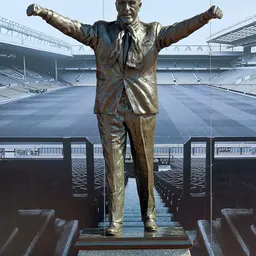
In his authorised biography, Bill Shankly said that Brown won the election in South Ayrshire as the local voters "wouldn't vote Conservative" but that he was "too mild" and not enough of a "keen socialist" for some of the more militant Labour members.
He was Lord High Commissioner to the General Assembly of the Church of Scotland three times, in 1924, 1930 and 1931. He was granted the Freedom of the Royal Burgh of Ayr in 1930, and of Girvan in 1931 and was awarded an Honorary LLD by the University of Glasgow in 1931. He was a Deputy Lieutenant of Ayrshire.
Personal life His life story "From Pit To Palace" by Alexander Gammie was published in 1931. He taught at the local sunday school in Annbank, and in his later years was unofficially nicknamed the "Uncrowned King of Annbank". According to newspapers, during his time as Lord High Commissioner he developed a rapport with George V. Despite being rewarded a salary of £10,000, he and his wife never moved from their two room miner's cottage in Annbank until it was demolished by Ayr County Council in the early 1930s.
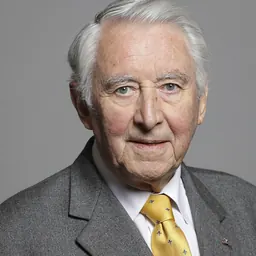
James and his wife had five children; two died before adulthood and one son was killed in the First World War. Through his wife, he was the great-uncle of the future first Presiding Officer of the Scottish Parliament David Steel.
In February 1935, Brown along with an agent were both injured in a car accident near Coatbridge.
James Brown died on 21 March 1939 in an Ayr nursing home at the age of 76 from heart failure, with his children at his bedside. George VI sent a personal telegram to his family expressing condolences. Newspapers reported that his last words were "Look after Katie"; referring to his wife, who was bedridden at home. She died in 1942.
The couple are buried in Annbank Cemetery, and there is a memorial for Brown in Annbank's main street, Weston Avenue. Another street in Annbank, Brown's Crescent, is named after him, as is James Brown Avenue (coloquially called "Jaba" by locals) in the Whitletts area of Ayr where he was from.
Don’t just read it —
keep it.
Full-length biographies made to live with: read them, listen on the way to work, watch them tonight.
- E-book
- Audio
- Video
Instant download · yours to keep · every purchase keeps this site free
Important facts
People in James Brown's life
Named in this biography and alive at the same time



Related people
Same field, nearest in time





Contemporaries
People whose lives overlapped James Brown's



Frequently asked questions
Who was James Brown?
Scottish Labour politician, born 1862 (1862–1939)
When was James Brown born?
James Brown was born on 16 December 1862.
When did James Brown die?
James Brown died on 21 March 1939.
What was James Brown's occupation?
James Brown was a politician.
What nationality was James Brown?
James Brown was British.
Sources & further reading
· DBpedia: James Brown (Scottish politician)
Cite this page
APA: Biography.guide. (2026). James Brown. https://biography.guide/james-brown-politician-1862/
MLA: "James Brown." Biography.guide, https://biography.guide/james-brown-politician-1862/.
Chicago: "James Brown." Biography.guide. https://biography.guide/james-brown-politician-1862/.
Data last updated: 2026-09-21 · Spot an error? Report a correction.
Portrait: Wikimedia Commons · author & licence
Page generated 2026-09-27 04:59 UTC