Bill Shankly
Scottish footballer and manager
About Bill Shankly
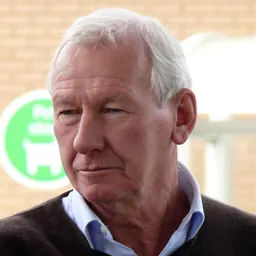
Lived 1913 – 1981 (aged 68). Bill Shankly was a British association football player and association football coach.
William Shankly (2 September 1913 – 29 September 1981) was a Scottish football player and manager who is best known for his time as manager of Liverpool. Shankly brought success to Liverpool, gaining promotion to the First Division and winning three League Championships and the UEFA Cup. He laid foundations on which his successors Bob Paisley and Joe Fagan were able to build by winning seven league titles and four European Cups in the ten seasons after Shankly retired in 1974. A charismatic, iconic figure at the club, his oratory stirred the emotions of the fanbase.
Shankly came from a small Scottish mining community and was one of five brothers who played football professionally. He played as a ball-winning right-half and was capped twelve times for Scotland, including seven wartime internationals. He spent one season at Carlisle United before spending the rest of his career at Preston North End, with whom he won the FA Cup in 1938. His playing career was interrupted by his service in the Royal Air Force during the Second World War. He became a manager after he retired from playing in 1949, returning to Carlisle United. He later managed Grimsby Town, Workington and Huddersfield Town before moving to become Liverpool manager in December 1959.
Shankly took charge of Liverpool when they were in the Second Division and rebuilt the team into a major force in English and European football. He led Liverpool to the Second Division Championship to gain promotion to the top-flight First Division in 1962, before going on to win three First Division Championships, two FA Cups, four Charity Shields and one UEFA Cup. It was during Shankly's tenure that the club changed to an all-red home strip, and "You'll Never Walk Alone" became the club's anthem. Shankly announced his surprise retirement from football a few weeks after Liverpool had won the 1974 FA Cup final, having managed the club for 15 years, and was succeeded by his long-time assistant Bob Paisley. He led the Liverpool team out for the last time at Wembley for the 1974 FA Charity Shield. He died seven years later, aged 68. Considered one of the greatest football managers of all time, Shankly was among the inaugural inductees into the English Football Hall of Fame in 2002, and the Scottish Football Hall of Fame in 2004.
Early life
Bill Shankly was born in the small Scottish coal mining village of Glenbuck, Ayrshire, whose population in 1913, the year of Shankly's birth, was around 700. People born there would often move to find work in larger coal mines. As a result, Glenbuck became largely derelict and by the time Shankly's ghost writer John Roberts visited it in 1976, there were only 12 houses left, including a cottage owned by Shankly's sister, Elizabeth, whom Roberts described as "the last of the children of Glenbuck". William was the ninth child and the youngest boy. His father was a postman who became a tailor of handmade suits. Despite the football pedigree in his family, he did not play himself.
All five Shankly brothers played professional football and Shankly claimed they could have beaten any five brothers in the world when they were all at their peaks. Jimmy (1902–1972), who played for various clubs including Sheffield United and Southend United; John (1903–1960), who played for Portsmouth and Luton Town; and Bob (1910–1982), who played for Alloa Athletic and Falkirk. Bob became a successful manager, guiding Dundee to victory in the Scottish championship in 1962 and the semi-finals of the European Cup the following year. He admitted that he and his friends used to steal vegetables from nearby farms; bread, biscuits and fruit from suppliers' wagons, and bags of coal from the pits. Shankly admitted the act was wrong but stated these acts were driven by youth, mischief and constant hunger. He said that he and his friends learned from their mistakes and became better people in later years. He was at school from age five until 14. Discipline at both home and school was strict but Shankly said it was character-building. His favourite subject was geography and he played football as often as possible, especially in the school playground, but there was no organised school team.
After Shankly left school in 1928, he worked at a local mine alongside his brother Bob. He did this for two years until the pit closed and he faced unemployment. In his autobiography, he described the life of a miner at some length and mentioned many of the problems such as the sheer hard work, rats, the difficulties of eating and drinking at the coal face. The worst problem was the filth because the miners never felt really clean, even though they would go home to wash in a tub after each shift.
While Shankly was employed as a miner, he played football as often as possible and sometimes went to Glasgow to watch either Celtic or Rangers, sharing his allegiance between the two and ignoring the sectarianism that divides Glasgow. Shankly developed his skills to the point that he was unemployed for only a few months before Carlisle United signed him. He wrote that he had his football future worked out in his mind and that, even when working in the pit, he was only "killing time". He always believed that it was only a matter of time before he became a professional player. He explained that, in football terms, he had always been an optimist with a belief in his destiny and that was the basis of his undying enthusiasm for the sport.
Shankly's village team was called the Glenbuck Cherrypickers, a name probably derived from the 11th Hussars (the "Cherry Pickers"), but he said the club was near extinction when he had a trial and he never actually played for them. Shankly, aged 18, then played part of the 1931–32 season for Cronberry Eglinton, about 12 miles from Glenbuck. He used to cycle to and from the ground. Although Shankly had less than one full season at Cronberry, he acknowledged his debt to Scottish Junior Football as he learned a lot, mainly by listening to older players and especially his brothers. He was invited for a month's trial and said it was the first time he had left Scotland. He was signed after just one trial match for Carlisle's reserves against Middlesbrough reserves, even though Carlisle reserves lost the match 6–0. A local newspaper report said that he had worked hard and might develop into a useful left back. In fact, he developed into a top-class right-half.
Shankly made his senior debut on 31 December 1932 in a 2–2 draw against Rochdale and made 16 appearances for the first team. At the end of the season, the reserves won the North Eastern League Cup, defeating Newcastle United reserves 1–0 in the final. In his 1976 autobiography, Shankly stated that he still had the medal.
At this stage of his career, Shankly was assessed as "a hard running, gritty right-half" whose displays brought him much praise and credit. He was considered a promising key young player who was capable of taking Carlisle to greater things. Shankly was happy at Carlisle, which was close to his home at Glenbuck, and he had settled in well with almost a guarantee of first team football. When the opportunity came for him to move on, he was not convinced he wanted to leave. Arriving at Carlisle, he discovered that the interested club was Preston North End who had offered a transfer fee of £500. The terms for Shankly personally were a fee of £50 plus a £10 signing-on fee and wages of £5 a week . Shankly's initial reaction was that it was not enough and the deal nearly fell through. Alec persuaded him that the opportunity was more important than what he would be paid immediately, stressing that it was what he would get later that counted. Shankly took his brother's advice and signed the Preston contract in a railway carriage.
Shankly began his Preston career in the reserves, who played in the Central League which was a higher standard than the North Eastern League. He made his first team debut on 9 December 1933, three months after his 20th birthday, against Hull City. Shankly created an early goal to help Preston win 5–0, earning him praise in a national newspaper for his "clever passing". With his wholehearted attitude and commitment to the team, he quickly established himself as a first-team regular and became a crowd favourite. In a summary of the 1933–34 season, a Preston correspondent, Walter Pilkington, wrote: The outstanding Northern Ireland international Peter Doherty recalled how Shankly dogged his footsteps in one match and kept muttering: "Great wee team, North End, great wee team", subduing Doherty completely as Preston defeated Manchester City 3–1.
In 1936–37, Preston reached the FA Cup final but were well beaten 3–1 by Sunderland at Wembley Stadium. Preston recovered to reach the 1938 FA Cup final in which they defeated Huddersfield Town 1–0 with a penalty scored by George Mutch in the final minute of extra time. As well as winning the FA Cup, Preston finished third in the league. On 30 May 1942, he played a single game for Liverpool in a 4–1 win over Everton at Anfield. He confirmed in his autobiography that his weight as an RAF boxer was 159 pounds (72 kg) and he was only six pounds (2.7 kg) heavier than that in 1976.
With the resumption of full League football again in the 1946–47 season, Shankly returned to Preston who held his registration, but he was now 33 and coming to the end of his playing days. Shankly was a qualified masseur and had decided he wanted to become a coach so, when Carlisle United asked him to become their manager in March of that year, he retired as a player and accepted the job. Shankly's departure from Preston was resented by some at the club and he was refused a benefit match, to which he felt entitled. He described Preston's attitude as the biggest letdown of his life in football.
Shankly had enormous admiration for Tom Finney and devotes more than three pages of his autobiography to Finney's prowess as a footballer. In the 1970s, Shankly was asked how a current star compared to Finney and Shankly replied: "Aye, he's as good as Tommy – but then Tommy's nearly 60 now". Another Preston player admired by Shankly was his Scottish international teammate Andy Beattie, with whom he would later work in management. Shankly was succeeded in the Preston team by Tommy Docherty and Shankly told Docherty that he should "just put the number four shirt on and let it run round by itself because it knows where to go". He spoke of his "unbelievable pride" when playing for Scotland against England and how, when confronted by the "Auld Enemy", the Scottish players would become William Wallace or Robert the Bruce for 90 minutes after pulling on the blue jersey. Shankly himself certainly had that spirit when playing for Scotland as confirmed by Alex James, who said of Shankly: "He is a real Scotland player who will fight until he drops".
Shankly made his international debut on 9 April 1938 against England at Wembley; Scotland winning the match 1–0 with a late goal by Tommy Walker.
Style and technique Shankly declared in his autobiography that he specialised in what he called "the art of tackling", emphasising that it is an art. He wrote that he was never sent off or booked by a referee.
Shankly was always noted for his dedication to football and, in his playing days, would do his own training during the summer months. During the summer of 1933 when he returned to Glenbuck after completing his first season as a professional, he decided to develop his throw-in skills. He was an early exponent of the long throw-in – he practised by throwing balls over a row of houses and the small boys of the village helped by fetching them back for him. In spotting a player, he always applied a basic formula which was that, first and foremost, the player must have both ability and courage. Other attributes were physical fitness and willingness to work, especially to struggle against the odds. Shankly's work ethic transformed the team who finished 15th in 1948–49 after he had been in charge for only the last few matches. They improved to ninth in 1949–50 and then to third in 1950–51, almost gaining promotion.
Shankly used psychology to motivate his players, for example telling them that the opposition had had a very tiring journey and were not fit to play the match. He urged the local population to support the team and would use the public address system at matches to tell the crowd about his team changes and how his strategy was improving the team. He even burned all the kits. When the team was travelling to Lincoln City, he saw a sportswear shop in Doncaster and stopped the coach to buy a full set of kits in which the team played at Lincoln.
Season ticket sales in 1950–51 reached an all-time high and Carlisle challenged strongly for promotion as well as achieving a draw with Arsenal at Highbury in the FA Cup. It ended badly, however, because Shankly accused the club's board of reneging on a bonus promise for the players should the team finish in the top three of the league. He resigned and accepted an offer from Grimsby Town. Shankly's overall record in league football at Carlisle was 42 wins and 22 defeats from 95 matches. Shankly moved to manage Grimsby Town in June 1951. He said in his autobiography that there was greater potential at Grimsby than at Carlisle. His main problems were that Grimsby had been relegated twice in recent seasons, dropping from the First to the Third Division, and some good players had been transferred before he arrived. Even so, Shankly believed he still had good players to work with and was able to buy some additional players on the transfer market for low fees. Shankly insisted in his autobiography that his Grimsby team was: Kelly added that this kind of talk by Shankly could only boost morale at the club. The games would last an hour each time. Shankly worked on set pieces such as throw-ins and tried to devise a method of counter-attacking from corners conceded. In 1953–54, Shankly became disillusioned when the board could not give him money to buy new players. He was reluctant to promote some promising reserves because of loyalty to the older players (a fault that was to resurface at Liverpool years later) and he finally resigned in January 1954, citing the board's lack of ambition as his main reason. In his autobiography, he said that he and his wife were feeling homesick in Grimsby and, when an opportunity came to manage Workington, he was attracted to the challenge partly because they would be closer to Scotland. Workington rose to 18th by the end of the 1953–54 season and so did not have to apply for re-election. In 1954–55, the team finished a creditable eighth and saw a rise in attendances from 6,000 to 8,000. The situation led to numerous arguments with the club's board which, as Kelly records, included a majority of rugby league men whose interest in football took second place to rugby.
Shankly resigned on 15 November 1955 to take up the post of assistant manager at Huddersfield Town, working with his old friend Andy Beattie. His record in league football at Workington was 35 wins and 27 defeats from 85 matches. and club historian Ian Thomas stated, "Denis Law recalls the players hanging on his every word". Another prospect in his team was left back Ray Wilson who went on to become Huddersfield's most capped player before joining Everton. Shankly did not gain promotion at Huddersfield, the team finishing 12th in 1956–57, ninth in 1957–58 and 14th in 1958–59.
Other players in Shankly's Huddersfield team were Ken Taylor, who was an England Test cricketer; striker Les Massie and captain Bill McGarry. On 21 December 1957, Huddersfield lost 7–6 to Charlton Athletic, who played most of the match with ten men, after Huddersfield were leading 5–1 with just 27 minutes remaining. Shankly described it as one of the most amazing games he had ever seen. On another occasion, Huddersfield beat Liverpool 5–0 with ten men and Shankly recalled the Liverpool directors leaving the ground in single file as if they were in a funeral procession.
Disillusioned by a board that wanted to sell his best players without offering money to buy replacements, Shankly felt stifled by Huddersfield's lack of ambition and was delighted in November 1959 to receive an approach for his services by Liverpool. He recalled how Liverpool chairman Tom (T. V.) Williams asked him if he would like to manage the best club in the country, to which Shankly replied: "Why, is Matt Busby packing up?" Shankly decided to think about the offer as he realised the great potential at Liverpool, who like Huddersfield were in the Second Division at that time. Rumours began and were fuelled by Liverpool's visit to Leeds Road on 28 November. Although Huddersfield won the game 1–0, Shankly accepted the Liverpool offer and resigned his position as Huddersfield manager at a board meeting on 1 December 1959. His league record at Huddersfield was 49 wins and 47 defeats in 129 matches. Anfield itself was in disrepair with no means of watering the pitch and Shankly insisted the club spend £3,000 to rectify that. Shankly described the training ground at Melwood as "a shambles". The Liverpool squad he inherited consisted largely of average players and some promising reserves. Paisley's influence at Liverpool was crucial for, as Kelly puts it, Shankly was "the great motivating force behind Liverpool, but it was Paisley who was the tactician". One aspect of the quartet's legacy to football was the conversion of an old storage room into what became known as the "Boot Room", which was used for tactical discussion while cleaning and repairing boots. Although Shankly believed he had an excellent coaching staff, hence his first decision at the club was to retain them rather than bring in his own, a decision which sportswriter John Keith says displayed "remarkable football foresight", the playing staff were not so impressive – indeed, Shankly said of the latter:
To deal with what he saw as a below average squad, he placed 24 players on the transfer list. All of them had left the club within one year. Shankly pursued his strength through the middle goal and knew which three players he needed to achieve it.
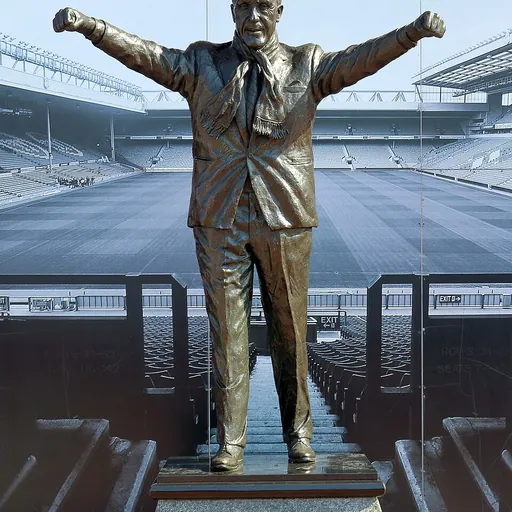
Regarded as a great orator who stirred emotions among the fanbase, following the 1971 FA Cup final which Liverpool lost to Arsenal, Shankly and the players toured the city of Liverpool where people turned out to greet the gallant losers. Standing on the balcony of St George's Hall, Shankly overlooked a crowd of over 100,000 Liverpool fans, and delivered one of his most famous speeches. Holding his arms out wide as silence descended on the fans below, he began by lauding the "show of red strength", and later stated: "Since I've come here to Liverpool, to Anfield, I've drummed it into our players, time and again, that they are privileged to play for you. And if they didn't believe me, they believe me now." Commenting on the mood of the crowd, a moved Peter Robinson, club secretary of Liverpool, told a reporter, "Bill's got such power of oratory that if he told them to march through the Mersey Tunnel and pillage Birkenhead, they'd do it".
Retirement from Liverpool Shankly was 60 when Liverpool won the 1974 FA Cup final and said in his autobiography that, on returning to the dressing room at the end of the match, he felt tired from all the years. His mind was made up and he knew he was going to retire. In 1974, he decided that he could leave Liverpool with pride in a job well done and only one regret, which was that he did not win the European Cup.
Shankly had considered retirement in previous years. The Liverpool secretary Peter Robinson was initially blasé in 1974 but, when he realised Shankly was serious this time, tried to make him change his mind. Shankly's granddaughter, Karen Gill, said to The Observer in 2009: "I think that perhaps it was tiredness, that football had taken its toll on him". In her 2006 book about her grandfather, Karen Gill said Shankly never professed anything privately about retirement that he did not declare publicly. She did not agree that there was any hidden motive behind his decision and she thought Brian Clough's view about tiredness was probably correct.
Shankly's retirement was officially and surprisingly announced at a press conference called by Liverpool on 12 July 1974. Chairman, John Smith, said in his opening address:
On his decision to retire, Shankly: "It was the most difficult thing in the world, when I went to tell the chairman. It was like walking to the electric chair." On the same day of his retirement, Ray Kennedy signed for a club record £200,000, with Shankly, who had admired Kennedy for years, stating "maybe it will be said that one of the last things I did at this club was to sign a great new player". Shankly soon regretted his decision to retire and tried to continue his involvement with the club, mainly by turning up for team training at Melwood. He said he still wanted the involvement as the club had become his life. He soon stopped going to Melwood because he felt there was some resentment and people were asking what he was doing there. He still attended matches, but sat in the stand away from the directors and staff. He was especially annoyed that Liverpool did not invite him to attend away matches as the club's guest. When, finally, he was invited to travel with them to the away leg of the 1976 UEFA Cup final in Bruges, he was accommodated in a separate hotel and said he found that insulting. About Everton, once his greatest rivals, he wrote that he had been received more warmly by Everton than by Liverpool. He said it was a scandal that he needed to say that about the club he had helped to build. Shankly's visits even went as far as actually taking over the training. and Joe Fagan. After lifting the club's first European Cup under Paisley in Rome in 1977, captain Emlyn Hughes recalled:
Soon after Shankly's retirement, Brian Clough – who himself had recently been sacked by Leeds United – was asked during a David Frost interview whom in football management he respected, to which Clough replied: "Well, the guy who had my total respect finished a few months ago at Liverpool. He's a one off, there'll never be another one like Shanks. Never at all. He absolutely lives the game ... he was totally honest, he believed implicitly in what he was doing, and there was never, ever a doubt when you either talked to him, met him, or anything; he was above board. He was above board. He was one off."
Later years
Shankly was awarded the OBE in November 1974, four months after he retired as Liverpool manager. He and Nessie went to Buckingham Palace and, according to Kelly, that was a rare day out for them. They continued to live in the semi-detached house at West Derby, near the Everton training ground at Bellefield, which they bought when they moved to Liverpool in 1959. After Shankly's death in 1981, Nessie lived there alone until she died in August 2002.
In realising he had made a mistake in retiring, he said "retire is a terrible, silly word. They should get a new word for it. The only time you retire is when you're in a box and the flowers come out." Despite being in his sixties, Shankly kept himself fit and often took part in five-a-side football. If nothing else was available he would join teams of youngsters in kickabouts. He was cremated at the Anfield Crematorium on 2 October and his ashes were scattered on the Anfield pitch at the Kop end.
On the day of Shankly's death, training was cancelled at both Melwood and Bellefield. On 3 October, Liverpool's first home league game since his death, the Liverpool and Swansea players stood for a minute's silence, including former red John Toshack who unveiled a Liverpool shirt from under his Swansea tracksuit. A fan on the Kop held aloft a homemade banner with the words "Shankly Lives Forever".
Liverpool erected the cast iron Shankly Gates in front of the Anfield Road stand. Inscribed "You'll Never Walk Alone", they were opened by Nessie Shankly at a low-key ceremony in August 1982. In 1997, a seven-foot tall bronze statue of Shankly was unveiled outside the stadium. In 2016, a plinth to Shankly was installed on 96 Avenue outside Anfield. The inscription features details of Liverpool's 1965 win over Inter Milan at Anfield, the club's first great European night.
From the mid-1990s, Preston North End started a rebuild of Deepdale to convert it into a modern all-seater stadium. When the former Spion Kop end was replaced by a new stand in 1998, it was named the Bill Shankly Kop and was designed with different coloured seats depicting an image of Shankly's head and shoulders.
Shankly was made an inaugural inductee of the English Football Hall of Fame in 2002, in recognition of his impact on the English game as a manager. In 2004, he was an inaugural inductee into the Scottish Football Hall of Fame. The novel was short-listed for the inaugural Goldsmiths Prize (2013). A hotel and museum opened in Liverpool in August 2015 dedicated to the life and career of Shankly. Shankly also features in the popular Liverpool chant "Allez, Allez, Allez", which is frequently sung by Liverpool supporters, especially during European matches. Archived voice overs of Shankly ("My idea was to build Liverpool into a bastion of invincibility") appear on the track "Anfield Rap", a Liverpool FA Cup final song from 1988. His image and quotes feature in supporter's banners, and in the 2017 documentary, Shankly: Nature's Fire, former Liverpool captain Steven Gerrard stated "Bill Shankly is the iconic figure of Liverpool football club".
Personal life Shankly was married to his wife Agnes Wren-Fisher from 1944 until his death 37 years later. They had met earlier during World War II, when Bill was serving as a Corporal with the RAF and "Nessie", who was six years younger, was serving with the WRAF. They had two daughters. Nessie survived her husband by more than 20 years, dying in August 2002 at the age of 82. On Shankly's appointment as Liverpool manager in 1959, he and his family moved into a house in Bellefield Avenue, West Derby, Liverpool. Nessie Shankly was still living there at the time of her death more than 40 years later. Upon his death in 1981 Shankly left £99,077 in his will . According to a BBC report in 1974, Shankly was teetotal.
Personality
Stephen Kelly, in his 1997 biography of Shankly, calls him "the ultimate obsessive". As a result, he had few interests outside the game other than his family. His wife Nessie told Kelly that Shankly would spend time in the garden, mowing and weeding. She could rely on him to clean the cooker when Liverpool lost.
Shankly was noted for his charismatic, outgoing personality and his wit; as a result, he is oft-quoted. His most famous quotation—'life and death'— is frequently paraphrased, and often appears in documentaries featuring him. In a May 1981 interview with Granada Television presenter Shelley Rohde, Shankly said that he had put his "heart and soul" into football "to the extent that [his] family suffered". When Rohde asked whether he regretted that devotion, he replied, "Yeah, I regret it very much", before adding:
Kelly wrote that, although it was said half-jokingly, so far as Shankly was concerned there was a degree of truth in what he had said. Shankly had fully realised the importance of football to its die-hard fans, himself included. It had become too important. Ian St John agreed that much of Shankly's behaviour was "bizarre", but everything was done with a purpose because Shankly always knew what he was doing and what he was saying. According to James Corbett in The Guardian: "he transformed Liverpool through sheer force of personality. As Keegan later said, he put "his character into the club in every facet from the bottom to the top". He instilled pride, discipline, loyalty and a relentless work ethic."
In his autobiography, Shankly gave insights into his character such as his world-view as a socialist, explaining that the socialism he believed in was not about politics but about collectivism, with everyone working for each other and enjoying a share of the rewards. That was the basis of his approach to football which is a team game in which everyone works together and shares the rewards.
While he lived most of his life in the North of England, Shankly identified as a Scot, saying "If Scotland went to war tomorrow, I'll be the first one there." His advice to compatriot Ian St John having joined Liverpool: "Son, you'll do well here as long as you remember two things. Don't over-eat and don't lose your accent." Shankly had no time for bigotry or prejudice, especially arising from differences of religion. He compared the cities of Glasgow and Liverpool by saying that there is nothing like the Rangers–Celtic situation in Liverpool because the supporters of Liverpool and Everton are a mixed bunch whose religion is football. Liverpool's perceived failings in the late 1960s have been attributed to Shankly's reluctance to drop his long-serving players even though they were past their best. Bob Paisley said it was Shankly's one failing and it was because he was "a softie at heart".
Honours
As a player
Club / Team Competition Achievement Year Preston North End FA Cup Winners; runner-up: 1936–37 1937–38 Football League War Cup Winners 1940–41 Football League Second Division Promotion 1933–34
As a manager
Club / Category Competition / Award Achievement Year Liverpool Football League First Division Winners 1963–64, 1965–66, 1972–73 Football League Second Division Winners 1961–62 FA Cup Winners 1964–65, 1973–74 FA Charity Shield Winners 1964, 1965, 1966 UEFA Cup Winners 1972–73
Individual
Award / Recognition Year Reference Manager of the Year Award 1972–73 Officer of the Order of the British Empire 1974 PFA Merit Award 1978 ESPN 10th Greatest Manager of All Time 2013 France Football 10th Greatest Manager of All Time 2019 World Soccer 20th Greatest Manager of All Time 2013 FourFourTwo 4th Greatest Manager of All Time 2020 Inaugural Inductee to the English Football Hall of Fame 2002
In April 2013, Shankly was honoured by Royal Mail in the United Kingdom, as one of ten people selected as subjects for the "Great Britons" commemorative postage stamp issue.
Managerial statistics
Don’t just read it —
keep it.
Full-length biographies made to live with: read them, listen on the way to work, watch them tonight.
- E-book
- Audio
- Video
Instant download · yours to keep · every purchase keeps this site free
Important facts
People in Bill Shankly's life
Named in this biography and alive at the same time







Related people
Same field, nearest in time


Contemporaries
People whose lives overlapped Bill Shankly's





Frequently asked questions
Who was Bill Shankly?
Scottish footballer and manager (1913-1981)
When was Bill Shankly born?
Bill Shankly was born on 2 September 1913 in Glenbuck.
When did Bill Shankly die?
Bill Shankly died on 29 September 1981 in Liverpool.
What was Bill Shankly's occupation?
Bill Shankly was an association football player and association football coach.
What nationality was Bill Shankly?
Bill Shankly was British.
Sources & further reading
Cite this page
APA: Biography.guide. (2026). Bill Shankly. https://biography.guide/bill-shankly/
MLA: "Bill Shankly." Biography.guide, https://biography.guide/bill-shankly/.
Chicago: "Bill Shankly." Biography.guide. https://biography.guide/bill-shankly/.
Data last updated: 2026-09-20 · Spot an error? Report a correction.
Portrait: Wikimedia Commons · author & licence
Page generated 2026-09-27 04:57 UTC