
About Jakub Kubicki
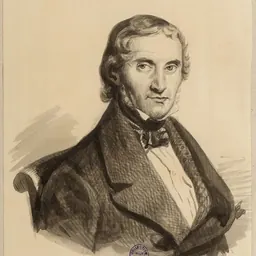
Lived 1758 – 1833 (aged 74–75). Jakub Kubicki was a Polish architect.
Jakub Kubicki (1758–1833) was a Polish classicist architect and designer.
Biography Born in Warsaw in 1758, into a bourgeois family, Jakub Kubicki graduated from the Jesuit College, at the same time that he was taking lessons from Domenico Merlini. In 1777, he was hired by architect Szymon Bogumił Zug to help in the construction of the Holy Trinity Church in Warsaw.
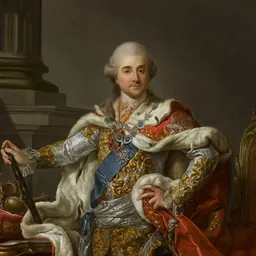
In 1783, he went to study in Italy as a fellow of King Stanisław August Poniatowski (with his brother), from where he returned in 1786. On his return he worked as an architect and he was the personal architect to the king.
Around 1783, he got married and had three children: Helena (b. 1784), Józefa (1787–1812), and Izabela (born 1791).
In 1791, in recognition of his services, he was knighted and received the coat of arms of Kolumna Skrzydlata . Since the possession of an estate was a symbol of belonging to the nobility, for many years he had an estate in Wilków. At the time of the Kościuszko Uprising, he was a judge in the Criminal Court of the Duchy of Mazovia.
After the collapse of the Polish Kingdom, he was an official with the position of the Crown Chief at the Intendant Building. Jakub Kubicki also belonged to the Temple of Isis masonic lodge, of which he was an honorary member from 1811 to 1812. He was a member of the Dawn Rising masonic lodge in 1818.
He died on 13 June 1833, in Wilków.
He was awarded the Order of Saint Stanislaus 2nd class, with a grant from Emperor Alexander I of Russia.
Architectural work He was the designer of numerous palaces. As an architect in Warsaw after 1807, he became a mediator between the pure classicism of the 18th century and the Empire style. Kubicki's works are characterized by use of typical design elements such as portico columns. He represented the mature phase of neo-classicism with Palladian influences and he was the designer of the typical Polish manor-palace.
In addition to projects such as palaces in Bejsce, Białaczów, Młochów, Nadzów, Pławowice, Radziejowice, Ropczyce, Sowiniec, Sterdyń he was the designer of many buildings inside and outside Warsaw. He designed churches in Mokobody and Radziejowice, as well as the town hall in Łęczyca and Weapons Factory in Kozienice.
Major works A palace for Marcin Badeni in Bejsce (1802) The palace in Pławowice (1804–1805) Reconstruction of the Krzemieniec Lyceum (1805) Church of St Klemens in Nadarzyn (1806) Warsaw toll houses from 1816 to 1818 at: Mokotów, Grochów, Marymonckie, Wolska, Jerozolimski, Golędzinowski, Powązkowski and Belweder Church of the Holy Trinity in Podwale in Warsaw (from 1818) Castle Square in Warsaw (1818–1821) The Kubicki Arcades at the Royal Castle in Warsaw (1819–21) An unrealised design for the Temple of Divine Providence in Warsaw The church of St. Jadwiga in Mokobody (a smaller version of his unrealised Temple of Divine Providence design) The Egyptian Gate at the castle in Ternopil Palace in Białaczów (around 1797) Reconstruction of the Radziejowice Castle in palace and park of Radziejowice Płock Town Hall (1827) The Płock toll houses (1816-1818, 1825): Warsaw, Dobrzynski and Płońsk. The palace in Ładyhy The palace in Samczyki – designing and decorating the ceiling in a circular living room The triumphal arch in Three Crosses Square in Warsaw (1809, 1815)
Buildings in Warsaw's Łazienki Park The Belweder Palace (the reconstruction in 1818–22) The Temple of Sybill (Świątynia Sybilli) (around 1820) The Hall within Belweder (1823–24) The Kubicki Stables (Stajnia Kubickiego) (1825–1826) The New Guardhouse (Nowa Kordegarda) (1830).
Objects of uncertain design The Egyptian Temples (Świątynia Egipska) in Łazienki Park (1819–1822) The House of the Invalids (Barracks Cantonists - Koszary Kantonistów) in Łazienki Park (1826–29) The palace complex in Farmstead Sielce (Folwark Sielce) - formerly part of the Łazienki Park (about 1820 or earlier)
Don’t just read it —
keep it.
Full-length biographies made to live with: read them, listen on the way to work, watch them tonight.
- E-book
- Audio
- Video
Instant download · yours to keep · every purchase keeps this site free
Important facts
People in Jakub Kubicki's life
Named in this biography and alive at the same time


Related people
Same field, nearest in time


Contemporaries
People whose lives overlapped Jakub Kubicki's





Frequently asked questions
Who was Jakub Kubicki?
Polish architect
When was Jakub Kubicki born?
Jakub Kubicki was born in 1758 in Warsaw.
When did Jakub Kubicki die?
Jakub Kubicki died on 13 June 1833 in Wilków Pierwszy.
What was Jakub Kubicki's occupation?
Jakub Kubicki was an architect.
What nationality was Jakub Kubicki?
Jakub Kubicki was Polish.
Sources & further reading
Cite this page
APA: Biography.guide. (2026). Jakub Kubicki. https://biography.guide/jakub-kubicki/
MLA: "Jakub Kubicki." Biography.guide, https://biography.guide/jakub-kubicki/.
Chicago: "Jakub Kubicki." Biography.guide. https://biography.guide/jakub-kubicki/.
Data last updated: 2026-09-20 · Spot an error? Report a correction.
Page generated 2026-09-27 05:00 UTC