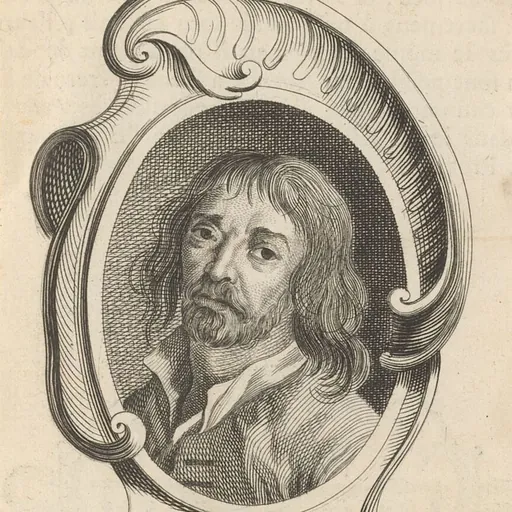
About Jacques Fouquier
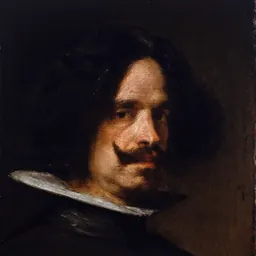
Lived 1590 – 1655 (aged 64–65). Jacques Fouquier was a Belgian and French painter and visual artist.
Jacques Fouquier or Jacques Fouquières, birth name Jacob (December 1590 – 1655) was a Flemish landscape painter. After training in Antwerp he worked in various places where he often obtained appointments as a painter to the court including that of the French kings. He earned great success and a very high reputation during his lifetime and was even referred to as the 'Flemish Titian'. Very few of his paintings have been preserved. His work was influential in his time and was widely circulated thanks to the reproductions made by various contemporary engravers. Research of the parish records kept by churches in Antwerp have shown that the artist was baptized with the first name 'Jacob' at the Antwerp Cathedral on 23 December 1590 as the son of Anthoni Foucuqiuer (Foucuqiur) and Lysbet. His godparents were Jacob van Bergen and Catelyn van Harlen. His baptism in Antwerp makes it likely that his place of birth was Antwerp.
In 1614 he was registered as a master painter in the registers of the Antwerp Guild of St. Luke under the name Jacques Foucque. The record does not mention who was his master. Some art historians have proposed a traineeship first under Joos de Momper, a prominent landscape painter and later under Jan Brueghel the Elder, a prolific painter and regular collaborator of Rubens. While there is no documentary evidence for such apprenticeships, they are supported on stylistic grounds. From 1619 to 1621 he was back in Brussels, where Philippe de Champaigne was one of his pupils. He possibly travelled around 1620 to Italy where he resided for a time in Rome. The city views he made for the King of France are lost as well as a series of grand landscapes he made for the Tuileries. Unlike many of his contemporaries, he usually took charge himself of the painting of the staffage in his landscapes. This did not prevent a collaboration with Rubens on a Landscape with a satyr chasing a nymph formerly in the collection of Archduke Leopold Wilhelm of Austria in which Rubens painted the satyr and nymph and Fouquier the landscape. he broke with this tradition by abandoning the wide panoramic landscapes in favour of a narrow focus on the depiction of a dark tree and a group of trees. In this development he followed in the footsteps of Gillis van Coninxloo a generation before him. He does not follow van Coninxloo in the direction of-a more naturalistic display of leaves, but he maintains the abbreviated, schematic treatment of foliage to concentrate rather on the new compositional ideas: uniform space in the foreground and middle ground rather than the stratification of the foreground, middle ground and distant portions and the romantic rocks of the de Momper school, only occasional perspective into the distance, greater ability to draw the viewer into the image, and above all a harmonization of color with more emphasis on light and the direction of the light: The color scheme, especially in the background, points to later developments in the 17th century such as seen in the works of Gaspard Dughet and Jacques d'Arthois. The prints provide a record of Fouquier's large-scale works that were produced after his move to France, most of the originals of which have been destroyed or not located. They show that throughout his French period Fouquier remained faithful to the style he adopted from 1622 onwards.
Don’t just read it —
keep it.
Full-length biographies made to live with: read them, listen on the way to work, watch them tonight.
- E-book
- Audio
- Video
Instant download · yours to keep · every purchase keeps this site free
Important facts
more
Jacques Focquier, Jacques Fouquiere, Jacques Fouquières, Jacques Fauquier, Jacques Fauquiers, Jacques Fockeer, Foucquie, Fouquier, Fouguieres, Feuquiere, Fauquire, Fouqueres, Fouquer, Old Feuquieres, Foukiere, Feugier, Fouquiere, Fauquier, Foucquier, Fanquires, Fouquières, Foquier, Fouquare, Fonquierer, J. Fouquieres, Foukier, Fouquere, Fougier, Fouguiere, Fouguet, Old Feuquiers, FoPeople in Jacques Fouquier's life
Named in this biography and alive at the same time



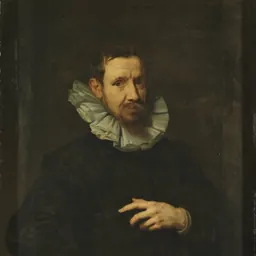
Related people
Same field, nearest in time
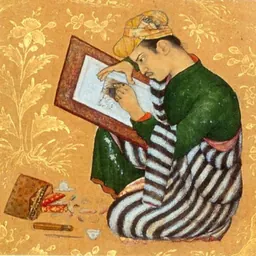
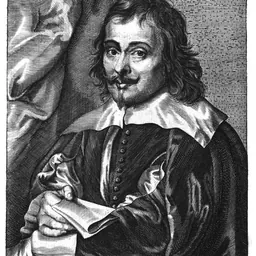

Contemporaries
People whose lives overlapped Jacques Fouquier's



Frequently asked questions
Who was Jacques Fouquier?
Flemish painter (1590-1655)
When was Jacques Fouquier born?
Jacques Fouquier was born in 1590 in Antwerp.
When did Jacques Fouquier die?
Jacques Fouquier died in 1655 in Paris.
What was Jacques Fouquier's occupation?
Jacques Fouquier was a painter and visual artist.
What nationality was Jacques Fouquier?
Jacques Fouquier was Belgian and French.
Sources & further reading
Cite this page
APA: Biography.guide. (2026). Jacques Fouquier. https://biography.guide/jacques-fouquier/
MLA: "Jacques Fouquier." Biography.guide, https://biography.guide/jacques-fouquier/.
Chicago: "Jacques Fouquier." Biography.guide. https://biography.guide/jacques-fouquier/.
Data last updated: 2026-09-23 · Spot an error? Report a correction.
Portrait: Wikimedia Commons · author & licence
Page generated 2026-09-27 05:07 UTC