
About Jacob Whitman Bailey
Lived 1811 – 1857 (aged 45). Jacob Whitman Bailey was an American botanist, naturalist, writer, microscopist and natural history.
Jacob Whitman Bailey (1811–1857) was an American naturalist, known as the pioneer in microscopic research in America.
Biography Jacob Whitman Bailey was born in Auburn, Massachusetts on April 29, 1811, and in 1832 graduated at West Point, where, after 1834, he was successively assistant professor, acting professor, and professor of chemistry, mineralogy, and geology. At West Point he studied with John Torrey. He devised various improvements in the construction of the microscope and made an extensive collection of microscopic objects and of algae, which he left to the Boston Society of Natural History. In 1857 he was president of the American Association for the Advancement of Science, as well as a member of the National Institute for the Promotion of Science, a precursor to the Smithsonian Institution. He was elected an Associate Fellow of the American Academy of Arts and Sciences (AAAS) in 1845. He was elected to the American Philosophical Society in 1852.
Bailey and his son William were survivors of the steamboat Henry Clay disaster on July 28, 1852, though his wife and daughter, both named Maria, were among the casualties.
The genus Baileya (desert marigolds), a North American genus of sun-loving wildflowers native to the deserts of northern Mexico and the Southwestern United States, were named by botanists William Henry Harvey and Asa Gray in honor of their colleague Jacob Whitman Bailey.
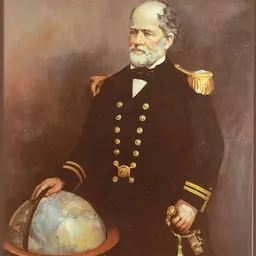
It was Jacob Whitman Bailey that Lieut. Matthew Fontaine Maury wrote a letter to inquiring as to the material from the sea floor brought up with Lt. John Mercer Brook's deep-sea soundings and core samples. From that it was determined that the sea floor where the trans-Atlantic Cable was laid because the samples showed Lieut. M. F. Maury that his "Telegraphic Plateau" was perfect for the underwater cable. The samples Maury sent proved the "Telegraphic Plateau" samples were non-abrasive for such a cable to be laid.
Bailey was buried at the West Point Cemetery.
Don’t just read it —
keep it.
Full-length biographies made to live with: read them, listen on the way to work, watch them tonight.
- E-book
- Audio
- Video
Instant download · yours to keep · every purchase keeps this site free
Important facts
People in Jacob Whitman Bailey's life
Named in this biography and alive at the same time



Related people
Same field, nearest in time
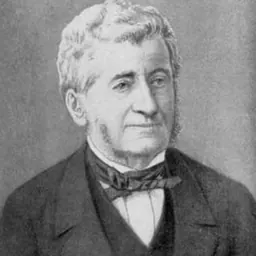


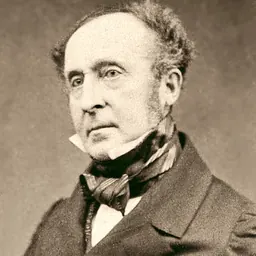
Contemporaries
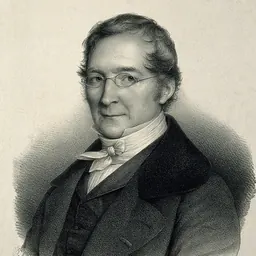
People whose lives overlapped Jacob Whitman Bailey's



Frequently asked questions
Who was Jacob Whitman Bailey?
American naturalist (1811-1857)
When was Jacob Whitman Bailey born?
Jacob Whitman Bailey was born on 29 April 1811 in Auburn.
When did Jacob Whitman Bailey die?
Jacob Whitman Bailey died on 26 February 1857 in West Point.
What was Jacob Whitman Bailey's occupation?
Jacob Whitman Bailey was a botanist, naturalist, writer, microscopist and natural history.
What nationality was Jacob Whitman Bailey?
Jacob Whitman Bailey was American.
Sources & further reading
· Wikipedia: Jacob Whitman Bailey
· DBpedia: Jacob Whitman Bailey
Cite this page
APA: Biography.guide. (2026). Jacob Whitman Bailey. https://biography.guide/jacob-whitman-bailey/
MLA: "Jacob Whitman Bailey." Biography.guide, https://biography.guide/jacob-whitman-bailey/.
Chicago: "Jacob Whitman Bailey." Biography.guide. https://biography.guide/jacob-whitman-bailey/.
Data last updated: 2026-09-25 · Spot an error? Report a correction.
Page generated 2026-09-27 05:12 UTC