
About Jacob van Loo
Lived 1614 – 1670 (aged 55–56). Jacob van Loo was a Dutch and French painter.
Jacob van Loo (1614 – 26 November 1670) was a painter of the Dutch Golden Age, chiefly active in Amsterdam and, after 1660, in Paris. Van Loo is known for his conversational groupings; particularly his mythological and biblical scenes generally attributed to the genre of History painting. He was especially celebrated for the quality of his nudes to the extent that, during his lifetime, particularly his female figures were said to have been considered superior and more popular than those of his Amsterdam contemporary and competitor Rembrandt. Unlike Rembrandt, he drew these nudes on blue paper. In 1663, three years after fleeing to Paris, Jacob van Loo was accepted into the Académie royale de peinture et de sculpture.
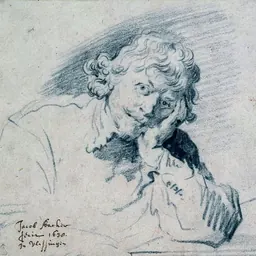
Though his father also painted, Jacob's success ensured that he would forever be referred to as the founder of the Van Loo family of painters; a dynasty which was influential in French and European painting from the 17th to the beginning of the 19th century. but more often his father is described as a painter from whom Jacob van Loo received his early training. Little is known of van Loo's early history due to the destruction of the city archives in Sluis during World War II. His early influences are said to have included Thomas de Keyser and Jacob Adriaensz Backer.
Family life In 1635, van Loo moved to Amsterdam, In 1642 he married Anna Lengele, the sister of the painter Martinus Lengele (1604–1668). They lived on Rozengracht in the Jordaan district of Amsterdam.
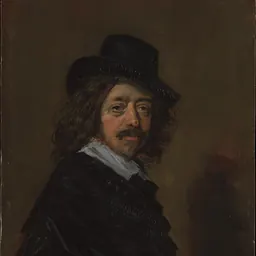
Professional practice In Amsterdam, van Loo found himself at the centre of an active and competitive circle of artists, which included Rembrandt, Frans Hals and Bartholomeus van der Helst. Around 1640 Eglon van der Neer entered his studio as an apprentice and remained his student for a decade. In 1652 van Loo bought himself citizenship (burgerrecht) of the city of Amsterdam. It was speculated that he did so in the hope of being commissioned to help decorate the newly constructed town hall.
Van Loo painted many portraits. Among his subjects were Johan Huydecoper van Maarseveen; his sister, Leonara Huydecoper, who was married to Jan J. Hinlopen; Joan Ortt, who was later involved with Antoinette Bourignon; and his wife Lucretia Boudaen.
Flight to Paris In 1660, van Loo fled from Amsterdam after fatally stabbing someone during an altercation at an inn. He was sentenced to death in absentia which forever prevented his return to the Dutch Republic. Van Loo settled in Paris, where, in 1663, he was admitted to the Académie de peinture et de sculpture. He died in Paris in 1670, three years after the van Loo family were naturalised as French citizens.
Gallery
Don’t just read it —
keep it.
Full-length biographies made to live with: read them, listen on the way to work, watch them tonight.
- E-book
- Audio
- Video
Instant download · yours to keep · every purchase keeps this site free
Important facts
more
Jacques Vanloo, Jakob, van Loo, Jacques Van Loo, Jac. Vanloo, jacob von loo, J. Van Loo, J. VanlooPeople in Jacob van Loo's life
Named in this biography and alive at the same time






Related people
Same field, nearest in time

Contemporaries
People whose lives overlapped Jacob van Loo's




Frequently asked questions
Who was Jacob van Loo?
Dutch painter (1614-1670)
When was Jacob van Loo born?
Jacob van Loo was born in 1614 in Sluis.
When did Jacob van Loo die?
Jacob van Loo died on 26 November 1670 in Paris.
What was Jacob van Loo's occupation?
Jacob van Loo was a painter.
What nationality was Jacob van Loo?
Jacob van Loo was Dutch and French.
Sources & further reading
Cite this page
APA: Biography.guide. (2026). Jacob van Loo. https://biography.guide/jacob-van-loo/
MLA: "Jacob van Loo." Biography.guide, https://biography.guide/jacob-van-loo/.
Chicago: "Jacob van Loo." Biography.guide. https://biography.guide/jacob-van-loo/.
Data last updated: 2026-09-20 · Spot an error? Report a correction.
Page generated 2026-09-27 05:26 UTC